Shoppers whose main priority is fat content
You’re looking for dried fruit to eat late in the evening and want to avoid options with added oil. The fat content per 100 g and the ingredients in the specific pack are what matter most to you.


If you want a low-fat midnight snack, dried fruit with no added oil could be a good option: EDEKA lists 0 g of fat per 100 g for GUT&GÜNSTIG prunes and 1 g for EDEKA Herzstücke mango strips. However, a low fat content doesn’t mean the fruit is low in sugar or energy. So compare the ingredients and nutritional information too, and set aside a portion before you start eating.
You’re looking for dried fruit to eat late in the evening and want to avoid options with added oil. The fat content per 100 g and the ingredients in the specific pack are what matter most to you.
You check for added sugar, but also want to know how much sugar the dried fruit contains overall. The consumer advice centre points out that ‘no added sugar’ doesn’t mean ‘sugar-free’.
You enjoy crunchy freeze-dried fruit or soft dried fruit, but don’t want to snack straight from the pack. You care about the nutritional information per 100 g as well as the portion you serve yourself.
If cutting down on fat is your main goal, start by comparing the fat content and ingredients. Then check the sugar and energy per 100 g, and think about how much you actually want to eat.
| What to check | What to look for when buying | Who it matters to |
|---|---|---|
| Fat and oil | Compare the fat content per 100 g and check the ingredients list for added oil. | I want dried fruit with a low fat content rather than an option containing oil. Around 36% of shoppers put fat and oil first when making this choice. |
| Added sugar | Check for ingredients such as sugar or syrup, and look separately at ‘of which sugars’ per 100 g in the nutritional information. | My main priority is avoiding added sugar, even if the fruit itself contains sugar. This is the top concern for around 29% of shoppers. |
| Portion size and nutrition | Check the energy and sugar per 100 g, and set aside a portion before you start snacking. | With small or crunchy pieces, I want to keep track of how much I’m actually eating. Around 21% of shoppers prioritise portion size and nutritional information. |
| Sulphur dioxide | If you know you’re sensitive to it, check the ingredients and look for mentions of sulphites or sulphur dioxide. | If I need to watch out for these ingredients, the labelling on the individual pack determines what I choose. This check is the main priority for around 14% of shoppers. |
The fruit’s natural sugar remains after drying. REWE lists 54 g of sugar per 100 g for Seeberger mango with no added sugar.
If both distinctions matter to you, check the ingredients list as well as the ‘of which sugars’ figure in the nutritional information.
Removing water concentrates the sugar and energy in dried fruit per 100 g. So the fat content alone doesn’t tell you everything about its nutritional value.
Compare the information per 100 g and put a portion in a bowl for your snack, rather than eating straight from the pack.
EDEKA lists added sugar and sunflower oil in GUT&GÜNSTIG cranberries. You can’t tell whether these ingredients are present from the fruit name alone.
Check the ingredients list and fat content for every variety before choosing it to meet your needs.
REWE says that sulphur-treated dried fruit is labelled accordingly. The product information for the Seeberger mango listed by REWE includes sodium metabisulphite.
If you know you’re sensitive to it, check the labelling on the specific pack; don’t rely on the type of fruit or brand alone.
Seeberger offers a range of dried fruit formats. Which one suits your needs depends on the recipe of the specific product.
REWE’s range includes a variety of dried fruit and freeze-dried fruit products under these own-label brands.
EDEKA’s product information features both dried fruit with a low fat content and sweetened varieties.
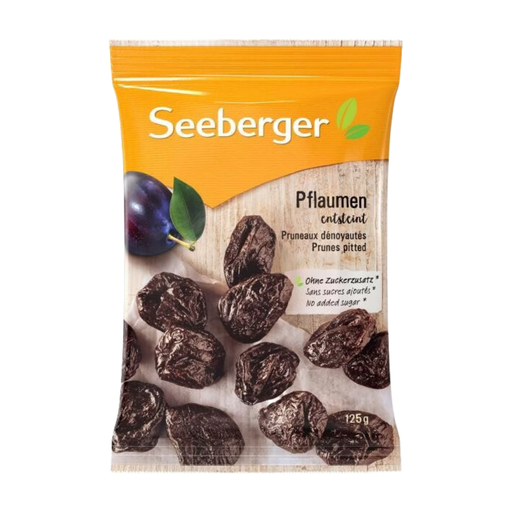
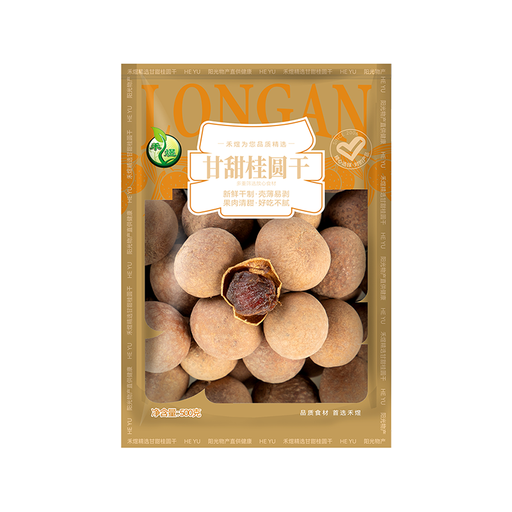
This selection includes soft prunes, jujubes and dried longan. For a late-night snack, check the nutritional information on the specific pack. With longan, it’s also important to follow the preparation instructions.
 No image available
An option if you’re looking for soft prunes to snack on. Compare the fat, sugar and energy per 100 g; even with pitted prunes, check for any pieces of stone.
 No image available
For shoppers considering jujubes as a dried fruit snack. As well as the fat content, check the sugar and energy per 100 g, and set aside a portion from the 500 g pack.
 No image available
Another jujube option to compare with other dried fruit. Check the ingredients and nutritional information before choosing, and set aside a portion from the 500 g pack for your snack.
 No image available
For shoppers who’d prefer soft prunes in a larger pack. Set aside a portion and, even though they’re pitted, watch out for any pieces of stone while eating.
 No image available
Dried longan is only a convenient late-night snack if the instructions on the specific pack say it can be eaten as it is. The available preparation instructions contradict each other: one says to wash and boil it. Check how it needs to be prepared before buying.
No, the fat content depends on the specific product. EDEKA lists 0 g of fat per 100 g for GUT&GÜNSTIG prunes, but 15.3 g per 100 g for dried tomatoes in rapeseed oil. So compare the nutritional information and ingredients for each variety.
No. The consumer advice centre explains that fruit with no added sugar can still contain natural sugars. You’ll find the total sugar content in the nutritional information under ‘of which sugars’ per 100 g.
Not just because it weighs less. The consumer advice centre points out that removing water concentrates sugar and energy per 100 g. If you’d like a crunchy option, compare its nutritional information and set aside a portion.
If you know you’re sensitive to it, check the labelling on the specific pack for sulphur dioxide or sulphites. REWE says that sulphur-treated dried fruit is labelled accordingly; the type of fruit alone won’t tell you.