What should you look for when buying?
Start by comparing the nutrition information and ingredients of similar dried fruit products. Then choose a pack size that suits how much you use and how you can store it.
| Criterion |
What to check |
Who it matters most to |
| Fat content |
Compare fat per 100 g in similar products. If a product is described as ‘reduced fat’, check what the claim is based on. |
If I’m buying dried fruit mainly because of its low fat content, I want to distinguish fruit-only products from mixes. For around 37% of shoppers, comparing fat content is the main consideration when stocking up. |
| Pack size and storage |
Check the pack size, best-before date and closure. If needed, plan to transfer opened products to an airtight, light-proof container. |
I need dried fruit regularly for muesli or baking, but don’t want to leave a large opened pack standing around for too long. That’s why around 27% of shoppers prioritise a quantity that suits how much they use and how they store it. |
| Ingredients and additives |
Read the ingredients list and allergen information on the specific pack. ‘No added sugar’, ‘unsulphured’ and ‘no preservatives’ describe different properties. |
If I want to avoid certain ingredients or additives, the words ‘dried fruit’ on the front aren’t enough. Ingredients are the most important selection criterion for around 18% of shoppers. |
| Availability |
Before planning to stock up, check whether your chosen variety and pack size are available from your preferred retailer. |
I want to be able to top up my cupboard with the variety and pack size I need, rather than having to look for an alternative when I shop. For around 18% of shoppers, being able to plan ahead comes first. |
A low fat content doesn’t tell you how much sugar a product contains. EDEKA lists 1 g of fat and 68.1 g of sugar per 100 g for its getrocknete Herzstücke Mangostreifen. ALDI SÜD lists 0.5 g of fat per 100 g for FARMER NATURALS Trockenpflaumen. These figures apply to the products named, not to all mangoes or plums. For your shopping, the nutrition information on the specific pack is what matters.
Brands and ranges to consider
These examples can help you find specific dried fruit products. A brand or retailer’s range alone doesn’t tell you the fat content, ingredients or whether every individual pack is right for you.
Seeberger
Seeberger sells pitted plums in several pack sizes, including 125 g, 200 g and 500 g.
- You can compare the different pack sizes of plums with the amount you plan to use.
- Seeberger describes its Soft-Pflaumen as having no added sugar and no preservatives. Don’t assume this applies to other Seeberger plums or pack sizes without checking.
REWE
The REWE range includes dried fruit from its own and other brands, including sultanas, apple crisps and mango strips.
- The range includes different types of fruit, giving you options to compare ingredients and pack sizes.
- The category also includes seeds and nuts. To compare fruit-only dried products, filter by product type and check what’s available in your area.
EDEKA / GUT&GÜNSTIG
EDEKA stocks GUT&GÜNSTIG Trockenpflaumen in a 500 g tub, as well as 100 g packs of Herzstücke Mangostreifen.
- According to EDEKA, the GUT&GÜNSTIG Trockenpflaumen tub has a resealable lid. EDEKA lists 1 g of fat per 100 g for its Herzstücke Mangostreifen.
- This information applies to the products named. EDEKA notes that details may differ from those on the packaging and that products may not be available everywhere.
Alesto
Alesto is a Lidl brand covering nuts, dried fruit and other snacks.
- Lidl lists Alesto mango strips with no added sugar as a specific dried fruit option.
- The range also includes nuts and other snacks. Check the ingredients and nutrition information for each product separately; ‘no added sugar’ doesn’t mean sugar-free.
FARMER NATURALS
ALDI SÜD stocks FARMER NATURALS Trockenpflaumen in a 500 g pack.
- ALDI SÜD lists 0.5 g of fat and 16 g of fibre per 100 g for this product.
- Different suppliers may be used, so the nutritional values can vary. Check the information on the pack you actually buy.
Dried fruit at Joybuy
This selection includes jujubes and dried plums in packs ranging from 200 g to 500 g. Choose a larger quantity if you use them regularly, or opt for a smaller pack. For each product, check the nutritional information and how it closes for storage after opening.
 No image available
Haoxiangni Grade A No-Wash Jujubes, 500 g
This 500 g pack could be a good choice if you regularly use jujubes as a snack or ingredient. Compare the fat and sugar content on the pack, and check how to seal it after opening.
View at Joybuy
 No image available
Changsi dried red dates, 500 g
This 500 g pack is better suited to regular planned use than to an occasional snack. Check the nutritional information on the specific pack and make sure you have a suitable way to seal it once opened.
View at Joybuy
 No image available
Seeberger pitted soft dried prunes, 500 g
This 500 g pack is a good option if you regularly use dried plums in snacks or recipes. Check the ingredients and nutritional values for this product specifically: claims about other Seeberger soft plums don’t necessarily apply to it. Take care when eating pitted plums, as small fragments of stone may remain.
View at Joybuy
 No image available
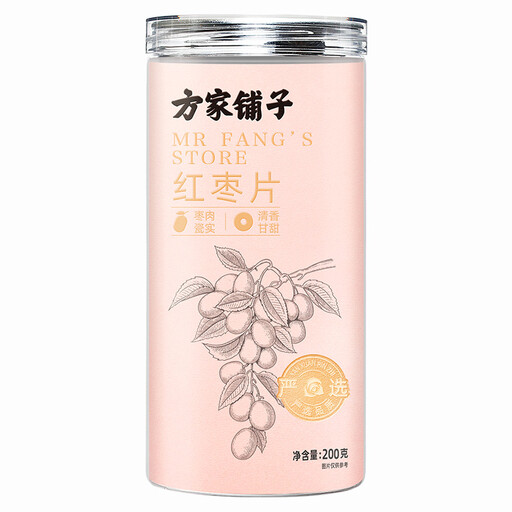
Fang Jia Puzi dried red date slices, 200 g
The pre-sliced pieces in this 200 g pack are an option if you want a smaller quantity for your store cupboard than a 500 g pack. As with the other products, compare fat and sugar per 100 g and check how to store it after opening.
View at Joybuy
 No image available
Haoxiangni Grade 2 Fresh-Locked pitted red dates Original Flavour, 280 g
At 280 g, this pitted variety is a mid-sized option between the 200 g and 500 g products shown here. Check that the quantity suits how much you use, and read the fat and sugar information on the pack itself.
View at Joybuy
Frequently asked questions
Is dried fruit with a low fat content automatically ‘reduced fat’?
No. A low fat content and the claim ‘reduced fat’ aren’t the same thing. According to Germany’s Federal Ministry of Agriculture, Food and Regional Identity, nutrition claims must meet the requirements of the EU Health Claims Regulation. To compare products while shopping, check the fat per 100 g on the specific pack.
How should I store opened dried fruit?
Follow the instructions on the pack: seal it and protect it from moisture. For dried apple rings, EDEKA recommends a cool, dry place and a resealable, light-proof container. Don’t assume this specific recommendation applies to every other type of dried fruit.
Does a low fat content tell me anything about the sugar content?
No. Fat and sugar are listed separately in the nutritional information. For example, EDEKA lists 1 g of fat and 68.1 g of sugar per 100 g for its getrocknete Herzstücke Mangostreifen. If both matter to you, compare the two values on the pack.
Where can I check for sulphur dioxide or preservatives?
Read the ingredients list and allergen information on the specific pack. Recipes can differ even within the same product category, so a claim such as ‘no preservatives’ for one particular product doesn’t automatically apply to other dried fruit from the same brand.


