If you’re keeping a close eye on fat
Compare the fat per 100 g and take the time to prepare it if that means you can decide whether to add oil and how much to use.


If you’re mainly looking to limit added fat, making popcorn at home gives you more control over the oil and seasoning than buying it ready-made. Still, check the nutritional information for the popcorn kernels and your appliance’s instructions. For packaged popcorn, compare the fat per 100 g and, depending on the variety, keep an eye on the sugar or salt too.
Compare the fat per 100 g and take the time to prepare it if that means you can decide whether to add oil and how much to use.
When it’s time for a film night, convenience matters. So, if you choose salted microwave popcorn, check the salt content as well as the fat.
You want a ready-to-eat product, but compare fat and sugar together rather than choosing a variety based on its fat content alone.
A good choice if: You want to decide whether to add oil and how to season it. EDEKA also describes a way to make it in an air fryer without adding fat.
Bear in mind: You’ll need suitable popcorn kernels and an appliance whose instructions allow this method.
A good choice if: You want sweet popcorn with no preparation and are happy to compare the fat and sugar on the pack.
Bear in mind: EDEKA’s GUT&GÜNSTIG sweet popcorn contains 4,5 g of fat and 30 g of sugar per 100 g.
A good choice if: Convenience matters more to you than controlling how much oil is added.
Bear in mind: EDEKA’s salted GUT&GÜNSTIG microwave popcorn contains palm oil, as well as 21 g of fat and 2,5 g of salt per 100 g.
| What matters | What to check | Who it matters to |
|---|---|---|
| Fat and preparation | Compare the fat per 100 g. If you’re making it yourself, also consider the oil you use and check your appliance’s instructions. | I mainly want to control added fat myself and can prepare the popcorn at home. This is the main priority for around 50% of consumers. |
| Quick preparation | For microwave popcorn, check the ingredients and the fat and salt per 100 g, not just the figures per serving. | I want to know how much fat and salt are in my chosen bag, even when I’m short on time. This is the top priority for around 33% of consumers. |
| Sweet flavour | For sweet popcorn, compare the fat and sugar per 100 g. | I prefer ready-made sweet popcorn, but don’t want to judge its nutritional values by the fat content alone. This matters most to around 17% of consumers. |
A relative claim compares a product with a reference. On its own, it doesn’t tell you how much fat the snack contains per 100 g. The Verbraucherzentrale says that solid foods can be described as “low-fat” if they contain no more than 3 g of fat per 100 g.
Check the actual fat content in the nutritional information before deciding whether the popcorn is low-fat.
Serving size alone doesn’t make the fat content of different products comparable. According to EDEKA, salted GUT&GÜNSTIG microwave popcorn contains 21 g of fat and 2,5 g of salt per 100 g.
Compare fat and salt using the same reference amount, and check the ingredients for added oils.
EDEKA’s GUT&GÜNSTIG sweet popcorn contains 4,5 g of fat, but also 30 g of sugar per 100 g. A lower fat content than another variety doesn’t tell you how much sugar it contains.
For sweet varieties, check both figures per 100 g and take into account how much you plan to eat.
These examples can help you compare popcorn with similarly named snacks. A brand name alone won’t tell you the fat content of a specific product.
EDEKA provides nutritional information for one sweet bagged popcorn and one salted microwave popcorn from its own brand.
Lidl describes ways to make popcorn at home, including in a microwave or air fryer.
Lorenz is an example of why a claim about reduced fat in another snack doesn’t apply to popcorn.
The product information relevant here relates to popchips and Protein Chips, not popcorn.
These popcorn kernels are intended for making your own popcorn. If you’re looking to limit fat, consider not only the information about the kernels but also any oil added during preparation.
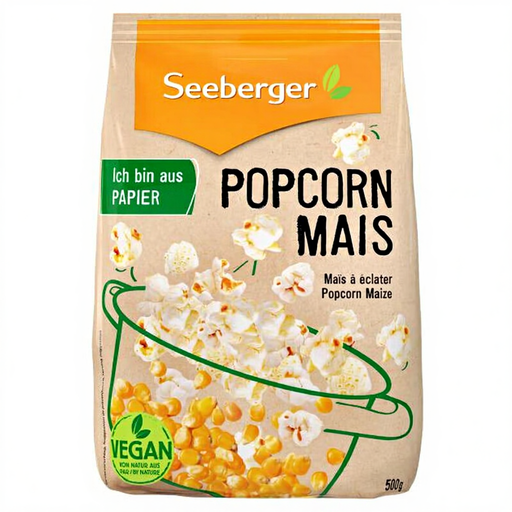 Image unavailable
For anyone who wants to make their own popcorn and choose how to season it.
The product description states 500 g. Before buying, check the actual unit of sale, as the pack-size information varies.
The preparation method described uses oil. The amount affects the fat content of the finished popcorn.
The information about peanuts and tree nuts is contradictory. If allergens are a concern for you, check the current packaging before eating.
The Verbraucherzentrale says that solid foods described as “low-fat” can contain no more than 3 g of fat per 100 g. Check the fat content of the specific product; “less fat” compared with another snack means something different.
There’s no single answer that applies to every product. Of the GUT&GÜNSTIG varieties described by EDEKA, the sweet popcorn contains 4,5 g of fat per 100 g, while the salted microwave popcorn contains 21 g. For the sweet variety, you should also note the 30 g of sugar per 100 g listed on the pack.
EDEKA describes a method using an air fryer without added fat. Use suitable popcorn kernels and first check whether your appliance’s instructions allow loose kernels to be cooked in it. Remember to account separately for any ingredients you add afterwards.
The current pack is important when choosing a specific food. Compare the nutritional information per 100 g and check the ingredients and allergens. EDEKA itself notes that information on product pages may differ from what’s on the packaging.