If you want to control added fat
Making popcorn yourself lets you choose how much oil and seasoning to use. It does take time, and you’ll need a suitable method of preparation.


If you want to control how much fat you add, making popcorn from kernels yourself is a good option. The fat and energy in the finished portion also depend on the oil and other ingredients you use. For ready-to-eat and microwave popcorn, compare fat, calories, sugar and salt per 100 g rather than judging it solely by how it is prepared or how light its texture is.
Making popcorn yourself lets you choose how much oil and seasoning to use. It does take time, and you’ll need a suitable method of preparation.
If you’re looking for a sweet, ready-to-eat option, consider fat, calories and sugar together. A lower fat figure alone doesn’t tell you how many calories it contains.
Ready-to-eat and microwave popcorn save you the effort of making it yourself. Pay particular attention to added fats and, for savoury varieties, the salt content.
First decide whether you want to make your own or eat it straight away. Then compare the nutrition information per 100 g, and remember to include any added ingredients when working out the values for homemade popcorn.
| What to consider | What to check | Who it matters to |
|---|---|---|
| Fat content | Compare fat per 100 g; if you’re making your own, factor in the amount of oil too. Under EU Regulation (EC) No 1924/2006, the claim ‘low fat’ for solid foods means they contain no more than 3 g of fat per 100 g. | If I make my own popcorn, I want to control the added fat, even if it takes longer to prepare. Around 50% of consumers prioritise this control. |
| Calories and sugar | For sweet popcorn, compare calories, fat and sugar per 100 g side by side. | When choosing a sweet option, I don’t want to reach for one just because it has less fat and overlook the sugar. Around 30% of consumers put this comparison first. |
| Convenience and salt | For ready-to-eat and microwave salted popcorn, check the fat and salt per 100 g, as well as the ingredients. | For a film night, I want to serve popcorn quickly without losing sight of its fat and salt content. This is the main consideration for around 20% of consumers. |
An airy texture doesn’t tell you how much fat the recipe contains. Under EU Regulation (EC) No 1924/2006, solid foods must contain no more than 3 g of fat per 100 g to carry the claim ‘low fat’.
Check the fat figure in the nutrition information, even if the packaging highlights how the popcorn is made.
According to EDEKA, GUT&GÜNSTIG sweet bagged popcorn contains 4.5 g of fat, but also 30 g of sugar per 100 g. Less fat doesn’t mean less sugar.
For sweet varieties, compare calories, fat and sugar per 100 g.
A ready-to-cook microwave popcorn bag may already contain fat and salt. EDEKA lists 21 g of fat and 2.5 g of salt per 100 g for its GUT&GÜNSTIG salted microwave popcorn.
Distinguish plain kernels for making your own popcorn from a ready-seasoned microwave product, and follow its cooking instructions.
Verbraucherzentrale recommends comparing the Nutri-Score within a product category. It doesn’t replace checking individual nutrient values and ingredients.
To make your choice, also check the fat, sugar and salt per 100 g.
EDEKA provides product information for its own-brand sweet bagged popcorn and salted microwave popcorn. This makes it possible to compare two different recipes.
Snackline Salted Popcorn is a ready-to-eat option to compare with homemade popcorn.
The funny-frisch puffed snacks considered here are crisps, not popcorn. They’re only worth considering if you see the two product categories as interchangeable.
Both of these products are popcorn kernels for making your own. When comparing fat and calories, consider the oil and seasoning you add, as well as the size of the finished portion, alongside the information for the kernels.
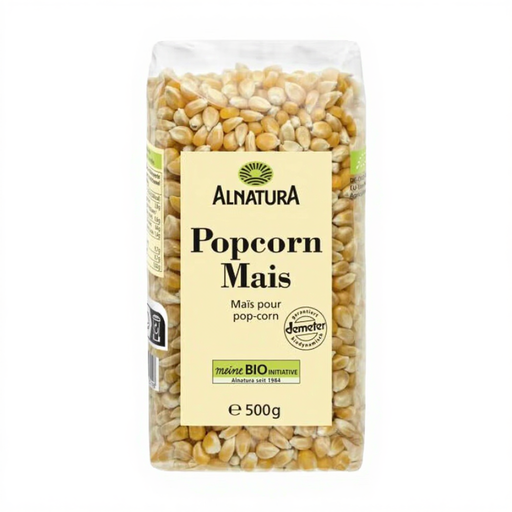 No image available
For making your own popcorn when you want to choose the seasoning. The pack contains 500 g of popcorn kernels; adding oil will change the nutrition values of the finished portion.
The information about peanuts and nuts is inconsistent. If you need to avoid allergens, check the label on the actual pack before buying.
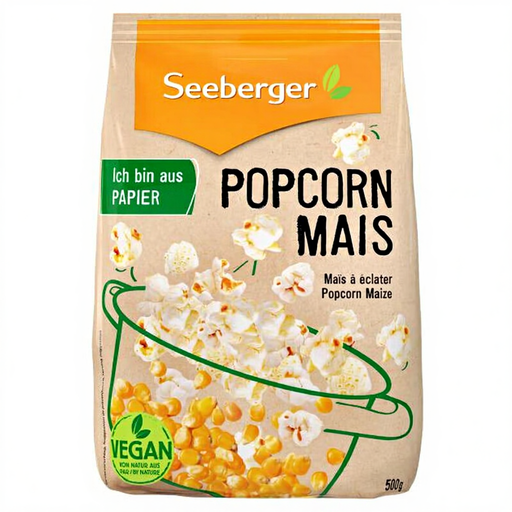 No image available
For making your own popcorn when you want to choose the seasoning. The pack contains 500 g of popcorn kernels; if you’re cooking them in a pan, remember to factor in the oil you use.
Under EU Regulation (EC) No 1924/2006, solid foods must contain no more than 3 g of fat per 100 g to carry this claim. Check the figure for the specific product; if you add oil yourself, include it when assessing your finished portion too.
Not necessarily: it depends on the recipe. EDEKA lists 385 kcal, 4.5 g of fat and 30 g of sugar per 100 g for GUT&GÜNSTIG Sweet Popcorn; REWE lists 434 kcal and 16 g of fat per 100 g for Snackline Salted Popcorn. These figures apply to the two products named, not to every sweet or salted variety.
You can only tell by checking the specific pack. According to EDEKA, GUT&GÜNSTIG salted microwave popcorn contains 21 g of fat per 100 g. If a low fat content is important to you, compare it with other recipes before buying.
No, not if you want to compare fat, calories or sugar specifically. Verbraucherzentrale describes the Nutri-Score as a comparison tool for products within the same category; you’ll find the individual figures in the nutrition information per 100 g.