
Lieferung heute & morgen

Qualitätsgarantie

Willkommens-Angebote freischalten: KOSTENLOSE Lieferung | Bis zu 80 % RABATT | Kostenlose 30-Tage-JoyPlus-Testphase
App herunterladen
By the Joybuy Product Recommendation Officer, August 30, 2026
Choosing the right lighting is a critical step in any renovation or new construction project. Low-profile LED downlights are particularly popular, offering a modern, space-saving, and energy-efficient solution. However, the market can be overwhelming, and tempting product descriptions often hide costly pitfalls. Before you make a decision, you should know the three most common mistakes made during selection.
To avoid these issues, it's essential to focus on the objective technical specifications that truly matter.
Instead of being swayed by marketing promises, you should base your choice on three fundamental criteria. These ensure that the lights not only fit but are also safe and functional for the long term.
The installation depth specification is one of the most critical values, especially for suspended ceilings with limited void space. Pay attention not only to the height of the spotlight itself but to the entire package.
The IP (Ingress Protection) rating indicates how well a light is protected against the intrusion of foreign objects and water. Choosing the wrong rating can pose a safety risk.
Modern LED ceiling spots offer much more than just on/off functionality. Two features are particularly relevant for adjusting the atmosphere.
Based on the criteria above, we have identified a few models that are well-suited for specific user profiles.
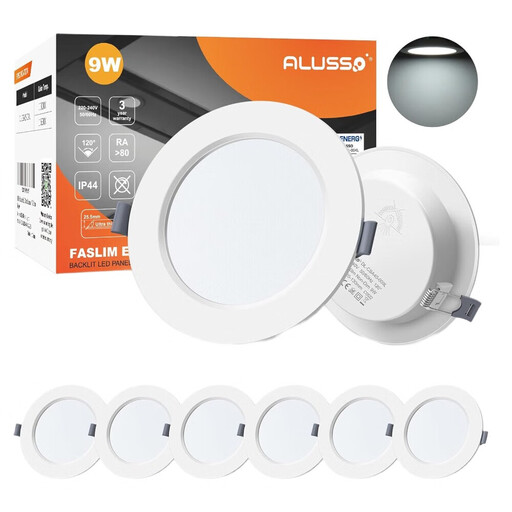
Why This Fits Their Persona: Ideal for standard projects like hallways, kitchens, or bathrooms where a reliable, easy-to-install, and cost-effective solution is needed, conveniently packaged in a set of 6.
The extremely shallow installation depth of just 25.5 mm and the direct 230V connection eliminate the problem of external transformers. The IP44 certification ensures suitability for damp locations.
Very slim design for ceilings with limited space; installation without an additional transformer.
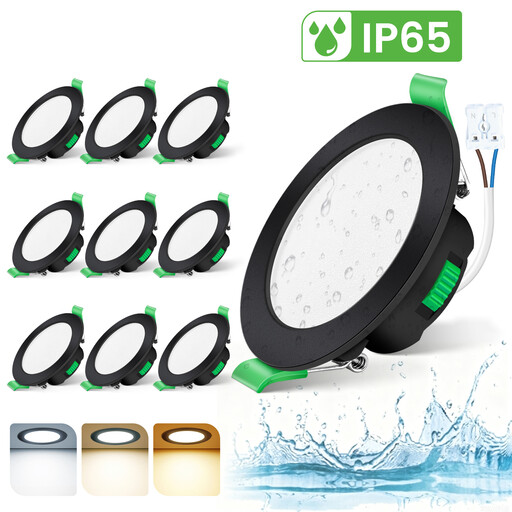
Why This Fits Their Persona: Perfect for users who value ambiance and want to adapt their lighting to any situation. The design as a black recessed ceiling light also adds modern accents to living rooms or bathrooms.
This model is explicitly designed as a dimmable LED spot and offers a selectable CCT colour temperature via a switch. This prevents compatibility issues and unwanted light colours. The high IP65 rating is even suitable for shower areas.
High flexibility with dimmability and 3CCT function; very high IP65 protection rating; modern, black design.
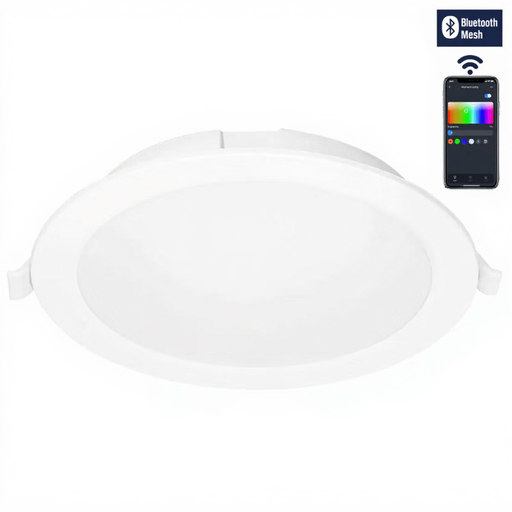
Why This Fits Their Persona: For anyone who wants to seamlessly integrate their lighting into a smart home and control it via app or voice, including coloured accents for any mood.
As a dedicated smart home light, it bypasses classic dimmer problems since control is handled digitally via the app. Full control over RGB colours and CCT prevents any compromises on lighting mood.
Full smart home integration via Bluetooth Mesh; RGB colour changing and continuously adjustable colour temperature (2700K-6500K).
We have compiled a complete, up-to-date list of products that fully meet these strict selection criteria and UK safety regulations.
As a rule of thumb for good ambient lighting in living spaces, plan for about one spot per 1.5 to 2.5 m?. In functional areas like kitchen countertops or bathrooms, a smaller distance (approx. 1 m) may be more appropriate. The required number depends on the room height, the brightness (lumens) of the spots, and the beam angle.
Yes, many modern 230V recessed lights are designed for direct connection to the mains supply. These models have the transformer (driver) already integrated, which greatly simplifies installation and saves space in the ceiling. Look for "230V direct connection" or "no transformer needed" in the product description. Installation should always be carried out by a qualified electrician.
CCT (Correlated Color Temperature) indicates the light colour in Kelvin (K). Models with selectable CCT offer flexibility. Common values are: