Hotel guests keeping an eye on sugar
You want a savoury snack to have with your coffee, so you compare the “of which sugars” figure per 100 g. This helps you choose without mistaking a marketing claim on the pack for its nutritional value.


If a low listed sugar content is your priority when having coffee in your hotel room, the Alnatura Organic Spelt Crackers with Sesame and Plain are worth considering among the crackers compared here. EDEKA24 lists 1.2 and 1.3 g of sugar per 100 g respectively, compared with 7.1 to 8.5 g for the classic crackers from TUC, Lorenz and Ritz included in this comparison. The sesame version contains sesame, so if you need to avoid certain ingredients, don’t make your choice based on sugar content alone. A low figure on its own also doesn’t mean a product can be labelled “reduced sugar”.
You want a savoury snack to have with your coffee, so you compare the “of which sugars” figure per 100 g. This helps you choose without mistaking a marketing claim on the pack for its nutritional value.
You don’t want to prepare anything or need a dip for your coffee break. In that case, it may also be useful to check whether an opened pack can be resealed and how it should be stored.
You may need to avoid ingredients such as spelt, wheat, barley, sesame, egg or milk. That means checking the labelling on the specific product is important, even if its sugar content is low.
When comparing crackers to have with coffee in your hotel room, start with the sugar content per 100 g. Then check whether you want to eat them without any preparation, and whether ingredients or allergens limit your choice.
| Criteria | What to check when buying | Who it matters to |
|---|---|---|
| Sugar content | Compare “of which sugars” per 100 g. Check any “reduced sugar” claim separately, including which product it is being compared with. | If I’m looking for the lowest possible listed sugar content, a marketing claim shouldn’t distract me from the nutritional information. Around 46% of shoppers prioritise this comparison. |
| Ready to eat | Check whether the crackers can be eaten on their own and what the storage instructions say for an opened pack. | For a quick coffee break, I don’t want to prepare anything or need a topping. Around 27% of shoppers consider this the most important factor. |
| Ingredients and salt | Read the ingredients and allergen information on the specific pack; compare the “salt” content per 100 g too, if needed. | If I need to avoid certain ingredients, the recipe takes priority over the sugar content; I may also want to consider the salt content. For around 27% of shoppers, this check comes first. |
An absolute figure in the nutritional information doesn’t show how much less sugar a product contains than a comparable food. In 2024, Lebensmittelklarheit explained that a “reduced sugar” claim requires at least a 30% reduction compared with a comparable food.
For a direct comparison, use the “of which sugars” figure per 100 g. If a product claims to have reduced sugar, also check what it is being compared with.
According to EDEKA24, Alnatura Spelt Crackers with Sesame contain sesame. The ingredients and allergen information also vary between the other crackers considered here.
Before eating, check the labelling on the actual pack if you need to avoid ingredients such as cereals containing gluten, sesame, egg or milk.
EDEKA24 lists 1.3 g of sugar and 2.0 g of salt per 100 g for Alnatura Organic Spelt Crackers Plain. For Ritz, EDEKA24 lists 8.5 g of sugar but 1.3 g of salt per 100 g. So the two figures don’t produce the same ranking.
If both figures matter to you, compare sugar and salt per 100 g and decide which criterion takes priority.
The Organic Spelt Crackers Plain and with Sesame are worth considering when comparing sugar content: EDEKA24 lists 1.3 and 1.2 g of sugar per 100 g respectively.
TUC Original is a classic cracker that can be eaten on its own, according to the product description. The pack is described as resealable.
According to EDEKA24, the Ritz crackers considered here are ready to eat, so there’s no need to prepare them.
Lorenz Clubs are classic crackers that can be eaten on their own or with a topping.
This selection features crispbread as a snack to have with your hotel coffee, rather than classic crackers. If you’re looking for the texture of crackers, check the product format before buying.
 Image unavailable
Crispbread for a quick coffee break, if you’d prefer this format to crackers.
The product is described as “Gluten-Free”. If you have specific dietary requirements, check the labelling on the pack you buy.
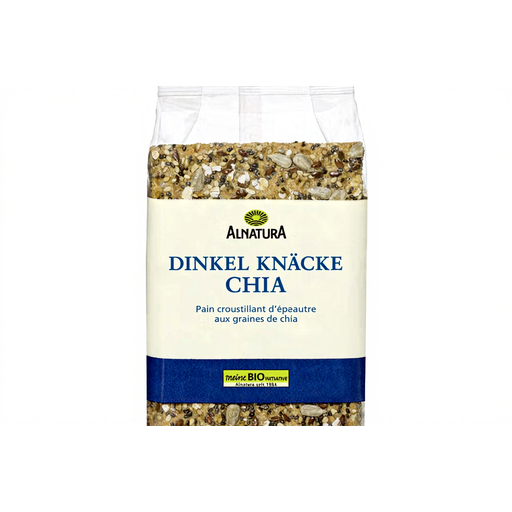 Image unavailable
A crispbread option if you don’t need classic crackers with your hotel coffee.
Spelt and chia seeds are listed in the product name. If you have dietary restrictions, check the ingredients and allergen information on the pack.
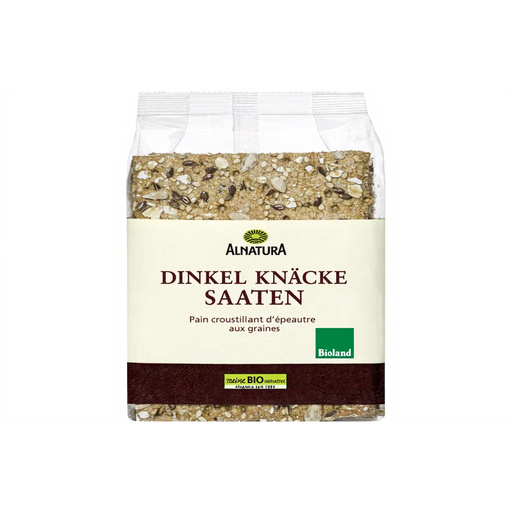 Image unavailable
For a coffee break with crispbread instead of classic crackers, if this different snack format suits you.
The product name mentions spelt and seeds, but doesn’t specify which seeds. So check the ingredients list on the pack you buy.
No. A low figure per 100 g doesn’t prove that a product contains less sugar than a comparable food. In 2024, Lebensmittelklarheit explained that a “reduced sugar” claim requires at least 30% less sugar than a comparable food. So check what the specific claim is based on.
Of the crackers compared here, EDEKA24 lists 1.2 g of sugar per 100 g for Alnatura Organic Spelt Crackers with Sesame and 1.3 g for the Plain variety. This is a comparison of these products based on their nutritional information, not a statement about all crackers or their suitability for people with particular allergies.
Check whether you want to eat the crackers on their own, and follow the storage instructions for an opened pack. Also read the ingredients and allergen information: the spelt crackers considered here contain cereals with gluten, and the sesame version also contains sesame.
EDEKA24 describes Ritz as ready to eat, while TUC Original and Lorenz Clubs are also sold for eating on their own. Follow the instructions on each pack for storing the crackers after opening.