If you want to bake sugar-free
Simply replacing granulated sugar isn’t enough if you want the finished biscuits to be classed as “sugar-free”. You’ll also need to include the other ingredients, filling and icing when checking the sugar content.


If you bake gingerbread at home, you can choose a recipe adapted to use less granulated sugar. But if you want the finished biscuits to be classed as “sugar-free”, you’ll need to take the sugar in every ingredient into account, including the icing and decorations. Honey and syrup are also sources of sugar, and a sweetener won’t necessarily work in every dough.
Simply replacing granulated sugar isn’t enough if you want the finished biscuits to be classed as “sugar-free”. You’ll also need to include the other ingredients, filling and icing when checking the sugar content.
You’d like to adapt a familiar gingerbread recipe without aiming for a sugar-free claim. As well as sweetness, consider how the change will affect the dough.
You’re looking for a replacement for granulated sugar and want to know which sweetener the recipe calls for. Check the ingredient labelling, quantity and whether it suits you and your household.
First decide whether you simply want to use less granulated sugar or specifically limit the sugar content of the finished gingerbread. You can then choose a recipe and, if needed, a sweetener intended for that recipe.
| Your priority | What to check before buying | Who it matters to |
|---|---|---|
| A sugar-free result | Check the sugar content of the finished biscuits, including icing, filling and decorations. Lebensmittelklarheit states that solid foods can contain no more than 0.5 g of sugar per 100 g to be labelled “sugar-free”. | If I want to class my gingerbread as “sugar-free”, I need to look beyond the granulated sugar added to the recipe. Around 36% of consumers make this their top priority. |
| Less sugar in the recipe | Check whether the recipe calls for a reduced amount of sugar and how it uses honey or syrup. | I want to bake a familiar gingerbread dough with less granulated sugar, without needing a sugar-free claim. Around 29% of consumers prioritise this compromise. |
| Sweeteners in the dough | Check which sweetener the recipe calls for, how much to use and its ingredient labelling. If you’re using a polyol, check the serving size too. | If I use a sugar substitute, I want to know whether it suits the recipe and my household. Around 21% of consumers put this choice first. |
| Comparing ready-made gingerbread | Read the “of which sugars” figure per 100 g and the ingredients list, rather than relying on a “less sugar” claim alone. | If I decide not to bake from scratch, I want to be able to assess the sugar content of a ready-made product directly. Around 14% of consumers prioritise this comparison. |
REWE suggests reducing the stated amount of sugar by around a third in many baking recipes. This isn’t a fixed rule for gingerbread: with a specific recipe, taste and dough texture matter too. EDEKA notes that honey and, in some cases, sugar are used in traditional gingerbread recipes. So don’t assume a recipe has been tested just because one ingredient has been replaced with a sweetener.
Honey, syrup and fruit can still add sugar to the finished gingerbread. The type of sweetener alone won’t tell you how much sugar the biscuits contain.
Include every ingredient, right down to the icing and decorations, and check the sugar content of the finished biscuits before considering a sugar-free claim.
A percentage reduction doesn’t tell you how much sugar is left in a product. According to Lebkuchen-Schmidt’s product information, “Elise Weniger Zucker” still contains 24.6 g of sugar per 100 g, despite its “30% less sugar” claim.
When comparing ready-made products, check the “of which sugars” figure per 100 g against your own goal.
Sweeteners are used in different ways, and a product described as a sugar substitute doesn’t guarantee that it will work in a particular gingerbread dough. Verbraucherzentrale also points out that polyols can have a laxative effect when consumed in large amounts.
Choose a recipe designed for the specific sweetener, check its labelling and try a small batch first when using a new ingredient.
These providers show a range of options, from making your own recipe to buying ready-made gingerbread. Their recipe tips and products aren’t the same as a sugar-free baking solution.
The ready-made “Elise Weniger Zucker” gingerbread is a useful example of why it’s worth comparing a sugar-reduction claim with the actual sugar content.
The baking advice can help you decide whether to make an existing recipe with less granulated sugar or use a sugar substitute.
Its gingerbread recipes are a good starting point for checking the ingredients in a traditional dough before changing the sweetener.
Its baking advice introduces alternatives to granulated sugar, including stevia and erythritol.
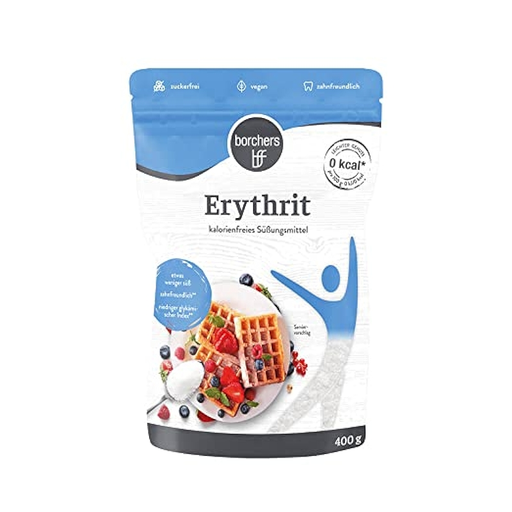
This erythritol could be an option if you want to use a gingerbread recipe made with a polyol. Choosing this product alone won’t tell you the sugar content or how the finished biscuits will turn out.
 No image available
For recipes that call for erythritol as a replacement for granulated sugar. The product name states that the pack contains 400 g of erythritol. For gingerbread, check the quantity required by your recipe and remember to include all the other ingredients when assessing the sugar content of the finished biscuits.
No. Honey, syrup and fruit can also add sugar to the finished gingerbread. Lebensmittelklarheit states that solid foods can contain no more than 0.5 g of sugar per 100 g to be labelled “sugar-free”. What matters is the sugar content of the whole product, not simply whether white sugar has been left out.
Where possible, choose a recipe that takes the specific sweetener and the amount needed into account. Xylitol and erythritol are polyols, so check the ingredient labelling and serving size. Verbraucherzentrale warns that these substances can have a laxative effect when consumed in large amounts. The sugar content of the gingerbread will still depend on the whole recipe.
No. Replacing granulated sugar with honey or syrup isn’t enough to make gingerbread sugar-free. Both are sources of sugar. If you use them for their flavour, include them when assessing the finished biscuits.
No. Although Lebkuchen-Schmidt states that the ready-made gingerbread contains 30% less sugar, it also lists 24.6 g of sugar per 100 g. It’s a ready-made product you can use to compare nutrition information, not a sugar-free baking ingredient.
Check the ingredients and allergen information for each product and baking ingredient individually. According to the product information for Lebkuchen-Schmidt’s “Elise Weniger Zucker”, this ready-made gingerbread contains nuts, wheat, egg and milk protein, among other ingredients. You can’t assume other gingerbread products have the same ingredients.