If keeping sugar low is your priority
You want to keep the sugar in your muesli as low as possible and are happy to avoid dried fruit. Compare the nutrition information per 100 g rather than relying only on the wording on the front of the pack.


If keeping sugar as low as possible is important to you, start by comparing the ‘of which sugars’ figures per 100 g on muesli packs. ‘No added sugar’ does not mean there is no sugar from dried fruit. For a fruity flavour, you could choose a blend with no added sugar; or start with plain flakes and portion out your own fruit and other ingredients. For your weekly shop, also check the ingredients, allergens and pack size.
You want to keep the sugar in your muesli as low as possible and are happy to avoid dried fruit. Compare the nutrition information per 100 g rather than relying only on the wording on the front of the pack.
You’re shopping for several breakfasts and want a fruity blend with no added sugar. Dried fruit still contains sugar, so check the nutrition information for this option too.
You want to stock up on a simple base and add fruit, yoghurt or other ingredients when you make each portion. Check whether you’re buying porridge oats or a ready-made muesli mix, and whether you’ll get through the pack size.
First decide what matters most to you: the actual sugar content, fruity flavour without added sugar, or a base you can customise. Then check the pack size and ingredients for the breakfasts you have planned for the week.
| What to consider | What to check | Who it matters to |
|---|---|---|
| Actual sugar content | Compare ‘of which sugars’ per 100 g and check the ingredients list for dried fruit or sweetening ingredients. | If I want to cut down on sugar at breakfast as much as possible, the figure in the nutrition table matters more to me than a claim on the pack. This is the main priority for around 36% of consumers. |
| Fruity flavour without added sugar | Check the fruit ingredients and the stated percentage, then look at ‘of which sugars’ per 100 g. | A fruity blend matters more to me than the lowest possible total sugar content, as long as no sugar has been added. This is the main priority for around 29% of consumers. |
| Stocking up and mixing your own | Check the pack size and product type: a simple base of flakes or ready-made muesli with ingredients already included. | I want to stock up on a base for several breakfasts and choose what goes into each portion myself. This is the main priority for around 21% of consumers. |
| Ingredients and allergens | Read the current ingredients and allergen information; if needed, also look for an explicit gluten-free label. | If I need to avoid certain ingredients, whether a product is suitable for me determines whether I buy it, even if the sugar content is right. This is the main priority for around 14% of consumers. |
Dried fruit can add sugar to muesli even when no sugar has been added. Kölln states that its Früchte Hafer-Müsli ohne Zuckerzusatz contains 40% dried fruit.
Compare ‘of which sugars’ per 100 g and read the ingredients list. This will help you weigh up your preference for fruity flavour against keeping total sugar as low as possible.
The sugar content won’t tell you whether a muesli contains ingredients such as nuts, sesame or gluten-containing cereals. REWE Bio 5-Korn-Müsli contains several types of cereal and sesame; Kölln lists nuts and seeds in its nutty Bircher muesli.
If you need to avoid certain ingredients, check the current labelling on each product, including any allergen information that’s relevant to you.
A larger pack is only a good fit for your weekly shop if you can store and use its contents in time. For example, REWE Bio 5-Korn-Müsli is available in a 1-kg pack.
Choose a pack size to suit your household and how often you eat muesli for breakfast, and follow the storage instructions once it’s open.
familia’s ‘Lower Sugar’ range featured here relates to the brand’s communications in Switzerland. Brüggen mainly describes mueslis that it makes for customers. Neither tells you the ingredients or nutritional values of a particular pack you might buy.
Choose based on the specific product, and check its ingredients, nutritional information and pack size.
Kölln makes oat mueslis with no added sugar, including fruit and Bircher varieties.
Seitenbacher Müsli zuckerarm is a fruit-free option for shoppers who want a specific sugar figure.
REWE Bio 5-Korn-Müsli is a multi-grain base that you can customise.
Alnatura describes both basic muesli and muesli varieties with no added sugar.
familia features a ‘Lower Sugar’ range on its Swiss brand website.
Brüggen describes itself as a manufacturer of traditional, crunchy and other mueslis for customers.
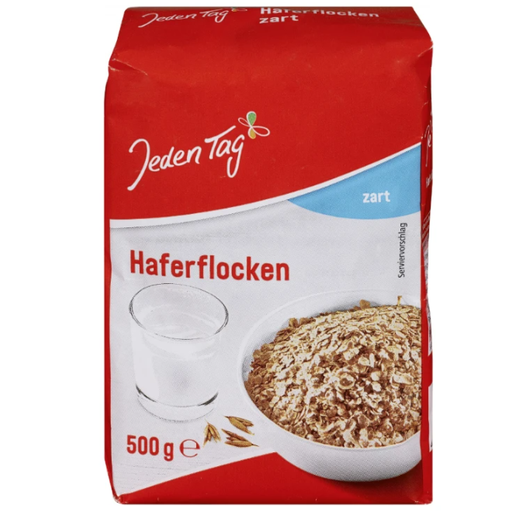
This selection includes porridge oats for mixing yourself, as well as ready-made mueslis with different fruit and sugar profiles. Porridge oats are an ingredient for making your own muesli, not a ready-made muesli mix.
 No image available
You can mix these porridge oats with ingredients of your choice to make your own muesli; they aren’t a ready-made muesli mix.
The pack contains 500 g. If you need to avoid particular cereals, check the current allergen information.
 No image available
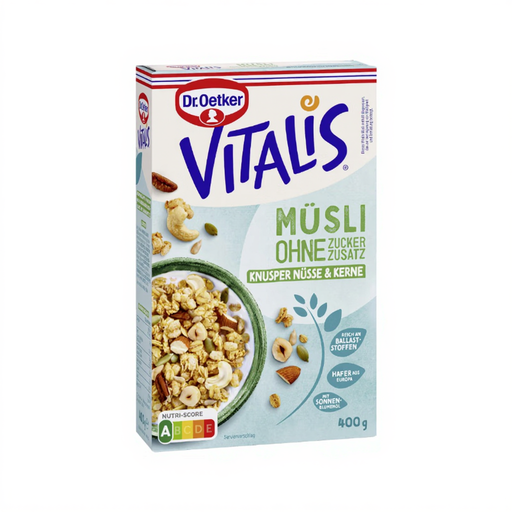
This ready-made crunchy nut mix could suit you if you’d rather not mix your own. ‘No Added Sugar’ doesn’t mean the product contains no sweeteners.
The pack contains 400 g. Check the ingredients, nutrition and allergen information before buying.
 No image available
These porridge oats make a suitable base if you want to put together your own muesli. They aren’t a ready-made muesli.
The pack contains 500 g. If gluten-free is essential for your shop, check the current labelling on the pack.
 No image available
This ready-made fruit muesli may suit you if you’re looking for fruity flavour without added sugar, but it won’t necessarily have the lowest total sugar content.
The pack contains 500 g. Compare ‘of which sugars’ per 100 g and check the current ingredients and allergen information.
 No image available
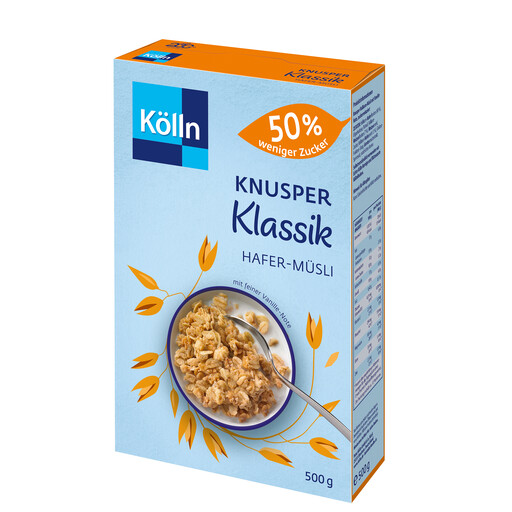
If you’re after ready-made crunchy muesli, check the stated sugar content and ingredients for this variety: its name doesn’t mean it’s sugar-free or has no added sugar.
For your weekly meal planning, check the pack size on the specific listing and take note of the allergen information.
No. Muesli with no added sugar can still contain sugar from ingredients such as dried fruit. Lebensmittelklarheit also points out that products carrying this claim may contain sweeteners or sugar substitutes. Check the ingredients list and ‘of which sugars’ per 100 g.
Compare fruit-free mueslis and plain flake or multi-grain bases using the ‘of which sugars’ figure per 100 g. Seitenbacher states that its Müsli zuckerarm contains 1 g per 100 g; REWE Bio 5-Korn-Müsli is listed as containing 0.9 g per 100 g. These figures apply only to the products named, not to every mix of this type.
You can stock up on porridge oats or a basic muesli and add fruit, yoghurt or other ingredients to each portion. If you want to keep an eye on total sugar, remember to include any ingredients you add, and choose a pack size that suits how much you use.
Yes. The sugar information doesn’t tell you whether a product contains nuts, sesame or gluten-containing cereals. Check the current ingredients and allergen information for the specific product. Lebensmittelklarheit also distinguishes between declared allergenic ingredients and possible traces.