If you’re looking for a measurable reduction in sugar for your snack stash, look for a percentage that names the product it’s compared with: Manner says its Vollkorn Schnitten contain 30% less sugar than its classic Manner Schnitte. If your main aim is to avoid added sugar, wafers labelled accordingly may be suitable. However, neither this claim nor a reduction in sugar automatically means a product is sugar-free or low in calories. So compare the nutritional information per 100 g, the ingredients and the portion you plan to eat.
Who might be interested in these wafers?
Shoppers with a specific sugar target
You want to check a stated reduction for yourself, rather than relying on the impression that a wafer tastes less sweet. To do that, you need to know what it’s being compared with and check the “of which sugars” figure per 100 g.
Shoppers stocking up on snacks
Whether you’re buying snacks for the office, your bag or home, you’ll want to know how many portions are in a pack and whether the best-before date and ingredient labelling suit your plans.
Shoppers with specific ingredient requirements
If you need to avoid sugar substitutes or take certain allergens into account, the labelling on the specific pack will help you decide whether a wafer is right for you.
What should you look for when buying?
First decide whether you’re looking for a substantiated reduction in sugar or a product with no added sugar. Then compare the nutritional information and ingredients. If you’re stocking up, also check portion sizes and the best-before date.
| What to check | How to check it | Who it matters to |
|---|
| Verifiable sugar reduction |
Check the percentage and comparison product; compare the “of which sugars” figures per 100 g. |
If I’m specifically looking to buy less sugar, I need a clear comparison rather than a vague claim on the front of the pack. For around 40% of shoppers, this verifiable reduction would be the main priority. |
| Portions and stocking up |
Check the pack weight, number of wafers and best-before date of the current stock. |
For snacks on the go, I want to be able to divide the pack into handy portions without buying more than I’ll use. Around 30% of shoppers would focus mainly on planning their snack stash. |
| Sweeteners and allergens |
Read the ingredients list, information about sugar substitutes and allergen labelling. |
If I need to avoid certain ingredients, I want to know what’s in the specific wafer and which warnings apply before I buy. For around 20% of shoppers, checking the ingredients would be the top priority. |
| Energy and portion size |
Compare kcal, sugar and fat per 100 g, as well as the figures for the portion you plan to eat. |
I want to assess the snack based on its overall nutritional content, not just the sugar figure. Around 10% of shoppers would make this comparison their main priority. |
Which mistakes can you avoid?
-
Assuming “less sugar” means “fewer calories”
The German Food Federation points out that a claim about reduced sugar doesn’t tell you the product’s energy value. Despite the stated sugar reduction, Manner’s Vollkorn Schnitten contain 480 kcal per 100 g.
Compare the energy per 100 g as well as the sugar, and work out the figures for the portion you plan to eat.
-
Reading “no added sugar” as “sugar-free”
A product can still contain sugars from its ingredients, even if no sugar has been added. The two claims therefore mean different things.
Check which claim suits your goal, and also read the “of which sugars” line in the nutritional information.
-
Stocking up on wafers with sugar substitutes without checking
Germany’s consumer advice centre explains that sugar substitutes can have a laxative effect if consumed in large quantities. Which substances and warnings apply to a wafer depends on its recipe.
Read the current ingredients list and consumption advice before planning to buy larger quantities.
-
Confusing a range listing with the product currently in stock
A wafer category doesn’t tell you the best-before date or labelling on the pack you’ll actually receive.
When stocking up, check the specific product, the number of wafers and the best-before date. If you choose an alternative, check its nutritional information again.
Brands to help you find your way
Manner
The Vollkorn Schnitten are a wafer-bar option with a specifically named product for comparison.
- Manner says they contain 30% less sugar than its classic Manner Schnitte; the Vollkorn Schnitten contain 26 g of sugar per 100 g.
- That doesn’t make them sugar-free. Their energy content should be considered separately: they contain 480 kcal per 100 g.
NEOH
NEOH offers wafer snacks labelled “no added sugar”.
- This claim is relevant to shoppers who want to avoid added sugar.
- It doesn’t prove that a product is sugar-free or has a specific percentage reduction in sugar. Compare the nutritional information for the variety you want.
NICK'S
NICK'S offers chocolate and protein wafers labelled “no added sugar”.
- The different varieties give you a choice of product type and flavour.
- Check the ingredients and nutritional information for the specific variety; “no added sugar” doesn’t tell you its total sugar content.
Damhert
A retailer’s listing for Damhert vanilla wafers mentions a significant reduction in sugar and the use of sugar substitutes.
- The retailer described the vanilla wafers as containing 92% less sugar than conventional wafers made with table sugar.
- The retailer listing in question gave a best-before date of 19 March 2026. So base any buying decision on the current stock and its labelling.
Lotus Biscoff
Lotus Biscoff is caramelised biscuit, not a reduced-sugar wafer; it’s included here only to show the difference between product types.
- EDEKA24 lists the caramelised biscuit as containing 38.1 g of sugar per 100 g.
- This figure doesn’t prove a sugar reduction, nor does it make the biscuit a wafer alternative for the same sugar goal.
Wafers and wafer bars at Joybuy
This selection includes a plain-tasting spelt wafer and a hazelnut wafer bar labelled “no added sugar”. The product description alone doesn’t substantiate a percentage reduction in sugar compared with another wafer for either product.
 No image available
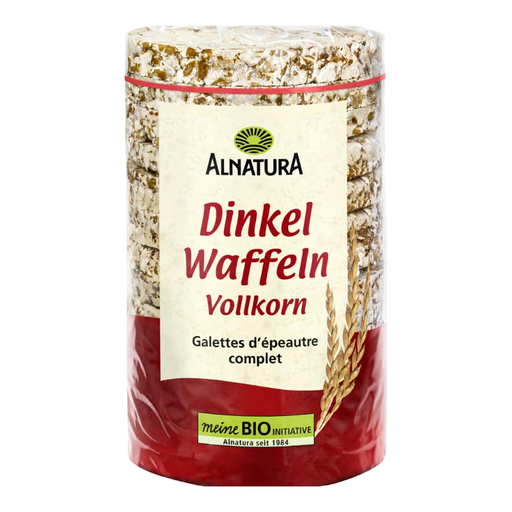
Alnatura organic plain spelt wafers, 100 g
An option if you’re looking for simple spelt wafers rather than sweet wafer bars for your snack stash. The pack contains 100 g; it doesn’t state a percentage reduction in sugar.
To meet your sugar goal, compare the nutritional information on the current pack. If you need to check gluten or fibre content, pay particular attention to the relevant labelling.
View at Joybuy
 No image available
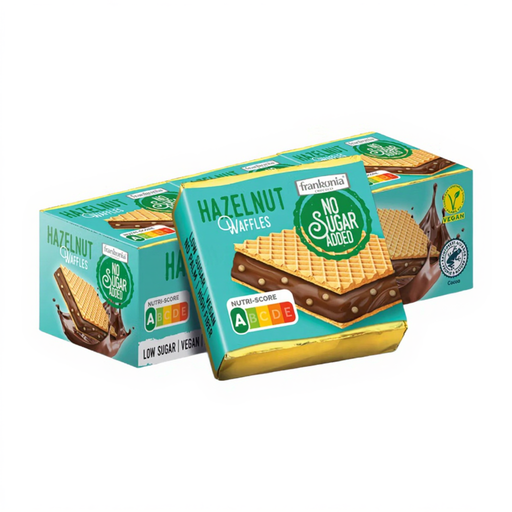
Frankonia hazelnut wafers with no added sugar, 9 × 19.4 g
An option if you want to avoid added sugar and stock up on individually portioned wafers. The pack contains nine wafers, each weighing 19.4 g; “no added sugar” doesn’t mean “sugar-free”.
Before buying, check the sugar and energy per 100 g, along with the ingredients and allergen information on the current pack. Also take note of any advice about consuming larger quantities.
View at Joybuy
Frequently asked questions
Is a reduced-sugar wafer sugar-free?
No. The German Food Federation defines “reduced sugar” as a reduction in sugar content of at least 30% compared with similar products. The nutritional information per 100 g tells you how much sugar the wafer still contains.
Do wafers with less sugar also have fewer calories?
Not automatically. According to the German Food Federation, the sugar claim doesn’t tell you the product’s energy value. So compare the kcal per 100 g and for the portion you plan to eat.
What should I know about maltitol, sorbitol or mannitol?
If a wafer contains these sugar substitutes, read the ingredients list and the information on the current pack. Germany’s consumer advice centre points out that sugar substitutes can have a laxative effect if consumed in large quantities.
Does “no added sugar” also mean “no sugar”?
No. The claim refers to added sugar; ingredients can still contain naturally occurring sugars. To check the total sugar, look at the “of which sugars” line in the nutritional information for the specific product.


