If you want to keep an eye on calories when choosing snack mixes, start by comparing similar products on a kcal-per-100 g basis, then work out the amount you actually plan to eat. Terms such as ‘baked’ or ‘protein’ are no substitute for this comparison; salt, ingredients and allergens may also affect your choice.
Who should compare products?
Shoppers comparing calories
You want a savoury snack and would like to compare the kcal in different products per 100 g and for the amount you plan to eat. This is particularly useful if a description such as ‘baked’ or ‘less fat’ influences your initial choice.
Shoppers planning snacks
Whether you’re at the office, out and about or having an afternoon snack, you want to decide on a portion in advance and consider fibre and protein as well as kcal. The Federal Centre for Nutrition recommends making considered choices about foods and portion sizes when planning meals.
Shoppers checking ingredients and allergens
When a mix contains several ingredients, you want to know exactly what’s in the pack you’re buying. The ingredients list and allergen information are particularly important if you need to avoid certain ingredients or are shopping for someone else.
What should you look for when buying?
First, compare dry snacks intended for a similar occasion on the same 100 g basis. Then consider the portion you plan to eat to work out how many kcal the snack will actually provide.
| Criteria |
What to check |
Who it matters to |
| Energy content |
Compare kcal per 100 g for similar snacks and calculate the kcal for your planned portion. A fat or protein claim is no substitute for the energy information. |
If I want to include a snack in my planned calorie intake, I need comparable energy information rather than a marketing term. Around 33% of shoppers would make this their most important buying criterion. |
| Portion and nutrients |
Check the amount per unit or pack, and also look at fibre and protein per 100 g. |
For a snack, I want to be able to decide in advance how much I’ll eat and take the other nutritional values into account too. For around 27% of shoppers, being able to plan their portion would be the main consideration. |
| Salt, sugar and ingredients |
Check the salt and sugar per 100 g, as well as the ingredients list and allergen information on the specific pack. |
If I need to avoid certain ingredients or am looking for a less salty mix, the kcal figure alone isn’t enough. Around 20% of shoppers would prioritise ingredients and labelling. |
| Product type |
Distinguish between dry savoury snack mixes, nut-and-chocolate mixes and frozen products before comparing their nutritional values. |
When shopping, I want to find products suited to the same snacking occasion, rather than relying on the name ‘snack mix’ alone. For around 20% of shoppers, this would be the first step. |
Common comparison mistakes
-
Assuming ‘protein’ or ‘less fat’ means fewer calories
The North Rhine-Westphalia Consumer Advice Centre points out that a lower fat content in alternative crisps doesn’t automatically mean a corresponding reduction in calories.
Compare the kcal and salt content per 100 g for the specific product, and consider the protein and fat figures as additional information.
-
Assuming the stated portion matches how much you eat
Information per portion is only useful if you eat roughly that amount. A larger serving from the same pack will provide more kcal accordingly.
Measure out the amount you want before eating, and calculate the kcal from the weight if needed.
-
Comparing every product called ‘snack mix’ directly
A dry savoury mix, a chocolate mix and a frozen snack product are intended for different occasions. A single kcal figure doesn’t explain these differences.
First identify the product type, then compare the nutritional information for suitable alternatives.
-
Relying on online information alone for allergens
A mix may contain several ingredients, and information for a listed version may not describe every pack you buy later. ALDI SÜD also notes that ingredients may differ between suppliers for one of its snack mixes.
If you have allergies, check the ingredients and highlighted allergens on the specific pack.
Brands and ranges to help you compare
These examples show different product types and nutritional information; they are not a blanket assessment of any brand. The specific product variant is what matters.
funny-frisch
The brand offers oven-baked and protein crisps, among other products; the variant you choose matters when comparing calories.
- funny-frisch states that Ofen Chips Paprika contain 405 kcal and 9.2 g of fat per 100 g.
- According to funny-frisch, the same product contains 1.6 g of salt per 100 g. The name ‘Ofen Chips’ alone tells you nothing about the nutritional values of other variants.
Lorenz
NicNac's Original and Saltletts Crunchy Bites Paprika Style are different types of savoury snacks in the range.
- Lorenz states that Saltletts Crunchy Bites Paprika Style contain 10 g of fibre and 11 g of protein per 100 g.
- According to Lorenz, these Crunchy Bites provide 447 kcal per 100 g; the manufacturer gives 533 kcal per 100 g for NicNac's Original. The fibre figure is no substitute for comparing energy content.
EDEKA / GUT&GÜNSTIG
The GUT&GÜNSTIG Snack-Mix is an example of a classic savoury snack mix.
- EDEKA states that this snack mix contains 452 kcal per 100 g.
- EDEKA also gives a salt content of 2.9 g per 100 g. Check the information on the pack you’re actually buying.
REWE
The listed range also includes snack mixes with confectionery ingredients.
- REWE’s product information lets you check the energy and sugar per 100 g in the listed M&M's Snack Mix.
- REWE states that this product contains 581 kcal and 36 g of sugar per 100 g. A mix containing confectionery isn’t comparable to a savoury snack mix simply because they share the name ‘snack mix’.
Lidl / Alesto
Lidl’s Alesto range includes both plain nuts and dried fruit, as well as seasoned party snacks.
- You can search for the type of product you want, such as a simple nut mix rather than a seasoned snack.
- The product type or brand name doesn’t determine the energy content; you’ll need to check the nutritional information for the specific variant.
ALDI SÜD
SPEISEZEIT Snack-Mix Paprinos is a frozen snack product, not a dry savoury mix.
- Its product type is easy to distinguish before comparing it with dry snack mixes.
- ALDI SÜD notes that different suppliers may be used and nutritional values may vary. Check the specific pack you buy.
Snack options at Joybuy
This selection features a paprika-flavoured protein snack as a possible alternative to classic snack mixes. To decide if it’s right for you, compare the nutritional information and the amount you plan to eat.
 No image available
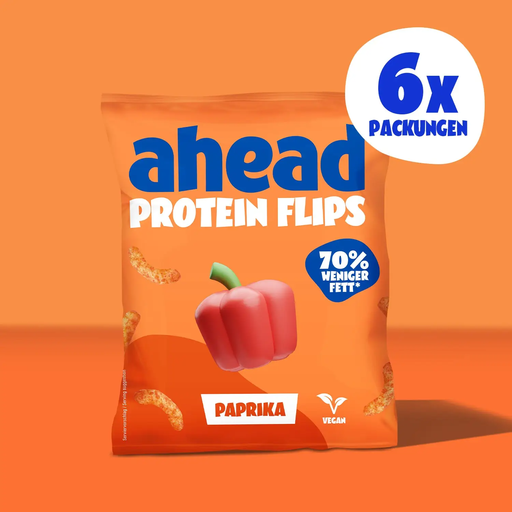
ahead Protein Flips Paprika, 6 × 50 g
If you’re considering Protein Flips instead of a classic snack mix, the six listed 50 g packs make it easy to choose a portion in advance.
For a calorie comparison, check the nutritional information on the specific pack. The word ‘protein’ alone doesn’t tell you the energy content.
View at Joybuy
Frequently asked questions
Does ‘40% less fat’ also mean fewer calories?
No. A lower fat content on its own doesn’t prove that there’s a corresponding reduction in calories. The North Rhine-Westphalia Consumer Advice Centre highlights this in relation to alternative crisps, so compare the kcal per 100 g and the amount you plan to eat.
Can the Nutri-Score replace nutritional information?
No. You’ll still need the nutritional information to make a specific comparison of kcal, salt or sugar. According to the Federal Centre for Nutrition, the Nutri-Score shows a food’s nutrient composition on a five-level scale and can be used as an additional way to compare similar products.
What should I look out for when it comes to allergens in snack mixes?
Check the ingredients list and allergen information on the specific pack, especially for mixes containing several ingredients. If you have allergies, don’t rely on older online product information alone.
How can I account for a snack mix when planning portions?
Decide how much you want before eating and calculate the kcal using the figure per 100 g. The Federal Centre for Nutrition recommends choosing foods and portion sizes carefully when planning meals; the portion shown on the pack may not match the amount you actually eat.


