If you’re looking for a lower-fat snack to take to the Christmas market, start by comparing dried fruit such as apple rings or prunes with oil-containing fruit crisps, using the information on each individual pack. Check the fat per 100 g alongside the ingredients list: a short list may better suit your preferences, while a low fat figure alone tells you nothing about sugar or other additives. Dried fruit contains concentrated fruit sugars, so the portion you plan to eat is also part of the decision.
Who is this choice relevant to?
Visitors keeping an eye on fat content
You’d like to take something sweet with you, but don’t want to treat oil-containing fruit crisps as the same as simply dried fruit. When comparing packaged products, you check the fat per 100 g and then look for oil in the ingredients list.
People with specific ingredient preferences
Before buying, you want to see whether the product contains anything besides fruit, such as sugar, oil, preservatives or sulphur dioxide. For you, the ingredients list on the specific pack matters more than a brief claim on the front.
Market visitors looking to share a snack
You’re looking for a pack that’s easy to take along and share. The size and closure matter just as much as the ingredients and what to do with any leftovers once the pack has been opened.
What should you look for when buying?
If you’re taking dried fruit to the Christmas market, start by deciding what matters most to you. A low fat figure, a short ingredients list and a handy pack each answer a different question.
| What matters to you |
What to check when buying |
Who it matters most to |
| Fat content |
Compare fat and saturates per 100 g; for fruit crisps, also check the ingredients list for oil. |
I don’t want to assume fruit crisps with oil are lower in fat just because they’re made from fruit. Around 36% of consumers put a lower fat figure first when making this choice. |
| Ingredients |
Read the full ingredients list and allergen information on the pack. |
If I need to avoid certain additives or take sulphites into account, I want to know what’s in the bag before I buy it. The ingredients are the main concern for around 29% of consumers. |
| Sugar and portion size |
Check sugar and energy per 100 g, and plan a suitable portion. |
When choosing a sweet snack to eat on the go, I want to estimate how much I’ll actually eat. Around 21% of consumers focus primarily on sugar and portion size when making this decision. |
| Packaging |
Check the pack size, closure and storage instructions. |
If we’re sharing a snack at the market, the pack should suit the group and any leftovers. For around 14% of consumers, this practical consideration comes first. |
Which buying mistakes can you avoid?
-
Treating banana chips like simply dried fruit
Seeberger banana chips listed by REWE contain coconut oil and provide 29 g of fat and 27 g of saturates per 100 g. So, just because they’re fruit-based doesn’t make them a lower-fat choice.
Compare crisps and other dried fruit using the nutritional information for each product. If you’re mainly after a crunchy texture, that’s a different priority from reducing your fat intake.
-
Assuming ‘no added sugar’ means low in fat
This claim doesn’t tell you anything about fat. REWE lists KoRo banana chips with no added sugar as containing 31 g of fat per 100 g; their ingredients list includes coconut oil.
Read the ingredients list and compare both sugar and fat per 100 g. Dried fruit can still be high in naturally occurring sugars, even without added sugar.
-
Looking only at the fat figure in fruit mixes
EDEKA’s Herzstücke mixed fruit is listed as containing 0.3 g of fat per 100 g, but it also contains ingredients including sunflower oil, potassium sorbate and sulphur dioxide. So, if you need to avoid certain ingredients or sulphites, you’ll need to look beyond the fat figure.
Check the full ingredients list and any highlighted allergens on the pack you’re buying.
Relevant brands and own-label ranges
Dried fruit, mixes and crisps can vary considerably within the same range. Compare the specific product rather than relying on the brand name alone.
Seeberger
The range includes different types of dried fruit, including soft fruit and banana chips.
- The different product types make it possible to compare ingredients and nutritional information within the brand’s range.
- The Seeberger banana chips listed by REWE contain coconut oil and 29 g of fat per 100 g. This figure doesn’t apply to other Seeberger products.
EDEKA / EDEKA Herzstücke
The documented range includes dried mixed fruit.
- EDEKA gives its Herzstücke mixed fruit a fat content of 0.3 g per 100 g; the pack description mentions a resealable bag.
- The same mix contains sunflower oil, potassium sorbate and sulphur dioxide. Check the ingredients and nutritional information on the pack in your local store.
ALDI Nord / TRADER JOE'S
ALDI Nord sells various types of dried fruit under TRADER JOE'S; freeze-dried fruit has also been listed as a special-buy item.
- The products described include prunes and small packs of freeze-dried fruit.
- Special-buy items may not be available in every store. You can’t tell the fat content from the pack size.
ALDI SÜD / FARMER NATURALS
The documented range includes FARMER NATURALS prunes and other dried fruit.
- ALDI SÜD gives the documented FARMER NATURALS prunes a fat content of 0.5 g per 100 g.
- ALDI SÜD notes that suppliers may vary, which can affect the nutritional information. Always check the pack you’re buying.
Dried fruit and fruit snacks at Joybuy
This selection includes dried fruit for an on-the-go snack, as well as candied ginger as a separate, sweetened option. If a lower fat figure is your main concern, compare the ingredients and nutritional information on each pack.
 No image available
Changsi dried red dates, 500 g
If you’re taking a fruit snack with you, consider how much you’ll need on the go from this larger pack.
Compare the ingredients and nutritional information on the packaging, and check how to reseal the bag once opened.
View at Joybuy
 No image available
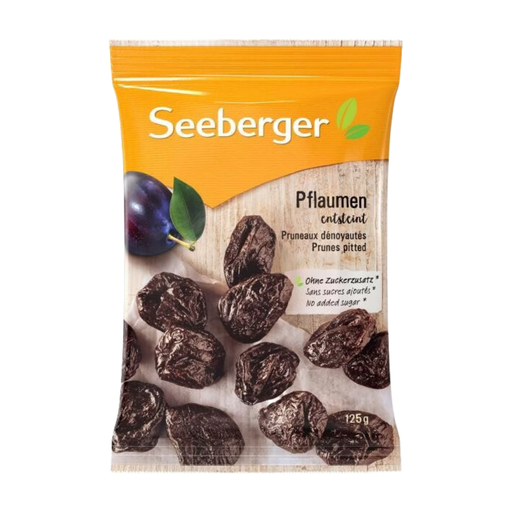
Seeberger Soft pitted prunes, 125 g
These pitted prunes are an option if you’re after a soft fruit snack on the go. Check the ingredients and nutritional information on the specific pack.
Even though they’re pitted, watch out for any possible fragments of stone when eating them.
View at Joybuy
 No image available
Seeberger dried apple rings, 80 g
The 80 g pack is an option if you’d prefer to take apple rings rather than crunchy fruit crisps with you.
If you need to take these substances into account, check the ingredients list and sulphite information on the pack.
View at Joybuy
 No image available
Seeberger Soft dried mango slices, 100 g
If you’d prefer soft fruit to a crunchy option, you can compare these mango slices with other packs.
Check the ingredients, sulphite information and sugar content. If there may be leftovers, follow the instructions for resealing the pack after opening.
View at Joybuy
 No image available
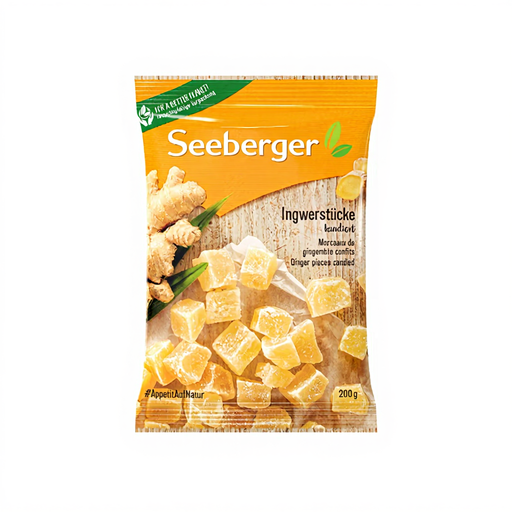
Seeberger candied ginger pieces, 200 g
These candied pieces are a different kind of product from simply dried fruit, and make a sweet, spicy snack.
Compare the sugar, fat and ingredients on the pack, and check the allergen information too.
View at Joybuy
Frequently asked questions
Is dried fruit with no added sugar also low in fat?
No. The claim ‘no added sugar’ doesn’t describe the fat content. REWE lists KoRo banana chips with no added sugar as containing 31 g of fat per 100 g; their ingredients list includes coconut oil. So, compare fat and sugar per 100 g, as well as the ingredients.
How can I spot fruit crisps that contain oil?
Check the fat per 100 g, then read the ingredients list for oil or fat. Lebensmittelklarheit explains that ingredients are listed in order of weight. Coconut oil appears in the ingredients list for the Seeberger banana chips described by REWE.
What should I look for when it comes to sulphur dioxide in fruit mixes?
Check the ingredients and allergen information on the specific pack if you need to avoid sulphur dioxide or sulphites. EDEKA lists sulphur dioxide in its Herzstücke mixed fruit; this doesn’t mean it’s found in every fruit mix.
How should I store opened dried fruit after visiting the market?
First, follow the storage instructions on your pack and keep any leftovers somewhere dry. EDEKA recommends storing dried prunes in a cool, dry place; a suitable closure helps keep an opened pack fresh.


