What should you look for when buying?
For a snack that’s lower in fat during the holidays, start by comparing the fat content per 100 g. Then make your choice based on sugar, energy, ingredients and the portion you plan to take with you.
| What to check |
Check when buying |
Especially important for |
| Fat content |
Compare the fat per 100 g on the specific pack; for mixes, check the ingredients too. |
If I choose dried fruit mainly based on its fat content, I need comparable information for each variety. For around 42 % of consumers, this is the main consideration when choosing. |
| Sugar, energy and portion size |
Check the sugar and energy per 100 g, along with the snack portion you plan to have. |
When I’m out and about, I want to work out how much I’ll eat from a pack rather than just looking for ‘no added sugar’. Around 33 % of consumers prioritise sugar, energy and portion size when choosing. |
| Ingredients and allergens |
Check the ingredients list and any information about sulphur dioxide or sulphites on each pack. |
If I need or want to avoid certain ingredients, the information on each product determines my choice. For around 25 % of consumers, this check takes priority. |
Dried fruit at Joybuy
These products give you a choice of classic dried fruit and pack sizes for a snack on the go. When choosing options lower in fat, the nutrition information and ingredients on each pack remain key.
 Image unavailable
Seeberger soft mango strips, 100 g
A pack of mango strips to take with you when you’re looking for a soft-textured snack.
Before choosing, compare the fat and sugar per 100 g. If you’re sensitive to sulphites, check the ingredients and allergen information carefully.
View at Joybuy
 Image unavailable
Seeberger dried apple rings, 80 g
An 80 g pack of apple rings if you’d like to take a smaller amount on your day out.
Check the sugar content as well as the fat. If you need to avoid sulphites, check the pack information.
View at Joybuy
 Image unavailable
Haoxiangni Grade A no-wash jujubes, 500 g
Dried jujubes for anyone who’d like to take this fruit along as a snack.
The 500 g pack is larger than the smaller packs in this selection. Think about your planned portion and compare the nutrition information per 100 g.
View at Joybuy
 Image unavailable
Changsi dried red jujubes, 500 g
Another jujube option if you’re looking for dried fruit for several snack portions.
The pack contains 500 g. To compare it with other varieties, check the fat, sugar and energy per 100 g.
View at Joybuy
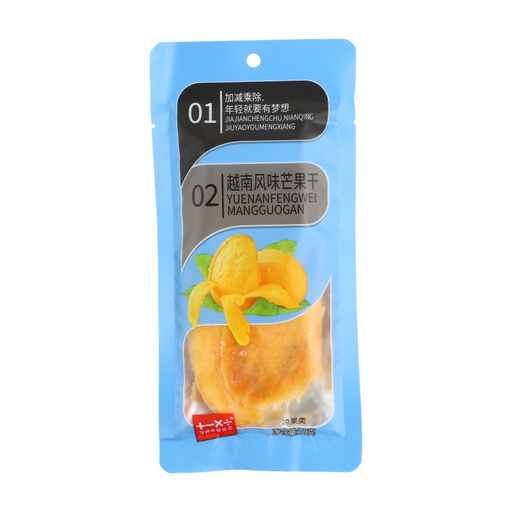 Image unavailable
Jia Jian Cheng Chu Vietnamese dried mango, 70 g
A 70 g pack of dried mango if you prefer a smaller pack for when you’re out and about.
Check the ingredients list for added sugar and the allergen information for sulphites. Take the rest of the nutrition information into account too.
View at Joybuy
Frequently asked questions
Is dried fruit always low in fat?
No. If you’re choosing dried fruit with fat in mind, check the fat content of the specific variety. EDEKA lists 0.3 g of fat per 100 g for one fruit mix, while ALDI SÜD lists 2.8 g per 100 g for one fig product. These individual figures don’t apply to all dried fruit.
Does ‘no added sugar’ also mean low in sugar?
No, this claim doesn’t tell you how much naturally occurring sugar the dried fruit contains. Removing water concentrates the sugar per 100 g, so check the nutrition information too.
When should I choose unsulphured dried fruit?
Unsulphured dried fruit is an option if you want to avoid added sulphur dioxide. Even so, check the ingredients and allergen information on every pack, especially if you’re sensitive to sulphites.
How should I store dried fruit for days out?
Follow the storage instructions on the specific pack and seal it well after opening. For dried plums, EDEKA recommends storing them in a cool, dry place at 7–10 °C and advises against refrigerating them because of the moisture; this specific temperature recommendation won’t necessarily apply to other varieties.
When are freeze-dried fruits a better choice than classic dried fruit?
Freeze-dried fruit may suit you if you’d prefer a crunchy rather than soft texture for a snack on the go. The Verbraucherzentrale notes that removing water also concentrates sugar and energy per 100 g in freeze-dried fruit. If you’re choosing a snack with lower fat in mind, compare the nutrition table for the specific product.


