Housemates keeping an eye on fat
If you want to limit added oil, compare the fat content per 100 g and check the ingredients. Making popcorn yourself lets you decide how much oil to use.


If you want to control how much oil you add and have suitable cookware, popcorn kernels are a good option for your house share. However, the fat content of the finished popcorn depends on how you prepare it. If you don’t have access to cooking facilities, ready-to-eat popcorn is more convenient; if you have a microwave, microwave popcorn is another option. Whichever type you choose, compare the nutrition information per 100 g and check the sugar and salt as well as the fat.
If you want to limit added oil, compare the fat content per 100 g and check the ingredients. Making popcorn yourself lets you decide how much oil to use.
If you don’t have a pan or other cooking equipment yet, ready-to-eat popcorn is ready to enjoy straight away. Microwave popcorn is only an option if you have a working microwave.
If you’re buying for several people, consider the pack size and how the popcorn is prepared. When choosing a variety, though, the nutrition information matters more than the size of the bag.
A good choice if: You have suitable cookware and want to control the amount of oil and seasoning yourself.
The trade-off: It takes time to prepare, and any extra ingredients will change the nutrition of the finished portion.
A good choice if: You don’t have access to cooking facilities yet.
The trade-off: The recipe is fixed. A lower fat content alone doesn’t tell you how much sugar or salt it contains.
A good choice if: You have a working microwave and want to make fresh popcorn.
The trade-off: The bag needs to be suitable for your appliance, and the set recipe gives you little control over the amount of oil.
| What to consider | What to check | Who it matters most to |
|---|---|---|
| Fat and ingredients | Compare fat per 100 g across similar products, and check the ingredients and sugar too. | If I want to limit added oil, I want to control how much I use or compare the information on the packs. For around 42% of consumers, keeping an eye on fat is the main priority. |
| Equipment you have | Before buying, check whether you can use a pan or microwave. If you’re buying microwave popcorn, follow the preparation instructions. | If there isn’t a suitable appliance when I move in, I need popcorn I can eat straight away. Being ready to enjoy is the main concern for around 33% of consumers. |
| Pack size | Match the net weight and any individual portions to the number of people you’re planning for. | For a film night with housemates, I want to make sure there’s enough without simply choosing the biggest pack. Portion planning is the priority for around 25% of consumers. |
The preparation method alone doesn’t determine the fat content. EDEKA lists 21 g of fat per 100 g for GUT&GÜNSTIG salted microwave popcorn.
Compare the nutrition information per 100 g and check the ingredients list rather than relying on the product name alone.
EDEKA lists 4,5 g of fat and 30 g of sugar per 100 g for GUT&GÜNSTIG sweet popcorn. So a lower fat content doesn’t tell you how much sugar it contains.
Check all the values that matter to you on the pack.
If you don’t have a working microwave, this type of popcorn won’t be suitable for moving-in day.
Before you shop, check that your house-share microwave works and follow the preparation instructions on the bag you choose.
EDEKA notes that online product information may differ from the details on the packaging.
When you buy, check the ingredients, nutrition information, allergens and net weight on the pack if they’re important to your decision.
REWE stocks popcorn kernels, microwave popcorn and ready-to-eat options. Its range lets you compare formats, but it doesn’t support a general claim about fat content.
EDEKA shows why it’s important to compare products individually: it lists 4,5 g of fat and 30 g of sugar per 100 g for sweet popcorn, and 21 g of fat and 2,5 g of salt per 100 g for salted microwave popcorn.
Lidl explains how to make popcorn from kernels with oil and seasoning. This gives you an idea of how to prepare popcorn, but it isn’t nutrition information for a finished popcorn product.
ALDI Nord stocks SUN SNACKS as its own-brand snack range and explains how Nutri-Score complements the nutrition table. When choosing popcorn, the information for each individual product is still what matters.
Lorenz describes Naturals Leicht fein gesalzen as potato crisps. Despite the association with lower-fat snacks, this product isn’t popcorn.
funny-frisch offers popchips as a popped snack. However, popchips aren’t popcorn products.
These popcorn kernels are a good fit if you want to control the amount of oil and seasoning yourself. When comparing them with ready-to-eat popcorn, bear in mind that adding ingredients will change the nutrition of the finished portion.
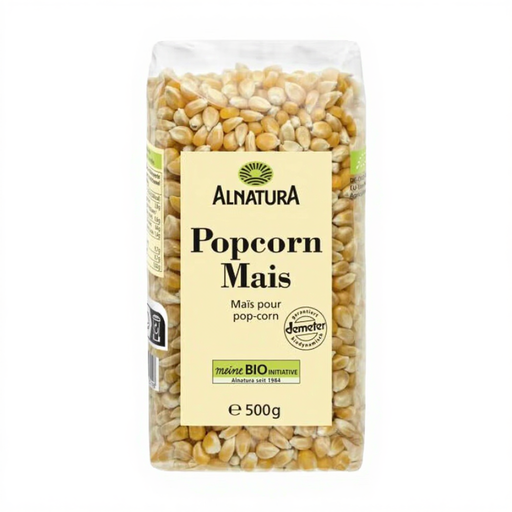 Image unavailable
Ideal for house-share evenings when you want to make your own popcorn and control how much oil you add. The pack contains 500 g of popcorn kernels; you’ll need suitable cookware to prepare them. The fat content of the finished portion also depends on any other ingredients you add.
Also compare the fat content per 100 g on the specific pack. The Verbraucherzentrale sets a limit of no more than 3 g of fat per 100 g for the claim “low fat” on solid foods; this doesn’t tell you about sugar, salt or ingredients.
No, the preparation method alone doesn’t tell you that. EDEKA lists 21 g of fat per 100 g for GUT&GÜNSTIG salted microwave popcorn, so check the information on the bag you’re thinking of buying.
When you use popcorn kernels, you decide how much oil to add during preparation. The fat content of the finished popcorn also depends on the oil, butter and any other ingredients you use; you’ll need suitable cookware too.
Compare fat and any other nutrition values that matter to you per 100 g, and read the ingredients list. Also check the net weight and allergens on the specific pack, especially if you’re buying for several housemates.
A claim like this about crisps or other snacks can’t be applied to popcorn. When comparing two popcorn products, check their fat content per 100 g and the basis for each claim.