If the fat content of your rice cake is a deciding factor for your office lunch, compare plain varieties using the nutritional information per 100 g rather than assuming that the type of product tells you how much fat it contains. ALDI SÜD lists 0.6 g of fat per 100 g for its salt variety, EDEKA lists 3.2 g for a plain variety and REWE lists 3.3 g for a sesame variety. Also consider what you plan to put on top, and check the gluten-free label, ingredients and allergen information on the specific pack where needed.
Who should take care when choosing?
Shoppers keeping an eye on fat content
You want to compare the fat content of the rice cakes and avoid treating a plain variety as equivalent to a coated one. If you’re having them as part of a packed lunch, you’ll also take the topping into account.
Shoppers checking for gluten and allergens
You’re looking for a variety specifically labelled gluten-free, or need to check the ingredients and information about sesame, milk or soya against your requirements.
Shoppers planning their office break
You’re deciding whether to top a plain or salted variety, or take a ready-to-eat crispy snack with you instead. Taste and salt content may also be important.
What should you look for when buying?
First decide whether you want a plain base for toppings or a ready-to-eat snack. Then compare the nutritional information for the specific variety and check the ingredients and allergen information.
| Criteria |
What to check when buying |
Who it matters to |
| Fat content |
Compare the fat per 100 g shown on the pack; for individual rice cakes, also consider the portion size. The European Commission sets the threshold for a ‘low fat’ claim on solid foods at no more than 3 g of fat per 100 g. |
If the fat content of the rice cake is my priority, I want to compare varieties on the same basis. This is the top priority for around 42% of shoppers. |
| Gluten and allergens |
Where needed, check the gluten-free label on the specific variety, along with the ingredients and any precautionary allergen information. REWE’s organic sesame variety contains sesame; REWE also lists possible traces of milk and soya. |
I need to be sure that the specific pack meets my requirements for gluten and other allergens. This is the top priority for around 33% of shoppers. |
| Variety and toppings |
Distinguish between plain rice cakes and coated snacks; check the salt content of salted varieties and consider the toppings if you’re having them as part of a packed lunch. |
Do I want a rice cake as a base for toppings, or would I rather take a ready-to-eat snack? This practical decision is the main consideration for around 25% of shoppers. |
Common mistakes when buying rice cakes
-
Assuming all rice cakes are ‘low fat’
The name alone tells you little about the fat content: ALDI SÜD lists 0.6 g of fat per 100 g for its salted variety, EDEKA lists 3.2 g for its plain variety and REWE lists 3.3 g for its sesame variety. According to the European Commission, the threshold for a ‘low fat’ nutrition claim on solid foods is no more than 3 g per 100 g.
Check the fat content on the pack you want to buy. The threshold for a nutrition claim doesn’t replace checking the nutritional value of your lunch as a whole.
-
Assuming rice cakes always contain gluten
This isn’t true of all rice cakes: REWE labels its organic sesame rice cake as gluten-free, as does Kallo for its Lightly Salted variety. However, the other ingredients and precautionary allergen information still need to suit the specific variety.
If you need a gluten-free variety, check the label on the pack. If you have relevant allergies, also check the ingredients and information about possible traces.
-
Checking the rice cake but not the toppings
The nutritional information for a plain rice cake doesn’t describe the whole lunch once you’ve added toppings. A sweet coating is also part of the snack variety in question, so its nutritional values shouldn’t be confused with those of a plain rice cake.
Decide whether you want to add toppings to a rice cake or eat a ready-to-eat snack, and include your chosen ingredients in your comparison.
-
Relying on rice cakes as your only snack option
The Federal Institute for Risk Assessment points out that rice cakes can contain relatively high levels of inorganic arsenic.
Mix things up by choosing other grain-based or snack options for your office lunch, rather than relying exclusively on rice cakes.
Brands and product ranges to consider
EDEKA Bio
EDEKA describes its organic plain rice cakes as an unsalted rice variety in a 135-g pack.
- EDEKA lists rice as the ingredient, along with 3.2 g of fat and 0.01 g of salt per 100 g.
- The fat content is above the 3 g per 100 g threshold the European Commission sets for a ‘low fat’ claim on solid foods. Always check the information on the pack you buy.
REWE Bio
REWE sells an organic sesame rice cake in a 100-g pack that is labelled gluten-free.
- For this sesame variety, REWE lists 3.3 g of fat and 0.01 g of salt per 100 g.
- Sesame is an ingredient; REWE also lists possible traces of milk and soya. The gluten-free label applies to this specific variety.
GUT BIO / ALDI SÜD
ALDI SÜD describes GUT BIO organic rice cakes with salt in a 135-g pack.
- For the product described, ALDI SÜD lists 0.6 g of fat per 100 g.
- ALDI SÜD says that it uses different suppliers, so nutritional information may vary. Be sure to check the details on the specific pack.
ALDI Nord / BISCOTTO
Under the BISCOTTO brand, ALDI Nord describes coated rice cakes with milk chocolate, yoghurt or dark chocolate.
- These varieties could suit you if you’d prefer a sweet snack to a plain rice cake.
- For a fat-content comparison with plain rice cakes, check the nutritional information for the specific coated variety you choose.
Kallo
Kallo describes Lightly Salted as a wholegrain rice cake and labels the variety gluten-free.
- According to Kallo, Lightly Salted contains 2.8 g of fat and 0.3 g of salt per 100 g.
- Kallo lists possible traces of milk, sesame and soya. Product information alone doesn’t tell you which shops stock this variety.
Joybuy products for your office break
This section focuses on a sweet, crispy snack for your office break. If you’re looking for a plain rice cake to use as a base for toppings, bear in mind that it’s different from a ready-to-eat snack.
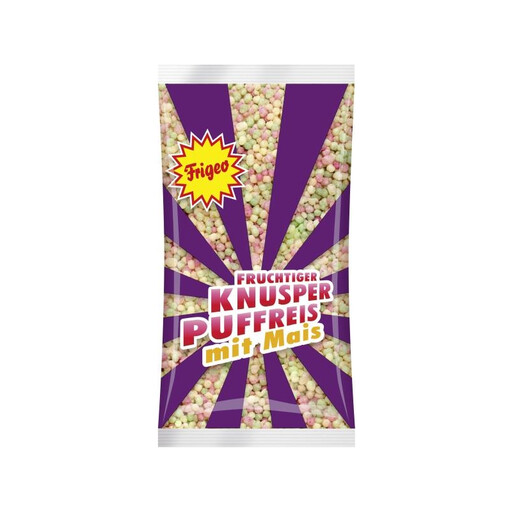 Image unavailable
Frigeo Knusper Pufetti Crispy Rice Cakes, 80 g
An option if you’re looking for a ready-to-eat crispy snack to take to the office, rather than a plain rice cake to add toppings to. If you’re keeping an eye on fat, compare the nutritional information per 100 g on the specific pack. For the sweet variety, check the sugar content too.
View at Joybuy
Frequently asked questions
Do rice cakes always contain gluten?
No, you can’t assume that all rice cakes contain gluten: REWE labels its organic sesame variety as gluten-free, as does Kallo for its Lightly Salted variety. If you need foods labelled gluten-free, check the specific pack, including the ingredients and allergen information.
What does ‘low fat’ mean for rice cakes?
The European Commission sets the threshold for a ‘low fat’ nutrition claim on solid foods at no more than 3 g of fat per 100 g. ALDI SÜD lists 0.6 g per 100 g for its salted variety, while the plain and sesame varieties listed by EDEKA and REWE are above this, at 3.2 g and 3.3 g respectively. Always compare the information on the specific pack.
Should I eat rice cakes as my only snack option every day?
Include other snack options in your office-break plans too. The Federal Institute for Risk Assessment points out that rice products such as rice cakes can contain relatively high levels of inorganic arsenic; a low fat content doesn’t tell you anything about this.
Why is the information on the pack more important than the product page?
The information on the pack is what matters for the specific variety you actually buy. ALDI SÜD notes that different suppliers may mean different nutritional values for its GUT BIO rice cakes with salt; EDEKA also recommends checking the information on the packaging.


