People with specific allergen avoidance requirements
The ingredients in the specific variety and the significance of any precautionary allergen labelling will determine whether a bar is suitable for you at all.


If you have a food allergy, checking the specific ingredients and any precautionary allergen labelling relevant to you should come before comparing fat content. Then compare only bars that meet your avoidance requirements, using the fat content per 100 g. Labels such as vegan, gluten-free or no added sugar do not tell you whether a product contains other allergens.
The ingredients in the specific variety and the significance of any precautionary allergen labelling will determine whether a bar is suitable for you at all.
You want to compare fat content, but only between bars that meet your personal avoidance requirements.
You pay attention to the recipe and the type of bar. Ingredients such as peanuts, oats, sesame or other nuts, as well as any precautionary allergen labelling, still need to fit your individual requirements.
First, check the current packaging to see which varieties meet your allergen avoidance requirements. Only then is it worth comparing the nutritional values per 100 g.
| Criteria | What to check when buying | Who it matters most to |
|---|---|---|
| Allergens and traces | Read the ingredients list, highlighted allergens and any relevant precautionary allergen labelling on the current packaging. | If I have to strictly avoid certain ingredients, suitability takes priority over all nutritional values. Around 42% of consumers put this allergen check first. |
| Fat content | Compare fat in g per 100 g across bars that are suitable after checking for allergens. | I want to find a lower-fat option among the varieties that suit me. This is the top priority for around 33% of consumers. |
| Recipe and format | For fruit and oat bars, check the specific variety for peanuts, nuts, oats and seeds. | I’m looking for a fruit or oat option for everyday use, with a recipe that meets my avoidance requirements. This is a priority for around 17% of consumers. |
| Dietary preferences | Consider claims such as vegan, gluten-free or lactose-free alongside the ingredients and precautionary allergen labelling. | As well as managing my allergy, I want to follow a particular diet without overlooking the other ingredients. This is the main additional selection criterion for around 8% of consumers. |
The fat content doesn’t tell you whether a bar contains allergens that matter to you or carries precautionary allergen labelling.
First rule out varieties that don’t meet your avoidance requirements, then compare their fat content per 100 g.
According to dm-drogerie markt, a foodloose peanut bar described as gluten-free and lactose-free contains peanut butter and carries precautionary allergen labelling for other ingredients, including nuts, sesame and soya.
For every variety, check the full ingredients list and any precautionary allergen labelling relevant to you.
A sesame bar contains sesame; depending on the variety, ingredients such as milk, soya or peanuts may also be important in other bars.
Check the specific variety rather than relying on the brand, type of bar or front of the packaging alone.
Product information in a shop can differ from the details on the packaging you buy, as EDEKA explains on its product page for the sesame crisp bar.
Use online information to shortlist products, then check the labelling on the pack you actually buy before eating it.
The sesame crisp bar is a good example of why you should check the recipe and fat content for each variety.
MAX BALANCE offers protein bars, among other products; check the information for each variety separately.
The range includes date bars, including a peanut variety for children.
KoRo offers raw and fruit bars made with dates, among other products.
Seitenbacher offers several types of bar, including muesli, fruit, oat and protein bars.
This selection includes oat and protein bars. Compare their fat content only after checking the ingredients and any precautionary allergen labelling relevant to you for each variety.
 No image available
An oat and peanut option to compare for fat content, provided it meets your allergen avoidance requirements.
The product name states that the pack contains 12 bars, each weighing 50 g. If you avoid peanuts or oats, or need to avoid possible traces of nuts or milk, check the current packaging carefully.
 No image available
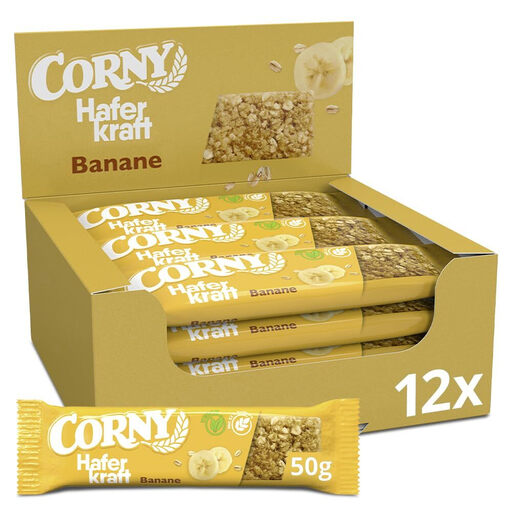
A banana and oat option for anyone looking to compare fruit and oat bars after checking for allergens.
The product name states that the pack contains 12 bars, each weighing 50 g. Check the current packaging carefully for oats and any precautionary allergen labelling for nuts, peanuts and milk.
 No image available
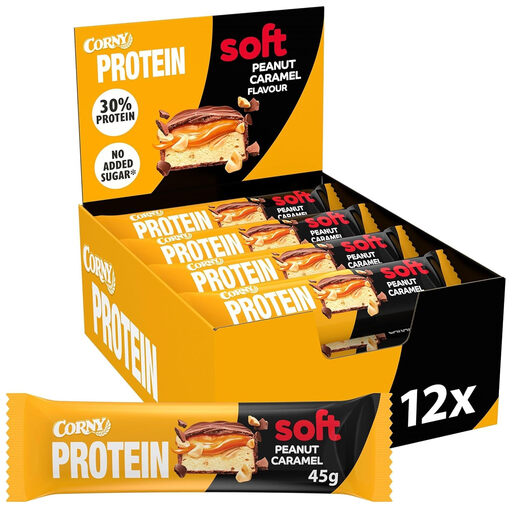
A protein bar to compare with other types of bar, if its ingredients meet your avoidance requirements.
The product name states that the pack contains 12 bars, each weighing 45 g. Check the current packaging carefully for peanuts, milk, soya and barley, as well as possible traces of nuts and egg.
Online information can help you shortlist products, but you should check it against the labelling on the pack you actually buy. Look at the ingredients list, highlighted allergens and any precautionary allergen labelling relevant to you.
No. The absence of precautionary allergen labelling isn’t a general guarantee that a bar is free from cross-contact. How you take such information into account will depend on the personal medical advice you’ve been given for your allergy.
Once you’ve ruled out varieties that don’t meet your allergen avoidance requirements, compare the fat content in g per 100 g. Fat per serving alone isn’t a like-for-like comparison when the bars are different sizes.
No, these claims don’t rule out other ingredients that may matter to you. For example, a foodloose peanut bar described by dm-drogerie markt as gluten-free contains peanut butter. So check the full packaging information for each specific variety.