If you’re looking to reduce sugar at afternoon coffee time, compare the stated sugar content per 100 g rather than relying only on the wording on the front of the pack. Brandt branded rusks with no added sugar, listed by REWE, contain 4.5 g of sugar per 100 g; Brandt states that its classic branded rusks contain 14 g, while EDEKA lists 12.4 g per 100 g for GUT&GÜNSTIG rusks. If someone has difficulty chewing or swallowing, the consistency recommended for them takes priority over the sugar content.
Who is this choice important for?
Coffee drinkers watching their sugar intake
If you’re looking for rusks with a lower stated sugar content, compare the nutritional information per 100 g. The figures published by REWE, Brandt and EDEKA show differences between the varieties mentioned.
Older people with specific texture requirements
If someone has difficulty chewing or swallowing, sugar content isn’t the only consideration. The German Nutrition Society notes that food needs to be adapted in texture for people with chewing and swallowing difficulties.
Households checking ingredients and allergens
If certain ingredients need to be avoided, check the information on the specific pack. The Brandt branded rusks with no added sugar listed by REWE contain wheat and soya; you should also check the may-contain information.
What should you look for when buying?
If needed, first check that the texture and ingredients are suitable for the person who’ll be eating them. Then compare the sugar content using the same measure, and only then choose an available pack for afternoon coffee.
| What matters |
What to check when buying |
Who it matters most to |
| Sugar content |
Compare the ‘of which sugars’ figure per 100 g; don’t assume that ‘no added sugar’ means ‘sugar-free’. |
I want to choose rusks with a lower stated sugar content to have with my coffee, rather than relying only on the wording on the pack. For around 50% of consumers, this comparison comes first. |
| Texture and ingredients |
If someone has difficulty chewing or swallowing, follow the texture recommended for them; check the ingredients, allergens and may-contain information on the pack. |
If the person concerned has difficulty chewing or swallowing dry, crumbly foods, or needs to avoid certain ingredients, personal suitability matters more than a lower sugar content. This check comes first for around 30% of consumers. |
| Availability locally |
Check which variety is actually available in your local shop or online, and compare its nutritional information with that of other packs. |
For coffee together, I’m looking for familiar rusks that I can actually buy, without assuming that one variety is the same as another just because both are available. Around 20% of consumers prioritise this. |
Which mistakes can you avoid?
-
Assuming ‘no added sugar’ means ‘sugar-free’
Rusks can contain sugar even when no sugar has been added: REWE lists 4.5 g of sugar per 100 g for Brandt branded rusks with no added sugar. The Verbraucherzentrale explains that the claim ‘no added sugar’ relates to added sugars and ingredients with a sweetening effect.
Also check the sugar content per 100 g in the nutritional information.
-
Focusing only on sugar content if someone has difficulty chewing or swallowing
Dry, crumbly rusks aren’t automatically suitable for people with these difficulties. The German Nutrition Society stresses that food texture should be adapted for existing chewing or swallowing difficulties.
If difficulties are known or suspected, check which texture has been professionally recommended for the person concerned.
-
Overlooking allergens in a no-added-sugar variety
Brandt branded rusks with no added sugar, listed by REWE, contain wheat and soya; they may also contain traces of egg, milk and sesame. The sugar information doesn’t tell you whether these ingredients need to be avoided.
Check the ingredients and allergen information on the specific pack against the individual’s requirements.
-
Assuming that a product listing means it’s available in store
EDEKA notes that the listed GUT&GÜNSTIG rusks may not be available in every shop.
Check whether the variety you want is available at your local shop or for delivery to your address, and read the information on the pack you receive.
Brands to help you choose
Brandt
Brandt offers classic branded rusks and a no-added-sugar variety listed by REWE, making it possible to compare their nutritional information.
- REWE states that Brandt branded rusks with no added sugar contain 4.5 g of sugar per 100 g; Brandt states that its classic variety contains 14 g per 100 g.
- The no-added-sugar variety listed by REWE contains wheat and soya; it may also contain traces of egg, milk and sesame. This information doesn’t automatically apply to other Brandt varieties.
Holle
The organic spelt baby rusks listed by REWE are a no-added-sugar variety, but they aren’t specifically marketed for older people.
- For the listed pack, REWE states that it contains 1.8 g of sugar per 100 g.
- The product is described as baby rusks for babies from 6 months. This doesn’t mean they’re suitable for people with chewing or swallowing difficulties; spelt is also a type of wheat.
GUT&GÜNSTIG
The rusks listed by EDEKA provide a classic option for comparing nutritional information.
- EDEKA states that they contain 12.4 g of sugar per 100 g, allowing you to compare them using the same measure.
- The listed variety contains wheat, barley and milk ingredients. EDEKA notes that it may not be available in every shop; always refer to the information on the pack.
Rusks available at Joybuy
This selection features wholemeal rusks labelled ‘no added sugar’ for afternoon coffee. Check the nutritional information and ingredients on the specific pack to see whether the sugar content and ingredients meet your needs.
 No image available
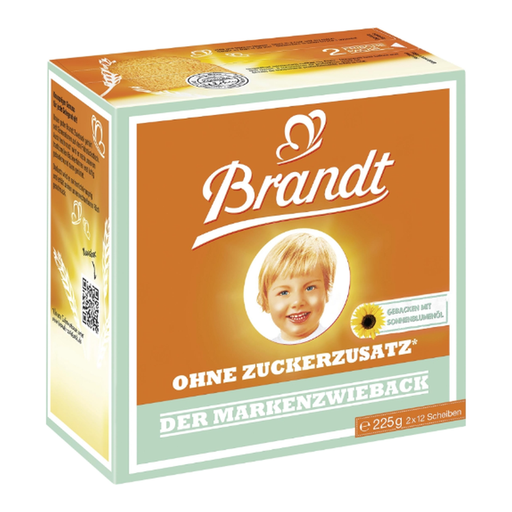
Brandt wholemeal rusks with no added sugar, 225 g
An option for afternoon coffee if you’re looking for rusks with no added sugar. The title describes the 225 g variety as wholemeal rusks; compare the sugar content per 100 g and check the ingredients and allergens on the specific pack. If someone has difficulty chewing or swallowing, the texture recommended for them is particularly important.
View at Joybuy
Frequently asked questions
Are rusks with no added sugar sugar-free?
No. ‘No added sugar’ doesn’t mean ‘sugar-free’. The Verbraucherzentrale explains that no sugar or ingredients with a sweetening effect have been added; however, Brandt branded rusks with no added sugar, listed by REWE, still contain 4.5 g of sugar per 100 g.
Is the claim ‘less sugar’ enough to compare products?
No. Compare the stated sugar content using the same measure. Lebensmittelklarheit explains that a claim such as ‘30% less sugar’ refers to sugar, not total carbohydrates. So check the other nutritional information and ingredients per 100 g too.
Are dry rusks suitable for someone with swallowing difficulties?
Not necessarily: food texture needs to be suitable for the person concerned if they have difficulty chewing or swallowing. The German Nutrition Society recommends adapting the texture accordingly. If difficulties are known or suspected, check the individual professional guidance before choosing rusks.
Why should I check the ingredients of a familiar brand again?
Because you need to check the information for the specific variety you’ve chosen against the person’s individual dietary requirements. Brandt branded rusks with no added sugar, listed by REWE, contain wheat and soya and may contain traces of egg, milk and sesame; check the labelling on the specific pack.


