People comparing sugar levels
You want to serve a wafer with your coffee and pay more attention to the stated sugar per portion than to a relative reduction claim.


When choosing a wafer to serve with coffee and cake, don’t rely solely on claims such as “less sugar” or “no added sugar”. Compare the “of which sugars” figure per 100 g and for the portion you plan to serve. A lower sugar figure may come with sweeteners. If a particular recipe or type of biscuit matters more to you, check the ingredients, allergens and portion size separately.
You want to serve a wafer with your coffee and pay more attention to the stated sugar per portion than to a relative reduction claim.
You may be looking for a vegan or gluten-free recipe, or need to avoid certain allergens. That’s why it’s important to check the labelling on the specific product.
You’re looking for a biscuit with a flavour, wafer style and piece size that suit your coffee gathering, without losing sight of its sugar content.
First, compare the sugar content for the same weight and for your portion. Then check that the recipe and type of biscuit are right for your coffee gathering.
| Criteria | What to check | Who it matters to |
|---|---|---|
| Sugar content | Compare “of which sugars” per 100 g and for the portion you plan to serve; for “less sugar” claims, check the product used for comparison. | When serving something with coffee, I want to know how much sugar is in my wafer, rather than relying solely on a “less sugar” claim. Around 50% of consumers put the absolute sugar content first. |
| Ingredients and suitability | Check the ingredients, highlighted allergens and may-contain warnings; if the product contains polyols, follow the consumption advice. | If I need a particular recipe or have to avoid certain ingredients, its suitability matters more to me than the lowest sugar content. For around 30% of consumers, ingredients and suitability come first. |
| Type of biscuit and portion | Check that the flavour, filling and weight per piece suit how you plan to serve it. | I want to serve a wafer that suits the flavour preferences and portion size of my coffee gathering, even if another option contains less sugar. The type of biscuit and portion size take priority for around 20% of consumers. |
A reduction claim refers to a comparison product. Manner says its Vollkorn Schnitten contain 30% less sugar than its classic wafer, but they still contain 26 g of sugar per 100 g.
As well as checking what the product is compared with, read the “of which sugars” figure per 100 g and work it out for the portion you plan to serve.
A wafer with no added sugar can still contain naturally occurring sugars. Frankonia makes this clear on its Hazelnut Crisp Waffles, which contain 3.0 g of sugar per 100 g.
Use the nutrition information to compare amounts, rather than relying solely on the claim on the front of the pack.
Damhert lists maltitol, while Frankonia lists polyols in its respective wafer recipes. Both manufacturers warn that excessive consumption may have a laxative effect.
Check the ingredients and consumption advice, especially if you’ll be serving several pieces or want to avoid polyols.
Recipes vary: Manner describes its Vollkorn Schnitten as vegan and lactose-free, while NICK'S gluten-free chocolate wafer contains milk and soya, according to the manufacturer.
Check the ingredients list, allergen labelling and possible traces on the specific pack.
These coffee wafers are filled biscuits, ideal for a small portion with your coffee.
Hazelnut Crisp Waffles are aimed at people looking for a vegan hazelnut wafer with no added sugar.
Vollkorn Schnitten are wafer biscuits for people who value a wholegrain recipe.
The chocolate wafer is an option for people specifically looking for a gluten-free recipe with no added sugar.
Here you’ll find a hazelnut wafer with no added sugar for a sweet treat with coffee, and a plain spelt wafer that you can serve in other ways. These two types of wafer serve different purposes, so be sure to compare the portion you’ll actually eat.
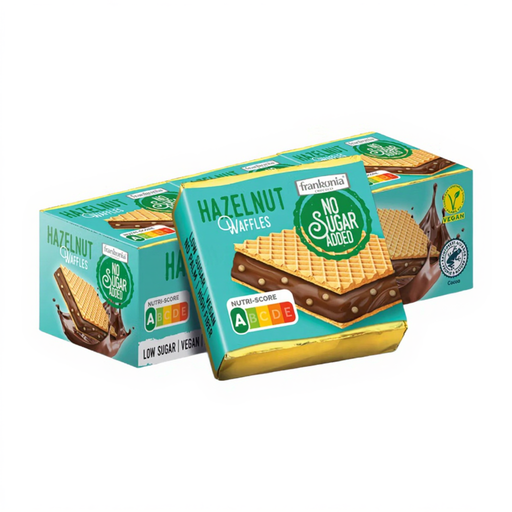 Image unavailable
A sweet hazelnut wafer to enjoy with coffee if you’re looking for a product with no added sugar.
The pack contains 9 × 19.4 g. “No added sugar” doesn’t mean sugar-free: check the current nutrition information, ingredients and allergens on the pack for your portion.
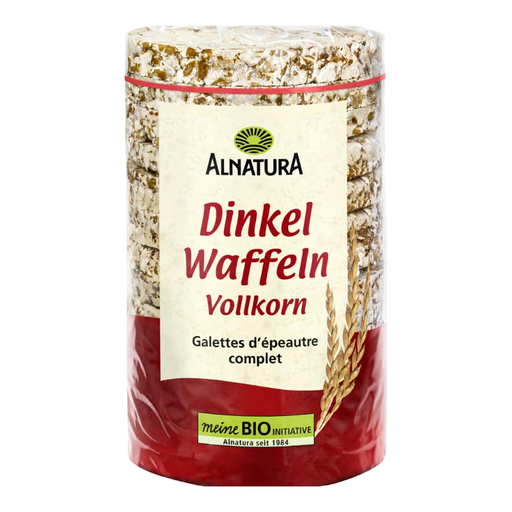 Image unavailable
A plain spelt wafer to enjoy with coffee if you’d like to choose your own toppings and portion size.
The 100-g pack is not the same as a sweet, filled coffee wafer. Compare the nutrition information per 100 g and check the labelling for spelt and gluten when choosing.
No, it can contain naturally occurring sugars. Frankonia makes this clear for its Hazelnut Crisp Waffles, which contain 3.0 g of sugar per 100 g; for any other product, check its own nutrition table.
It describes a comparison, not the amount of sugar in your portion. Manner compares its Vollkorn Schnitten with its classic wafer and states that the wholegrain version contains 26 g of sugar per 100 g. So check the “of which sugars” figure and what the product is compared with.
Follow the consumption advice for the specific product. Damhert and Frankonia warn that excessive consumption of the wafers mentioned may have a laxative effect. Check the ingredients on the pack, especially if you want to avoid polyols.
Check the ingredients, highlighted allergens and may-contain warnings on the specific pack. Information varies between products: Damhert lists wheat, milk and egg for its coffee wafers; Frankonia lists wheat and nuts, among other ingredients, for its Hazelnut Crisp Waffles; and NICK'S lists milk and soya for its chocolate wafer.