For a ready-to-eat study snack, packaged waffles may be an option if you can check the sugar per 100 g, ingredients and portion size for the specific product. A claim on the packaging alone does not prove that it contains less sugar. If you want to choose the ingredients and added sugar yourself, you can make waffles from a recipe, but you’ll need time and a waffle iron.
Which option matters to you?
Students comparing pack information
You want a ready-to-eat waffle snack, so you compare the ‘of which sugars’ value per 100 g, the ingredients and how much you actually plan to eat. A claim such as ‘less sweet’ is no substitute for this information.
Students who want to bake their own
You can bake before your study session and want to choose the sweetener and toppings yourself. REWE and EDEKA publish different waffle recipes; the information applies to each recipe as described, not to packaged products.
Shoppers who care about the type of sweetener
You want to know before buying whether sweeteners are used, and which ones. The ingredients list is more useful for this than a general claim about taste. The amount you eat also matters with sugar substitutes, as explained by the Verbraucherzentrale.
What should you compare?
First decide whether you need a snack that’s ready to eat or whether you can set aside time to bake. Then compare sugar information and ingredients within the product or recipe type you’ve chosen; a biscuit isn’t a waffle.
| Criteria |
What to check when buying |
Who it matters most to |
| Sugar and portion size |
Compare the ‘of which sugars’ value per 100 g for similar waffles and take into account the weight of the portion you’ll actually eat. |
If I want to compare the sugar content of different waffles, taste alone isn’t enough. Around 39% of consumers put comparing sugar and portion size first. |
| Snack that’s ready to eat |
Check whether they’re ready-to-eat waffles or wafer slices, and how the pack is divided up. |
During a study break, I want something I can eat without baking and the freedom to choose how much. For around 23% of consumers, having a snack ready to eat is the main priority. |
| Ingredients and sweeteners |
Check the ingredients list for the type of sweetener and any declared sweeteners; check allergens against the specific pack. |
Before choosing waffles made with a different sweetener, I want to know what’s in them and whether they’re right for me. Ingredient transparency is the main priority for around 23% of consumers. |
| Recipe you can customise |
Plan the ingredients, toppings, preparation time and waffle iron you’ll need in advance; check the nutritional values for the portion size. |
If I have time before my study session, I’d rather decide for myself what goes into and on my waffles. Around 15% of consumers prioritise having this control. |
Common buying misconceptions
-
Assuming ‘less sweet’ means less sugar
The taste and phrases such as ‘sweetness from fruit’ don’t tell you how much sugar a waffle contains. According to the Verbraucherzentrale, honey, syrups and fruit juice concentrate can also contribute to the sugar content.
For packaged waffles, compare the ‘of which sugars’ value per 100 g, then read the ingredients list.
-
Assuming a sugar reduction means a better overall nutritional profile
A lower sugar value than a comparison product doesn’t, by itself, tell you the absolute sugar content or the other nutritional values. The Verbraucherzentrale makes this point too.
As well as the sugar content, check the other nutritional information and your portion size.
-
Reading ‘low fat’ as a claim about sugar
Fat and sugar are different things. According to its ingredients list, Lidl’s low-fat waffle recipe contains both sugar and vanilla sugar.
To check the sugar content, look at the recipe ingredients or, for packaged products, the nutrition table rather than assuming it from the name.
-
Choosing sugar substitutes without considering the amount
The Verbraucherzentrale distinguishes sugar substitutes from sweeteners and points out that large amounts of sugar substitutes can have a laxative effect.
For products made with these sweeteners, read the ingredients and labelling information, and consider how much you plan to eat.
Brands and recipe sources to consider
These examples help you distinguish between recipes, packaged waffles and biscuits; they aren’t a selection of commercially available reduced-sugar products.
REWE
REWE publishes recipes including spelt waffles described as ‘low in sugar’ and banana waffles with no refined sugar.
- The recipe ingredients and portion information let you see how to prepare the waffles.
- A recipe description isn’t a sugar value for packaged REWE waffles. You’ll also need to consider apple purée, agave syrup or bananas in the recipe you choose.
EDEKA
EDEKA describes a quark waffle recipe as having no added sugar and publishes its ingredients and nutritional values per portion.
- The recipe gives you a practical starting point for planning ingredients and portion sizes for homemade waffles.
- It contains milk, eggs and quark. The recipe information doesn’t describe a ready-to-eat packaged waffle.
Lidl
Lidl provides waffle recipes and information to help you understand the nutritional values of recipes.
- For recipes, Lidl’s NährwertKompass takes account of sugar, fibre, fat and protein, among other things.
- The published low-fat waffle recipe contains sugar and vanilla sugar; its name doesn’t prove that it has less sugar.
ALDI SÜD / BISCOTTO
ALDI SÜD publishes nutritional information for packaged BISCOTTO butter waffles and Neapolitan wafer slices.
- ALDI SÜD lists 41.1 g of sugar per 100 g for its butter waffles and 43 g per 100 g for its Neapolitan wafer slices. Both values can be compared using the same reference amount.
- These products aren’t labelled as reduced-sugar options. ALDI SÜD also notes that the nutritional values of its butter waffles may vary depending on the supplier.
Lotus Biscoff
The Lotus Biscoff product relevant here is a biscuit, which can also be used as an ingredient in waffle recipes.
- Lotus Biscoff publishes ingredients and nutritional information for the biscuit.
- A biscuit isn’t a waffle, so it shouldn’t be included as if it were a similar waffle when comparing sugar content.
Waffles at Joybuy
If you don’t want to bake, a packaged spelt waffle is listed here. To find out whether it has less sugar than a particular alternative, you’ll need to compare the information for both specific products.
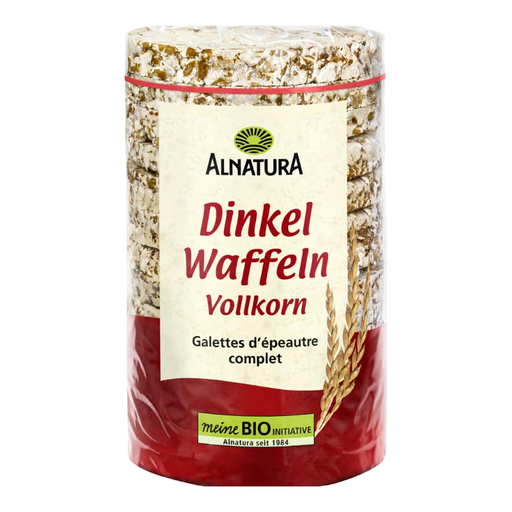 Image unavailable
Alnatura Organic Plain Spelt Waffles, 100 g
These ready-to-eat spelt waffles may suit you if you don’t want to bake during a study break. The product name specifies a 100 g pack; for your comparison, the nutritional information on the specific pack and your portion size are what matter. The product name alone doesn’t show that they contain less sugar than another waffle.
View at Joybuy
Frequently asked questions
How do I compare the sugar in two packaged waffles?
First compare the ‘of which sugars’ value per 100 g for the same type of product, then consider how much you’d eat of each. The ingredients list can also help you understand which sweeteners have been used; according to the Verbraucherzentrale, these can include syrups, honey and fruit juice concentrate.
Do ‘no added sugar’, ‘sugar-free’ and ‘less sweet’ mean the same thing?
No. The Verbraucherzentrale explains that ‘sugar-free’ and ‘no added sugar’ are defined claims, while ‘less sweet’ doesn’t give you a reliable indication of the sugar content. So check both the nutritional information and ingredients list for the specific waffle.
Are waffles made with sweeteners automatically the better choice?
No. The type of sweetener alone doesn’t determine whether a waffle is right for you. The Verbraucherzentrale distinguishes sweeteners from sugar substitutes and notes that the latter may have a laxative effect in large amounts. Read the ingredients and consider the labelling in relation to how much you plan to eat.
Can you use the DGE recommendation to set a sugar limit for each waffle?
No. The recommendation from the German Nutrition Society relates to free sugars in your overall diet, not a limit for an individual waffle. When choosing between waffles, the directly comparable figures are the sugar content per 100 g and the portion you actually eat.


