Parents keeping an eye on sugar
You’re looking for an easy after-school snack and want to understand its sugar content, rather than relying solely on a claim on the front of the pack.


For an after-school snack, the choice comes down to whether you prioritise the lowest possible sugar content, a ready-to-eat wafer snack or control over a homemade recipe. Manner says its wholegrain wafer slices contain moderately less sugar than the original; Damhert lists a lower sugar content for its coffee wafers, but they contain polyols. Compare the nutrition information per 100 g and check the ingredients, portion size and allergens on the pack you buy.
You’re looking for an easy after-school snack and want to understand its sugar content, rather than relying solely on a claim on the front of the pack.
For you, the key thing is which allergens are listed on the pack you buy. As well as cereals containing gluten, other ingredients may also be relevant, depending on the recipe.
You’re looking for a low sugar content, but also want to know whether the waffles contain sweeteners or polyols, and what guidance there is on how much to eat.
A good choice if: Sugar content per 100 g is your priority and sweeteners are suitable for your household. Damhert lists 3.0 g of sugar per 100 g for its coffee wafers.
The trade-off: Damhert says they contain 29.0 g of polyols per 100 g. The manufacturer warns that excessive consumption may have a laxative effect.
A good choice if: You’re looking for a packaged wafer snack and want to take wholegrains and fibre into account. Manner lists 26 g of sugar per 100 g for its wholegrain wafer slices.
The trade-off: Manner says they contain 30% less sugar than its classic wafer slices. This does not mean they are “low sugar”.
A good choice if: You can choose the recipe and ingredients yourself, and prepare the waffles in advance.
The trade-off: Baking takes time, and the sugar and nutrition content depend on the recipe, portion size and toppings.
| Criteria | What to check when buying | Who it matters most to |
|---|---|---|
| Sugar content and marketing claims | Sugar per 100 g and which product a claimed reduction is being compared with. | If I’m specifically looking to buy less sugar, I need a comparable figure, not just a claim on the front of the pack. Around 36% of shoppers put clear, easy-to-understand sugar information first. |
| Ingredients and allergens | The highlighted allergens and ingredients on the pack you’re buying. | If we need to avoid certain ingredients, the pack’s labelling determines whether the waffles are suitable for us. For around 29% of shoppers, this check comes first. |
| Portion size and preparation | Pack size, planned portion and whether the waffles are ready to eat or need baking. | After school, I want a snack that’s ready without baking, or I’ll make time to prepare it. Around 21% of shoppers give the most weight to this kind of everyday convenience. |
| Sweeteners and energy | Ingredients list, guidance on how much to eat and energy per 100 g. | A low sugar content alone isn’t enough if I also want to consider the type of sweetener and how much we plan to eat. Around 14% of shoppers put these considerations first. |
A sugar reduction is a comparison with a similar food. Lebensmittelklarheit explains that “low sugar” means no more than 5 g of sugar per 100 g for solid foods.
Check the sugar content per 100 g, then separately check which product the advertised reduction is being compared with.
Damhert lists 29.0 g of polyols per 100 g for its Less Sugar coffee wafers and warns that excessive consumption may have a laxative effect.
Check the ingredients list and guidance on how much to eat before choosing this recipe for your snack.
Waffles can contain different ingredients. According to the Verbraucherzentrale, the main allergens in packaged foods must be highlighted in the ingredients list.
Read the labelling on every pack you buy, particularly if the recipe may have changed.
Information per 100 g doesn’t automatically reflect how much you’ll eat as a snack. A sugar reduction claim doesn’t specify a portion size either.
Compare the nutrition information per 100 g, then take the amount you actually plan to eat into account.
The wholegrain wafer slices are an option for shoppers who want to combine a sugar reduction compared with the classic product with wholegrains.
The Less Sugar coffee wafers may suit shoppers looking for a low sugar content who also want to check the other ingredients.
These Neapolitan wafer slices provide a specific point of comparison with a classic wafer snack; they are not a confirmed reduced-sugar option.
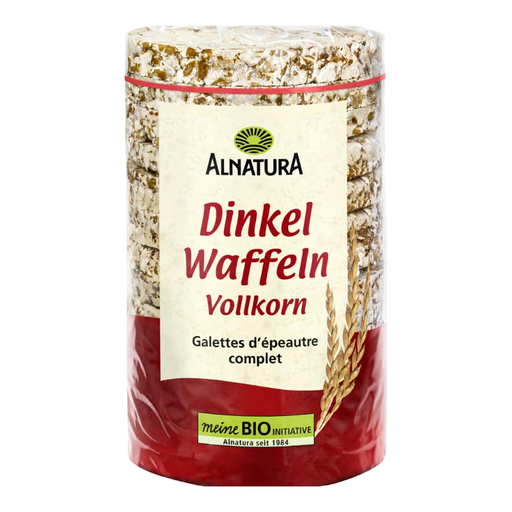
This selection focuses on a ready-to-eat spelt waffle. It’s different from the filled wafer slices and coffee wafers in the brand comparison; if you’re choosing by sugar content, check the information on its own pack.
 No image available
A ready-to-eat spelt waffle for an after-school snack. If you’re choosing by sugar content or need to avoid gluten, check the nutrition and ingredients information on the pack you buy.
No, these are different claims. Lebensmittelklarheit explains that a reduced-sugar claim requires at least 30% less sugar than a comparable food of the same type; “low sugar” means no more than 5 g of sugar per 100 g for solid foods.
Not necessarily compared with every other waffle. According to Lebensmittelklarheit, a comparative reduced-sugar claim can only be used if the product has no more calories than the comparison product. To help you choose, also check the energy per 100 g and the ingredients.
Check the highlighted allergens in the ingredients list on the pack you’re buying, particularly cereals containing gluten, such as wheat. The Verbraucherzentrale points out that the main allergens in packaged foods must be clearly highlighted in the ingredients list.
Follow the storage instructions on the pack and reseal opened waffles tightly to protect them from moisture. If you need to avoid allergens, store different snacks separately and label them clearly.