If you compare sugar levels
You want to keep total sugar per 100 g as low as possible. In that case, the nutrition table matters more than a claim such as ‘no added sugar’. For example, Seitenbacher’s low-sugar muesli lists 1 g of sugar per 100 g.


If keeping total sugar low is important to you, compare the ‘of which sugars’ figure per 100 g for muesli and granola, rather than relying on the wording on the front of the pack. ‘No added sugar’ doesn’t mean the same as ‘sugar-free’: Kölln’s fruit muesli contains dried fruit, and the REWE product page lists 22 g of sugar per 100 g. For a holiday rental, also consider the ingredients, allergens and what you’ll need to make breakfast.
You want to keep total sugar per 100 g as low as possible. In that case, the nutrition table matters more than a claim such as ‘no added sugar’. For example, Seitenbacher’s low-sugar muesli lists 1 g of sugar per 100 g.
Dried fruit matters more to you than having a particularly low sugar content. Kölln explicitly points out that its fruit and oat muesli with no added sugar is not sugar-free.
You want to know before you shop whether you’ll have water, milk or yoghurt, and enough time to prepare breakfast. Bircher muesli and porridge require different steps from crunchy muesli.
First decide whether total sugar, fruity flavour or a particular preparation method matters most to you. Then check the ingredients and allergen information on the specific pack.
A good choice if: Your main aim is to reduce the stated sugar content per 100 g. Seitenbacher lists 1 g per 100 g for its low-sugar muesli.
The trade-off: According to Seitenbacher, this blend contains no fruit and includes ingredients such as spelt, barley malt and almonds.
A good choice if: You want dried fruit and are happy with a higher total sugar content. Kölln says its fruit and oat muesli contains 40% dried fruit.
The trade-off: The REWE product page lists 22 g of sugar per 100 g for this Kölln product.
A good choice if: You want a crunchy blend with no added sugar and are happy to have sweeteners in it.
The trade-off: The ingredients list published by REWE for Dr. Oetker Vitalis Knusper Pur includes maltitol syrup. ‘No added sugar’ doesn’t mean ‘unsweetened’.
A good choice if: You want to make an oat-based breakfast with milk or water. EDEKA24 gives a preparation time of five minutes for EDEKA Herzstücke Haferhimmel Porridge Beeren.
The trade-off: Porridge isn’t crunchy granola, and the product page also lists possible traces of allergens.
| Criterion | What to check when buying | Who it matters to |
|---|---|---|
| Total sugars | Compare ‘of which sugars’ per 100 g, and only compare figures based on the same product quantity. | If I want to keep sugar levels low, I don’t want to rely on the front of the pack alone. Around 33% of consumers would consider total sugars a priority when buying. |
| Fruity flavour | Look at the dried fruit content and sugar per 100 g together. | I want dried fruit in my holiday breakfast, even if it contributes to the stated sugar content. For around 27% of consumers, this would be their top priority. |
| Ingredients and allergens | Read the full ingredients list, including highlighted allergens and any trace warnings on the pack. | If I need to avoid certain ingredients or don’t want sweeteners, the recipe will determine what I choose. This would be the most important criterion for around 20% of consumers. |
| Preparation | Check the required liquid, preparation time and storage instructions against the facilities at your accommodation. | If the kitchen isn’t well equipped, I want to be able to make breakfast with the ingredients I have to hand. Around 20% of consumers would focus above all on how easy the breakfast is to prepare. |
Dried fruit can contribute to the total sugar content. The REWE product page lists 22 g of sugar per 100 g for Kölln fruit and oat muesli with no added sugar.
Compare the ‘of which sugars’ figure, then decide whether the blend suits your needs.
Lebensmittelklarheit points out that products with no added sugar can still contain sweeteners. The ingredients list published by REWE for Dr. Oetker Vitalis Knusper Pur includes maltitol syrup.
Read the ingredients list if you’re looking for a recipe with no sweeteners.
The mueslis covered here include ingredients such as gluten-containing cereals and nuts; some product pages also mention other possible traces. Information for a different variety won’t necessarily apply to your pack.
If you have allergies, check the labelling on the specific product before buying it for your trip.
Alnatura recommends making its Bircher muesli with milk or yoghurt and leaving it to soak. The porridge described by EDEKA24, on the other hand, is made with milk or water.
Before you buy, check what liquid, utensils and preparation time will be available in your holiday rental.
Its low-sugar muesli is a useful point of comparison if the stated sugar content matters to you.
Its fruit and oat muesli with no added sugar highlights the choice between fruit content and total sugar.
Its Bircher muesli is an option if you’re looking for muesli that needs soaking rather than a crunchy blend.
The retailer’s product pages can help you compare specific mueslis and their nutritional information.
EDEKA Herzstücke Haferhimmel Porridge Beeren is an alternative if making breakfast with milk or water matters more to you than crunchiness.
The manufacturer describes muesli as a product category for custom blends.
These mueslis offer different ways to enjoy breakfast in a holiday rental, including crunchy options and a fruity blend. Pay particular attention to total sugar, and check for sweeteners and allergens on your chosen pack if needed.
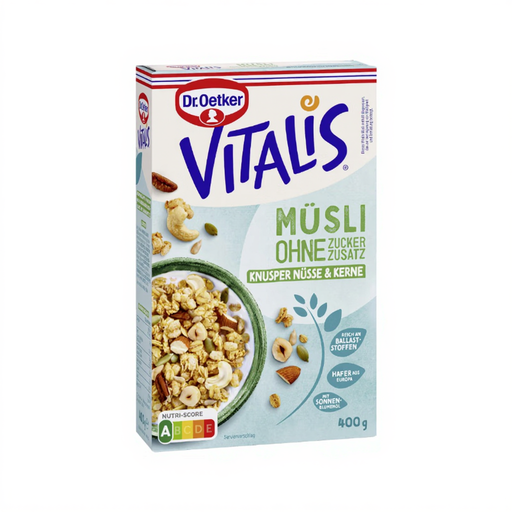 No image available
A crunchy muesli option if you’re looking for a blend with no added sugar and are happy to have sweeteners in it.
Before buying, check the ingredients and allergen information on the specific pack, especially if you want to avoid nuts or sweeteners.
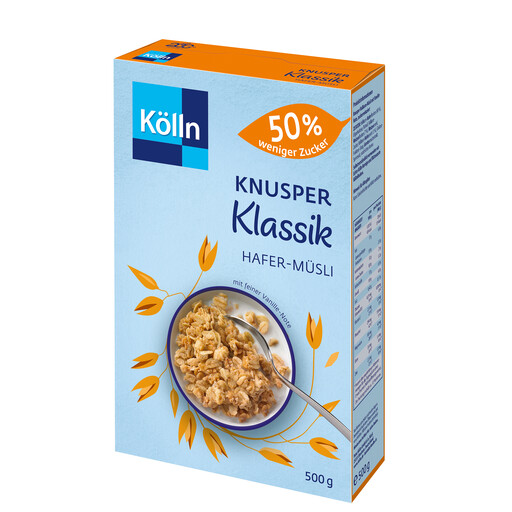 No image available
A crunchy oat muesli option if you want to compare different sugar levels.
The ‘50% Less Sugar’ name doesn’t replace checking the ‘of which sugars’ figure per 100 g. Check the ingredients list too if you want to avoid added sugar.
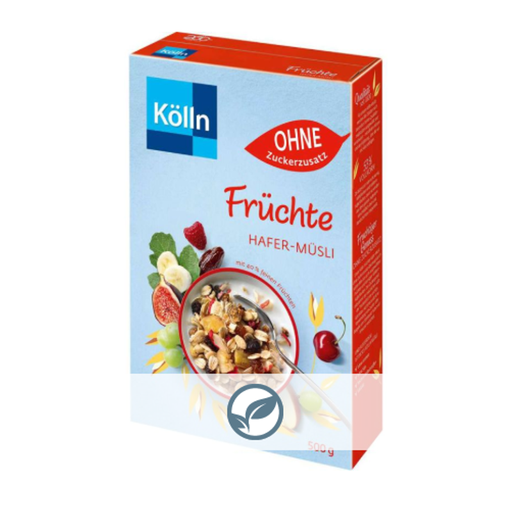 No image available
A fruity muesli option for anyone who cares more about the ‘no added sugar’ claim than having the lowest possible total sugar content.
The product name states that it contains 50% fruit and comes in a 500 g pack. Compare the sugar content per 100 g, and check the labelling on the specific pack if you have allergies.
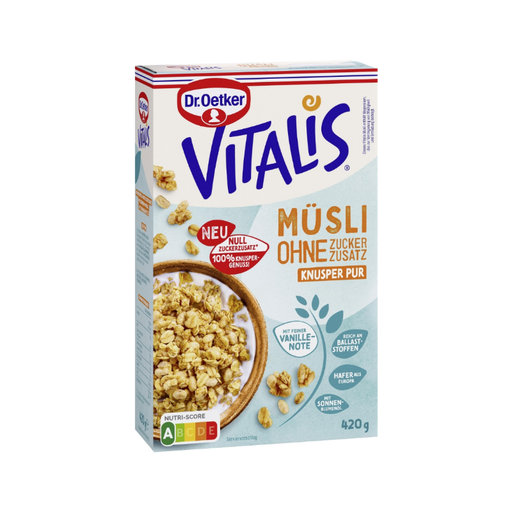 No image available
A crunchy muesli option if you’re specifically looking for a blend labelled ‘no added sugar’.
To assess the total sugar content, check the ‘of which sugars’ figure per 100 g on the pack. Check the ingredients and allergens too.
No. ‘No added sugar’ doesn’t rule out naturally occurring sugars from ingredients such as dried fruit. If total sugar matters to you, compare the ‘of which sugars’ figure per 100 g. The REWE product page lists 22 g per 100 g for Kölln fruit and oat muesli with no added sugar.
Yes. Lebensmittelklarheit points out that this is possible. For example, maltitol syrup is listed in the ingredients published by REWE for Dr. Oetker Vitalis Knusper Pur. If you want to avoid sweeteners, check the ingredients for the variety you’re considering.
Choose according to the liquid required and the preparation time. Alnatura recommends making its Bircher muesli with milk or yoghurt and leaving it to soak; EDEKA24 says Haferhimmel Porridge Beeren can be made with milk or water.
No. The fact that a blend contains oats doesn’t automatically mean it’s suitable for a gluten-free diet. If you have coeliac disease, follow the labelling on the specific product and your personal medical advice. The Federal Centre for Nutrition also highlights differences in how individuals tolerate oats.
Before choosing a product for your trip, read the ingredients list and the allergen and trace warnings on the specific pack. The Verbraucherzentrale identifies ingredients and allergens as important labelling information; details for another variety from the same brand aren’t a substitute for checking your pack.