
Lieferung heute & morgen

Qualitätsgarantie

Willkommens-Angebote freischalten: KOSTENLOSE Lieferung | Bis zu 80 % RABATT | Kostenlose 30-Tage-JoyPlus-Testphase
App herunterladen
A STAEDTLER Lumocolor marker can be used on glass, plastic, metal, overhead transparencies, paper and presentation surfaces. However, the brand itself is not the only deciding factor. The combination of ink type, line width, nib shape and surface is what matters. If you choose based solely on colour or price, you could easily end up with a marker that is unsuitable for its intended purpose.
As a Joybuy Product Recommendation Officer, I organise the available product information according to practical buying criteria. This makes it easier to decide when a STAEDTLER permanent marker is the right choice and when an erasable marker would be more suitable.
A Lumocolor permanent marker is designed for long-lasting labelling on many smooth materials. However, depending on the surface and cleaning agent used, the ink may be partially removable from glass, metal or plastic. On absorbent materials such as paper, card, untreated wood or textiles, it may soak in permanently.
For labelling that may need to be corrected later, a STAEDTLER Non-Permanent Marker with water-soluble ink is more suitable.
A marker with a chisel nib can produce several line widths, but it requires controlled handling. For small labels or tables, a fine nib of around 0.4 to 0.6 mm is usually easier to read. A chisel nib measuring 1.0 to 2.5 mm is more suitable for headings, labels and clearly visible markings.
According to the product information, some Lumocolor models feature DRY-SAFE technology and can remain uncapped for several days. Nevertheless, the cap should be fitted firmly after every use to ensure the most consistent ink flow possible. Many variants are also recommended to be stored horizontally.
The type of ink determines how much work will be required later:
Before using a marker on sensitive materials, test it on an inconspicuous area. Permanent inks may require alcohol-based or specialist cleaning products to remove them from smooth surfaces.
The letter designations provide an initial guide:
If you often switch between fine and bold lines, consider a duo marker with two nibs.
A universal marker for glass and plastic should not be selected based on its colour designation alone. Also check:
According to the product description, several of the Lumocolor models listed are compatible with a STAEDTLER refill station. The 487 17 refill station is often specified for permanent variants, while 487 15 is listed for non-permanent models. Check compatibility against the relevant product model before buying.
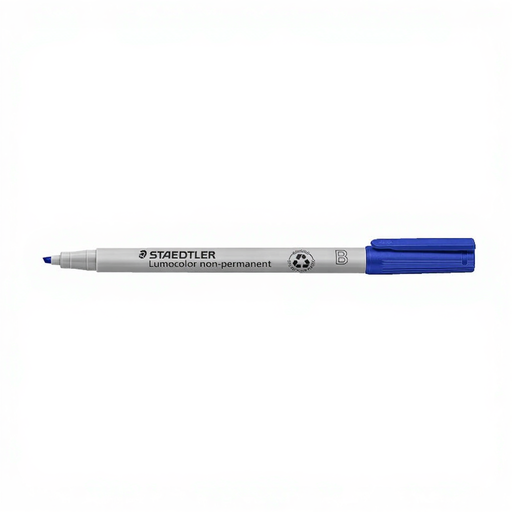
Why this product suits this profile: The blue, water-soluble universal ink and chisel nib are suitable for presentations, transparencies and temporary markings on smooth surfaces.
The non-permanent ink reduces the risk of permanently marking a presentation transparency or smooth writing surface. The marking can be removed with a damp cloth.
Variable line width of approximately 1.0 to 2.5 mm; according to the product information, refillable with the STAEDTLER 487 15 refill station.
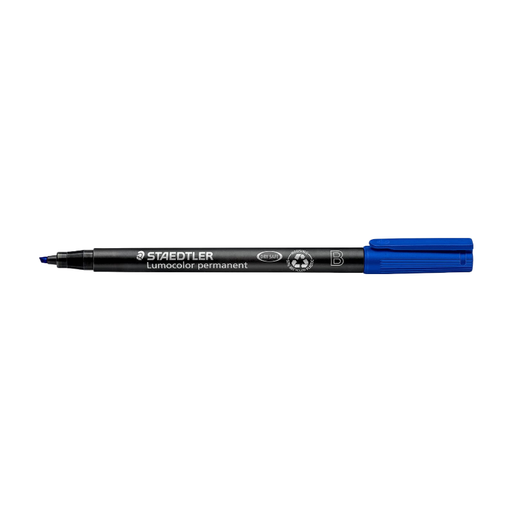
Why this product suits this profile: The broad chisel nib supports both finer labelling and highly visible markings in the office, storage area, workshop and home.
The stated line widths of approximately 1.0 and 2.5 mm make the choice more transparent than with markers without precise width information. The permanent ink is designed for lasting markings.
Waterproof and smudge-resistant ink according to the product description; refillable with the 487 17 refill station.
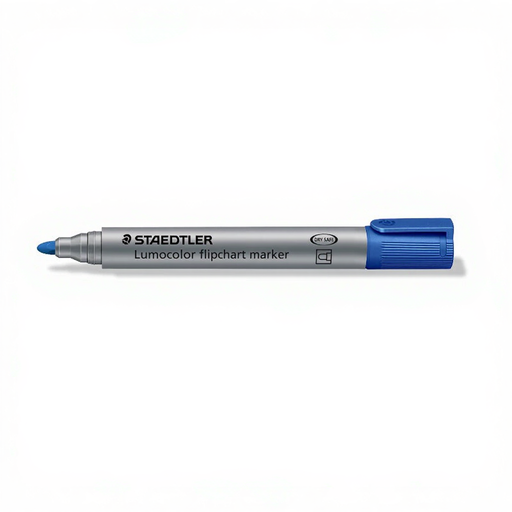
Why this product suits this profile: This marker is designed for flipchart paper, presentations, brainstorming and creative working sessions.
The round 2 mm nib is designed for clear, legible lines on paper and avoids the mistake of choosing a permanent marker for flipchart content that changes frequently.
Water-based, low-odour ink; according to the product information, it is refillable and designed for regular use.
We have put together a complete, regularly updated list of products that fully meet these strict selection criteria and the safety regulations applicable in the EU.
For consistent writing, make sure the nib is fully supplied with ink without applying excessive pressure. With a chisel nib, the line width changes depending on the angle to the surface. When writing on glass or plastic, the surface should be clean, dry and free from grease.
Also remember:
Both permanent and non-permanent Lumocolor variants may be suitable for glass. Choose permanent for longer-lasting labels and non-permanent if you want to remove the writing with a damp cloth. The surface should be cleaned beforehand, and the marker should be tested on an inconspicuous area.
Its lifespan depends on the line width, amount of writing, storage conditions and whether the cap is replaced. According to the product information, a refillable marker can continue to be used with the appropriate STAEDTLER refill station. The cap should still be closed after every use to prevent the ink from evaporating unnecessarily.
That depends on the product range. A waterproof marker generally belongs to the permanent range and is designed for durable markings. An erasable marker usually belongs to the non-permanent range and can be removed from many smooth, non-absorbent surfaces with a damp cloth. On paper and other porous materials, both types of ink may behave differently than they do on glass or plastic.