
Lieferung heute & morgen

Qualitätsgarantie

Willkommens-Angebote freischalten: KOSTENLOSE Lieferung | Bis zu 80 % RABATT | Kostenlose 30-Tage-JoyPlus-Testphase
App herunterladen
Temporary labelling seems straightforward at first: pick up the marker, write, then remove it later with a damp cloth. In practice, however, an unsuitable nib, the wrong surface or caps that are left off for too long can quickly lead to uneven lines and dried-out ink. Teachers, office workers, presenters, students and creative users should therefore take a closer look at the technical features.
The STAEDTLER Lumocolor non-permanent Marker is designed as a water-soluble universal pen for smooth, non-absorbent surfaces. Depending on the version, different colours and line widths are available. This makes the range suitable as an erasable marker, OHP marker or film marker for glass, plastic and overhead projector transparencies.
Water-soluble ink can be removed from smooth, non-porous surfaces with a damp cloth. On paper, textiles, untreated wood or wallpaper, however, the ink may soak in and leave stains. If you are looking for a marker for glass and plastic, you should first check whether the specific surface is genuinely smooth and water-repellent.
A fine marker with a 0.4 mm tip is suitable for small labels, diagrams and detailed notes. For general labelling, a 0.6 mm marker is often easier to read. A chisel tip with 1.0 or 2.5 mm can cover both narrower and wider lines. Choosing based on colour alone can therefore lead to an impractical result.
According to the product information, the ink dries quickly on the surface. This reduces smudging while writing. As it is water-soluble ink, moisture can loosen the writing again later. This is desirable for temporary markings, but should be taken into account on glass surfaces that are touched frequently or on materials used for transport.
The designations in the Lumocolor range provide a practical guide:
A synthetic fibre tip can help provide controlled lines during normal use. For very small writing, however, you should test the marker on the material you intend to use.
A water-soluble marker is not the same as a permanent marker. The Lumocolor non-permanent is intended for temporary markings on smooth surfaces. According to the product description, a soft, slightly damp cloth is all that is needed for removal. Before using it extensively for the first time, testing it on an inconspicuous area is recommended, particularly on coated plastics.
Several versions are compatible with the STAEDTLER Refill Station 487 15. This can extend the product’s usable life and reduce consumption of disposable markers. After each use, the cap should be replaced fully until it closes securely. Storing the marker horizontally or in the box provided can help keep the ink distribution at the tip even.
The advertised Airplane-safe function is also relevant for business travel. According to the product information, an automatic pressure-compensation system balances pressure differences during a flight and is intended to reduce ink leakage as a result. Before flying, it is still advisable to close the cap securely and transport the marker in a protective manner.
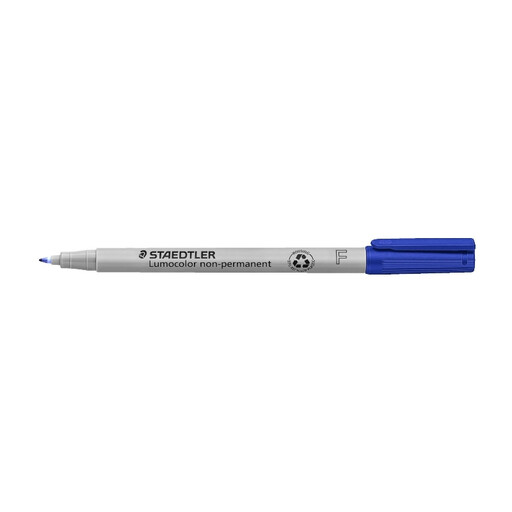
Why this product suits the profile: The fine fibre tip combines precise labelling with a line width that works well on films and plastic. Blue is a versatile choice for notes, teaching materials and planning sheets.
The stated line width prevents small labels from becoming illegible due to an overly broad tip. The ink is intended for wiping off with a damp cloth on smooth surfaces.
0,6 mm synthetic tip, water-soluble blue ink and refillable with Station 487 15.
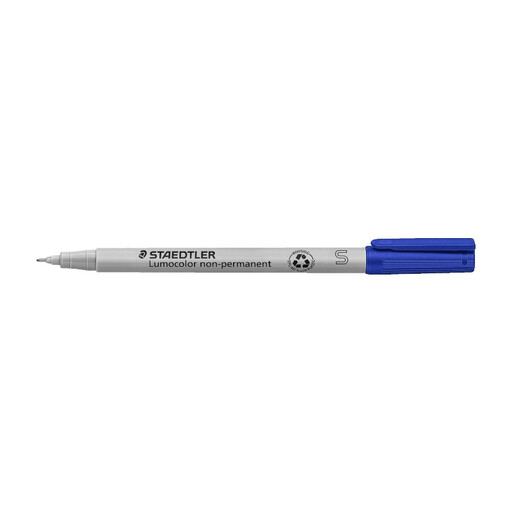
Why this product suits the profile: The superfine tip is designed for very small, controlled writing and detailed drawings. It is ideal for presenters and specialist users who want to work as precisely as possible in limited space.
The 0,4 mm tip reduces the risk of fine table lines or technical details closing up when written with a broad tip.
Superfine synthetic tip, water-soluble ink and automatic pressure stabilisation according to the product information.
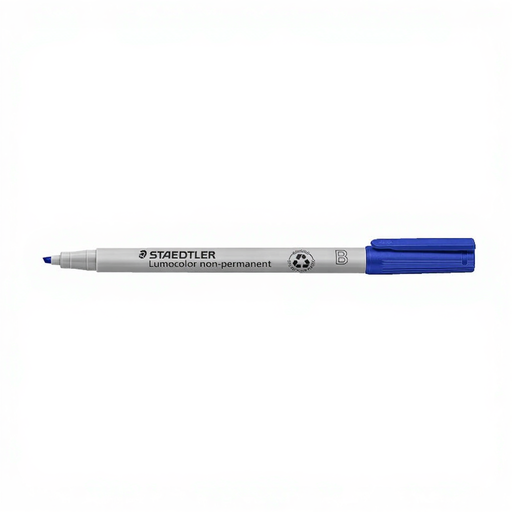
Why this product suits the profile: Depending on how it is held, the chisel tip produces either a narrower or broader line. This is practical for presentation films, teaching materials and changing labelling tasks.
The variable line width eliminates the need to buy several tip shapes for simple and more prominent markings.
1,0/2,5 mm chisel tip, refillable design and suitability for OHP transparencies and smooth surfaces.
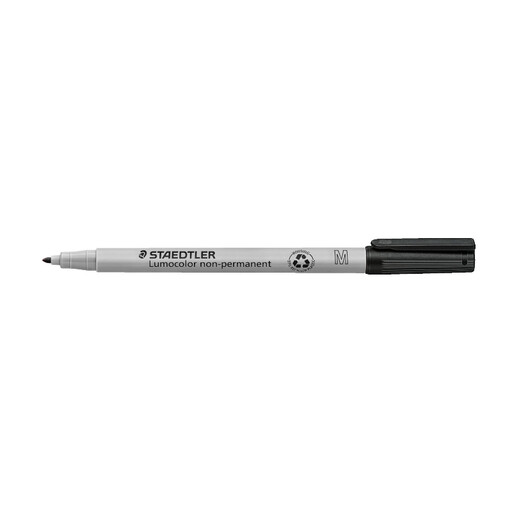
Why this product suits the profile: The medium black line is suitable for clear labelling on films, plastic and glass when a neutral colour is preferred.
The medium tip is more noticeable than a superfine marker while remaining narrower than a broad chisel tip.
Black 1,0 mm synthetic tip, water-soluble ink and refill option according to the product information.
We have put together a complete, regularly updated list of products that fully meet these strict selection criteria and the safety regulations applicable in the EU.
On smooth glass, the water-soluble ink can be removed with a damp cloth according to the product information. The specific glass coating should be tested before regular use. Results may vary on porous or damaged surfaces.
There is no single fixed service life. It depends on the line width, writing pressure, frequency of use and storage conditions. Refilling with Station 487 15 can extend the period of use. A tightly closed cap is essential to prevent the ink from drying out prematurely.
According to the product description, many versions feature an automatic pressure-compensation system and are labelled ‘Airplane-safe’. The marker should nevertheless be transported with the cap closed and protected as far as possible in your luggage.