
Lieferung heute & morgen

Qualitätsgarantie

Willkommens-Angebote freischalten: KOSTENLOSE Lieferung | Bis zu 80 % RABATT | Kostenlose 30-Tage-JoyPlus-Testphase
App herunterladen
A lunch box should reliably carry your meals to work, school, university or on your travels. In practice, though, some models disappoint after only a short time: the lid doesn’t close securely, the seals are difficult to clean or the compartments don’t suit what you eat each day. Terms such as ‘leakproof’, ‘bento’ and ‘microwave-safe’ are only useful when the technical conditions are clearly stated.
That’s why the Joybuy Product Recommendation Officer selection is based on clear, easy-to-check criteria. It’s not just about design and marketing promises: materials, closure, capacity, cleaning and intended use all matter.
A leakproof lunch box needs more than a lid that sits snugly on top. Look for:
For liquid foods such as soup, sauce or yoghurt, it’s also important to check whether the manufacturer explicitly says the lunch box is suitable for leakproof use. A product designed for dry foods shouldn’t be carried in a bag with liquids inside.
A lunch box with compartments or a bento lunch box can keep different foods separate. However, lots of small sections can reduce the usable capacity. A simple layout may be enough for a sandwich, fruit and a snack. If you want to carry rice, vegetables, a side dish and sauce, removable compartments or sections in different sizes can be more useful.
So don’t just compare the number of compartments. Check:
‘Microwave-safe’ doesn’t automatically mean you can heat the entire lunch box with the lid closed. With plastic boxes, you’ll often need to remove the lid or open a valve. Cutlery, seals and removable inserts may also have their own instructions.
For a dishwasher-safe lunch box, check whether all the parts can go in the dishwasher or just the container. Follow instructions such as ‘top rack only’, as high temperatures and powerful jets of water can deform seals.
A polypropylene lunch box is usually lightweight and, depending on the model, may be suitable for the microwave, freezer and dishwasher. If it’s relevant to your purchase, check that the material is labelled BPA-free. The product description should clearly state the temperature range.
A stainless steel lunch box made from 304 stainless steel is durable and often suitable for dry or pre-prepared meals. However, stainless steel containers aren’t automatically microwave-safe. If the model has a seal, check whether it can be removed and cleaned separately.
A thermal lunch box or insulated food container uses vacuum insulation and is designed for hot soups, stews or cold foods. These containers are usually taller and heavier than flat bento boxes. According to the product details for the models in question, some variants can help maintain food temperature for several hours. This doesn’t replace checking the actual storage conditions or how long the food will keep.
For a single meal, practical sizes are often between around 700 millilitres and 1.5 litres. A lunch box for an adult will often need more capacity than one for a child, but it should still fit in the bag you have.
Rectangular shapes make efficient use of space in a rucksack or briefcase. A tall food jar, on the other hand, is suitable for soups and liquid dishes but needs to be kept upright. If you prepare meals for several days at a time, you can use several smaller containers or a set of meal prep boxes.
A good closure should be easy to use but shouldn’t pop open accidentally. Removable compartments make cleaning easier. A lunch box with cutlery can be handy if the knife, fork and spoon fit securely in the lid or in a separate compartment.
Also check whether the box can dry completely after washing. Moisture trapped beneath a seal can encourage odours. Insulated containers often need to be hand-washed, particularly around the lid and seals.
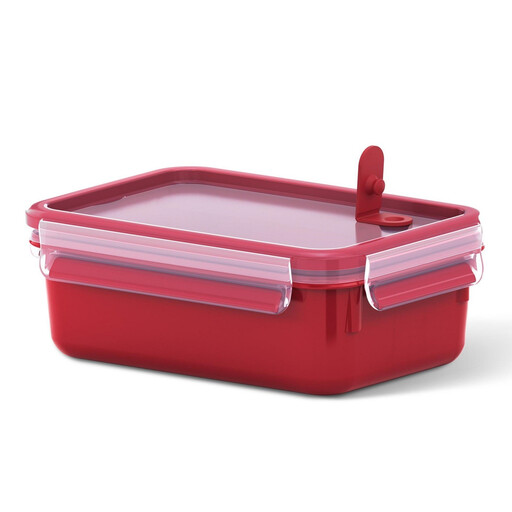
Why this product suits this profile: A compact 1-litre box for work, study and short journeys, with clear guidance on microwave, freezer and dishwasher use.
The click-lock system and stated leak resistance help reduce the risk of accidental spills. A valve is provided for microwave use.
1-litre capacity; microwave-, freezer- and dishwasher-safe according to the product details; BPA-free according to the stated EU 10/2011 test method.
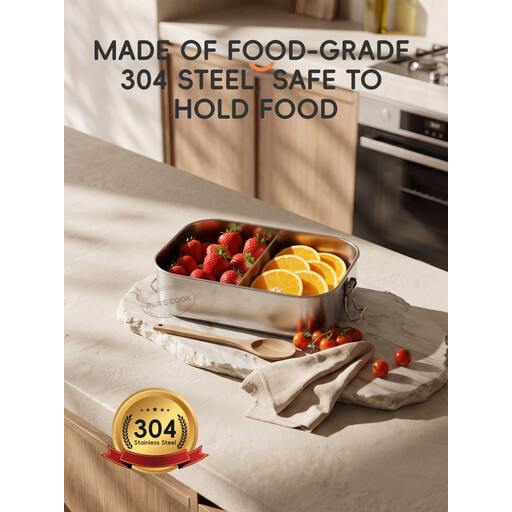
Why this product suits this profile: With two sections, this stainless steel container is a good choice for anyone who prefers a durable material and a clear separation between their main meal and snack.
The product details specify a removable silicone seal and locking clips. This makes it easier to check the closure and clean the seal separately.
304 stainless steel, two compartments and a stated capacity of 61.2 fl oz; dimensions: 18 × 15 × 6.7 cm.
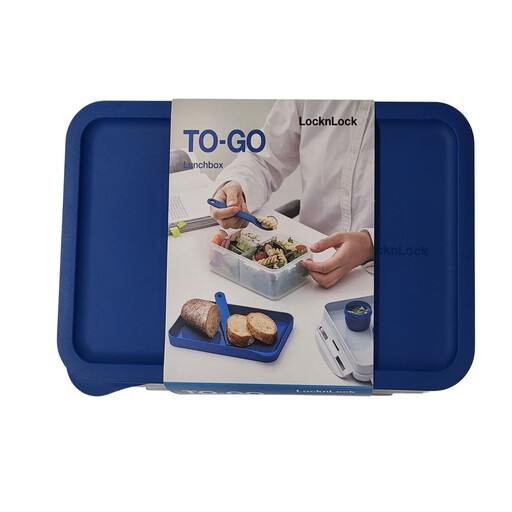
Why this product suits this profile: Three removable compartments, a sauce pot and a cutlery set make it suitable for varied meals at school, at work or on the go.
The compartments can be removed, so you can clean the spaces between them as well as the outer box. According to the product details, the four-sided closure is airtight and leakproof.
1-litre capacity, three compartments, cutlery and a sauce pot; according to the product details, suitable for the microwave without the lid, the freezer and the top rack of the dishwasher.
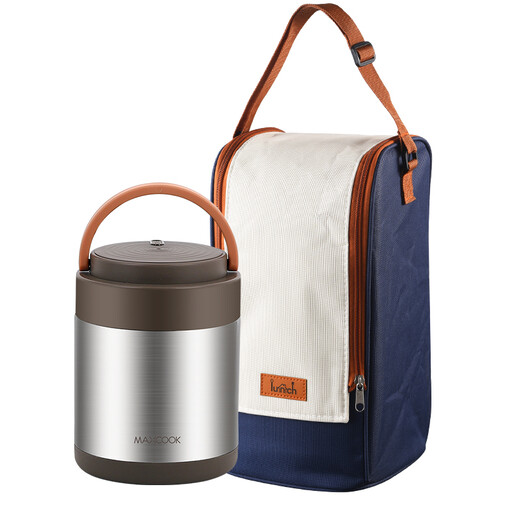
Why this product suits this profile: The wide opening and vacuum insulation make it suitable for soups, stews and hot meals on your commute or outdoor activities.
The product description says the lid closes tightly, while also advising you not to tip the container over. This makes it clear that it’s intended to be kept upright.
1.4-litre capacity, 304 stainless steel, vacuum insulation and a wide opening; according to the product details, it helps maintain the temperature for around 4 to 6 hours.
We’ve put together a complete, regularly updated list of products that meet these strict selection criteria and fully comply with the safety regulations in force in the EU.
For soups and sauces, you’ll need a container that’s specifically described as leakproof, with a seal that runs all the way around and a secure closure. For hot, liquid dishes, an insulated food jar may be more suitable than a flat bento lunch box. Keep it upright during transport, in line with the manufacturer’s instructions.
Its lifespan depends on the material, how often you use it and how well you care for it. Regularly check the seal, lid, clips and container for cracks, warping or other damage. If you can see any damage, stop using the lunch box. Some models have seals that can be cleaned separately or replaced; always follow the manufacturer’s instructions for your model.
No. Stainless steel containers aren’t designed for microwave use. With plastic models, check the instructions for the lid, valve and temperature limits. Only heat a microwave-safe lunch box as directed in the product instructions, often without the lid or with the valve open.