
Lieferung heute & morgen

Qualitätsgarantie

Willkommens-Angebote freischalten: KOSTENLOSE Lieferung | Bis zu 80 % RABATT | Kostenlose 30-Tage-JoyPlus-Testphase
App herunterladen
Whether you’re heading to the office, school, university or out for the day, a lunch box should keep your food secure, be easy to clean and suit your daily routine. In practice, disappointment often comes not from the price, but from unsuitable dimensions, unclear claims about leak resistance or limited microwave compatibility.
A leakproof lunch box can contain liquids during normal, upright transport. That doesn’t necessarily mean it will stay completely leakproof if it tips over in your rucksack. Key features to look for include:
A lunch box with compartments may also have different levels of leak resistance in each compartment. Removable inserts are handy, but any extra contact points need to be fitted correctly.
Many plastic containers are approved for reheating in the microwave, but only without the lid or with the vent open. Sealed containers can build up steam pressure. Take particular care with stainless steel: metal should only be used in a microwave if the appliance instructions explicitly allow it. Lids, seals and insulated bags should never go in the microwave.
A meal prep set with several food containers is useful for preparing meals and organising your fridge. But carrying several containers to work or school every day can mean extra weight and take up more space. Before buying, check:
A compact sandwich box is often enough for a sandwich and some fruit. A lunch box for work or school with a capacity of around 0.8 to 1.2 litres gives you more room for a main meal, a side and a snack. If you want to keep foods separate, you could choose a bento lunch box or a lunch box with compartments.
Fixed dividers stop food from shifting around, but can’t be adjusted. Removable containers offer more flexibility for meal prep. For larger quantities, food storage containers with a capacity of 1.8 or 3 litres are generally better suited to the fridge than to everyday use on the go.
The term “BPA-free lunch box” should refer to the plastic parts specified. Seals, lids and fastenings also need to be considered when it comes to cleaning.
A dishwasher-safe lunch box is handy for everyday use, although there may be restrictions such as “top rack only”. Removable silicone seals should be cleaned separately and dried thoroughly. For microwave and freezer use, specific guidance matters more than general marketing claims. Look out for instructions such as:
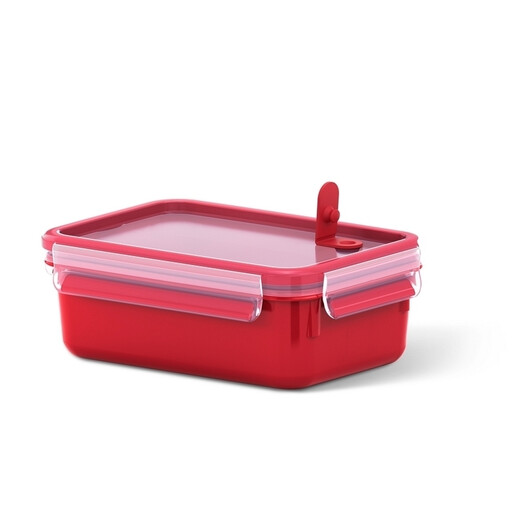
Why it’s a good fit: Its capacity is ideal for individual portions, snacks or leftovers at work or school. According to the product details, the container is BPA- and phthalate-free.
The manufacturer describes the lid as leakproof and says it has an integrated steam vent. Open the vent before reheating.
0.8 l capacity, with guidance for use in the microwave, freezer and dishwasher. Measurement markings make portioning easier.
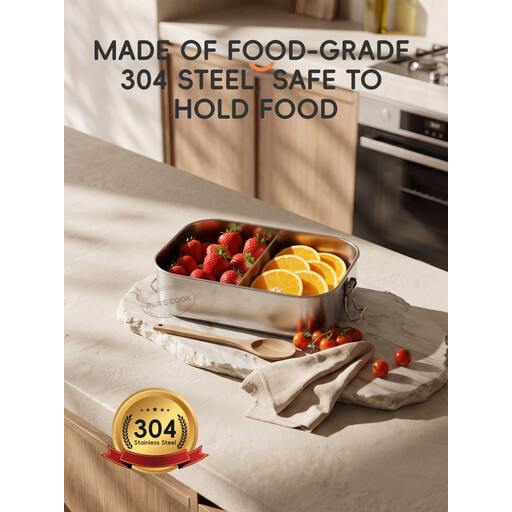
Why it’s a good fit: This uncoated stainless steel box has two fixed compartments, making it suitable for rice, sides, fruit or snacks at work or school.
Two metal clips press the lid against the silicone seal. According to the product details, it must be carried upright when filled with liquids.
304 stainless steel, two integrated compartments and dishwasher-safe construction. The box is designed for hot and cold food.
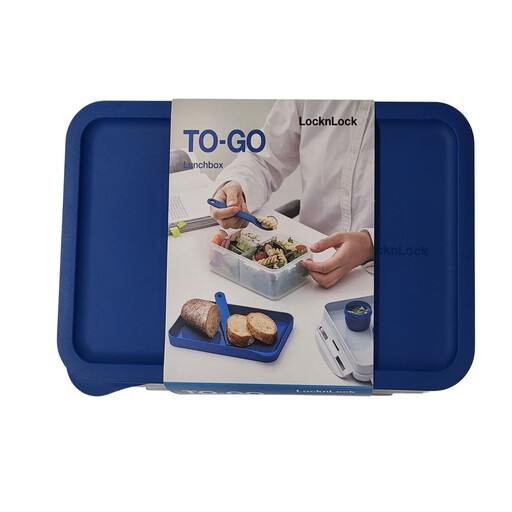
Why it’s a good fit: Three removable compartments, cutlery and a sauce container make it easy to prepare varied meals and plan ahead regularly.
The product details specify a four-sided seal and an airtight, watertight design. Remove the lid completely before reheating.
1.0 l total capacity, BPA-free PP, three removable inserts, and guidance for freezer and dishwasher use.
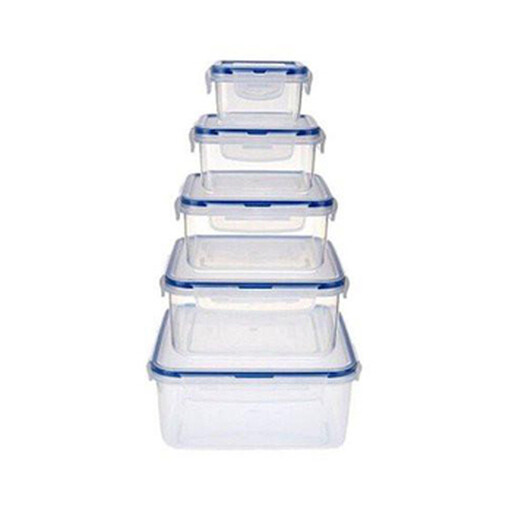
Why it’s a good fit: Five sizes, from 180 ml to 2.1 l, are suitable for snacks, leftovers and prepared portions. The empty containers nest inside one another for easy storage.
The containers are listed as suitable for the fridge, freezer and microwave. Before reheating, release the fastenings and loosen the lid.
BPA-free PP, removable silicone seals and five graduated sizes. According to the product details, the containers and lids are suitable for the top rack of the dishwasher.
We’ve put together a complete, regularly updated list of products that meet these strict selection criteria and fully comply with the safety regulations in force in the EU.
Your lunch box will stay in good working order if you open it and clean it after every use. Don’t leave food residue in a sealed container for long periods. Check regularly for:
In plastic boxes, foods high in oil, fat, sugar or tomato can put more strain on the surface when heated. Let hot food cool briefly before sealing the box, unless the manufacturer’s instructions say otherwise.
Look for a well-fitting silicone seal, secure fastenings and an explicitly stated leakproof design. Even so, liquids should be carried upright. Before buying, also check the lid design and fill level.
No. Plastic containers need the manufacturer’s approval for microwave use. The lid usually needs to be removed or opened. Stainless steel and glass models have their own instructions; for metal, you must also follow the microwave manufacturer’s guidance.
For snacks or a filled sandwich, 0.5 to 0.8 litres is often enough. A full meal with a side usually needs around 1 litre or more. The right size depends on your portion, the compartment layout and the space available in your bag and fridge.