
Lieferung heute & morgen

Qualitätsgarantie

Willkommens-Angebote freischalten: KOSTENLOSE Lieferung | Bis zu 80 % RABATT | Kostenlose 30-Tage-JoyPlus-Testphase
App herunterladen
A lunch box needs to do more than simply hold food. It should stay leak-proof in your bag, be easy to clean and suit the size of your meal. At the same time, many products promote features such as “leak-proof”, “Bento” or “insulated” without clearly highlighting the important limitations.
To make your choice easier to understand, this buying guide focuses on verifiable details about capacity, closures, materials, cleaning and intended use.
Calling a lunch box leak-proof requires a secure seal. Even so, seals can lose their effectiveness if they are fitted incorrectly, affected by food residue or damaged. A closure that only locks on one side can also cause problems with liquids.
Therefore, look for:
A lunch box with compartments or a Bento box keeps the main dish, side dish and sauce separate. Removable inserts make it easier to organise your food, but they also take up space. A simple compartment is often enough for a sandwich with fruit; for salad, toppings and dressing, several compartments may be more practical.
Check whether the dividers are permanently integrated or removable. Removable inserts offer greater flexibility, but they must be cleaned as additional individual parts and fitted correctly.
For many plastic containers, only the base is designed for microwave use. According to the relevant manufacturers’ product information, the lid must be removed or an existing valve opened. A closed container can build up pressure from steam.
A microwave-safe lunch box is not a substitute for an oven- or hob-safe container. Before use, check the temperature limits, valve position and instructions relating to foods containing fat, sugar or tomatoes.
A 1-litre lunch box is suitable for a normal meal with a side dish or for several snacks. However, how practical it is depends on its shape. A slim, rectangular lunch box often fits better in a work bag, while a square Bento box requires more space.
Consider the following questions:
For larger portions, 1.2 litres may be useful. A smaller meal-prep box, on the other hand, is lighter and takes up less storage space.
A BPA-free lunch box made from polypropylene is usually lightweight and, depending on the product, may be suitable for the freezer, dishwasher and microwave. Always check the specific suitability in the manufacturer’s information. The term “BPA-free” describes a material characteristic, not a medical effect.
Stainless steel is durable and resistant to odours, but is generally not suitable for microwave use. A stainless-steel lunch box is therefore mainly intended for cold food, unless the manufacturer states otherwise.
An insulated lunch bag or cool bag for on the go can carry several containers, but it cannot maintain their temperature indefinitely. Suitable ice packs may also be needed for perishable food. Information about insulation time should not be confused with active cooling.
A dishwasher-safe lunch box involves less effort in everyday use. Even so, seals, lid valves and cutlery may need to be placed in specific positions in the upper rack. After washing, all parts should be left to dry completely before the lunch box is closed. This helps reduce moisture and odours inside.
If you want to eat directly while out and about, you can choose a lunch box with cutlery. Check whether the cutlery is actually included or is only shown in the product images.
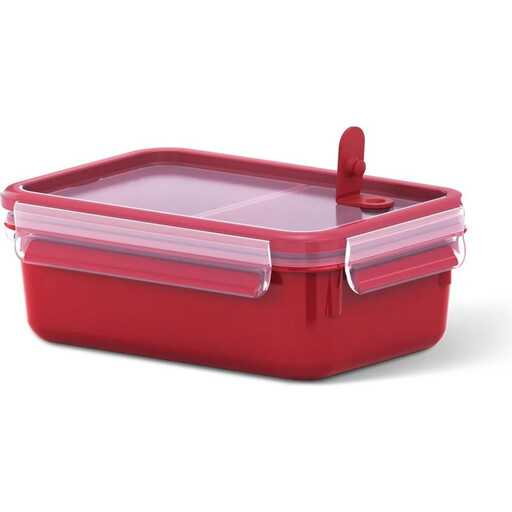
Why this product suits this profile: With a rectangular design and a capacity of 1,000 ml, this box is made for work, school and everyday journeys. According to the product information, it is leak-proof, dishwasher- and microwave-safe, and BPA-free.
The technical specifications state precise dimensions of 195 × 135 × 70 mm and a capacity of 1 litre, rather than using an unclear size description. For microwave use, the lid should be removed according to the instructions.
Compact rectangular shape, 1,000 ml capacity, plus information about being BPA-free and suitable for the dishwasher and microwave.
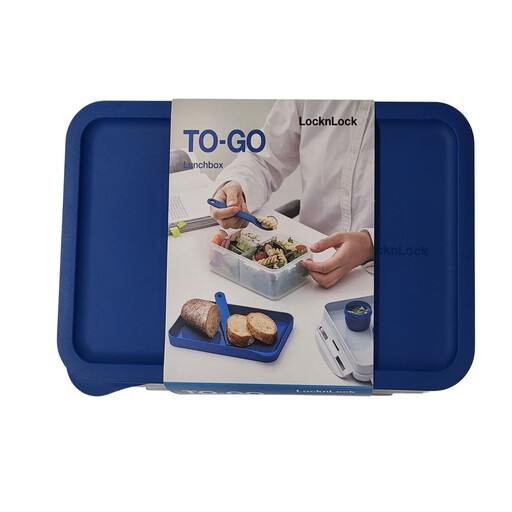
Why this product suits this profile: Three removable compartments, a sauce container, and a knife, fork and spoon make this a good choice for anyone who wants to transport meals in an organised way. According to the product information, the box is made from BPA-free polypropylene.
The four-sided closure and silicone seal are clearly described. The lid must be removed completely when heating; the temperature limit is stated as up to 120 °C.
Three removable compartments, included cutlery and sauce container, plus information about freezer, microwave and dishwasher suitability.
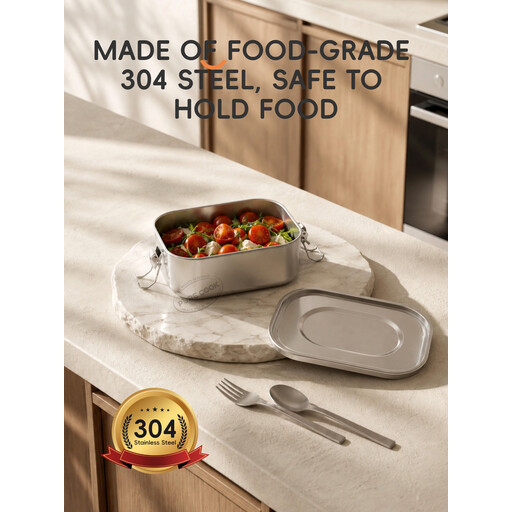
Why this product suits this profile: This rectangular stainless-steel box is designed for reusable transport of meals, snacks and meal-prep portions. It has a single compartment, clips and a removable silicone seal.
The 304 stainless-steel material and removable seal are clearly specified. As no microwave suitability is stated, the box should not be used for heating.
Durable stainless-steel body, single-compartment interior and removable silicone seal for easy cleaning.
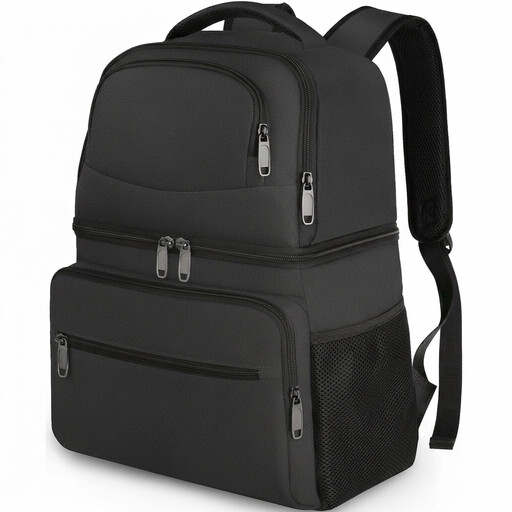
Why this product suits this profile: According to the product information, the backpack has an insulated cooler compartment, a separate dry compartment and several organiser pockets. It is suitable for picnics, camping, hiking and longer journeys.
The design separates chilled and dry contents. The PEVA lining is described as leak-proof; ice packs should still be used for temperature-sensitive food.
Two separate compartments, 8 mm insulation according to the product description, and a stated net weight of 700 g.
We have put together a complete, regularly updated list of products that fully meet these strict selection criteria and the safety regulations applicable in the EU.
For a single meal, around 700 to 1,000 ml is often sufficient. A 1-litre lunch box has room for a main dish and a side. If you are carrying larger portions or several components, you can choose 1.2 litres. The key consideration is whether the external dimensions fit in your bag and fridge.
Its lifespan depends on the material, closure and care. Regularly check the seal, clips and lid for cracks, deformation or a loss of grip. Damaged parts should be replaced in accordance with the manufacturer’s instructions, or the box should no longer be used. This also applies when the container still appears usable from the outside.
With a reusable lunch box, the main costs are cleaning and any replacement seals. A dishwasher-safe lunch box can reduce the daily effort, while stainless-steel models often need to be washed by hand. A cool bag may also require ice packs. A specific cost assessment depends on how often the box is used, the cleaning method and the availability of replacement parts.