
Lieferung heute & morgen

Qualitätsgarantie

Willkommens-Angebote freischalten: KOSTENLOSE Lieferung | Bis zu 80 % RABATT | Kostenlose 30-Tage-JoyPlus-Testphase
App herunterladen
A lunch box with compartments should keep food separate, be safe to carry and be easy to clean as part of your daily routine. In practice, though, it’s easy to end up with the wrong one. A box may be advertised as leakproof when only the lid itself forms a tight seal. Or its capacity may sound generous, but be split between several small sections that are barely big enough for a full meal.
That’s why Joybuy’s Product Recommendation Officer focuses on clear product information rather than marketing claims.
Simply describing a lunch box as leakproof isn’t enough. Look for:
A removable divider can be useful, but it won’t automatically seal each compartment from the others. So only put soups, dressings and other runny foods in containers whose product details explicitly say they’re suitable for them.
A 950 ml bento box may be big enough for lunch, while a lunch box with smaller compartments may be better suited to snacks, fruit and side dishes. The total capacity also doesn’t tell you how large each compartment is.
This guide can help you choose:
A dishwasher-safe lunch box isn’t necessarily suitable for the microwave. Conversely, a container may be microwave-safe but need to be used without its lid. Check the product details carefully:
For compartmentalised plastic boxes, it’s also worth looking for a clearly labelled BPA-free food container. If this isn’t stated, don’t assume the product is suitable for direct contact with food.
Polypropylene (PP) is lightweight and commonly used for lunch boxes, meal-prep containers and food storage boxes. According to the product details for the Samba models, a clear PP box is particularly suitable for dry food and small items; liquids are explicitly not recommended.
Borosilicate glass is heavier, but may be suitable for storing and heating food if the manufacturer says so. The 5five Rectangular Compartmentalised Glass Container is described as having a borosilicate glass body, a polypropylene lid and a silicone seal. The product details also state that it’s dishwasher-safe.
Stainless steel is durable and a good option for carrying dry or solid food. Metal isn’t suitable for microwave use. If you’re considering a stainless-steel bento box, check whether the lid, seal and compartments are removable, and how the box should be cleaned.
An integrated divider stops dry foods from mixing directly, but it doesn’t replace separately sealed containers. For salad, toppings and dressing, a removable insert with its own seal is more practical.
A flat box is easier to fit into a rucksack pocket, desk drawer or fridge shelf. Large storage containers with compartments can be bulky. Before you buy, check:
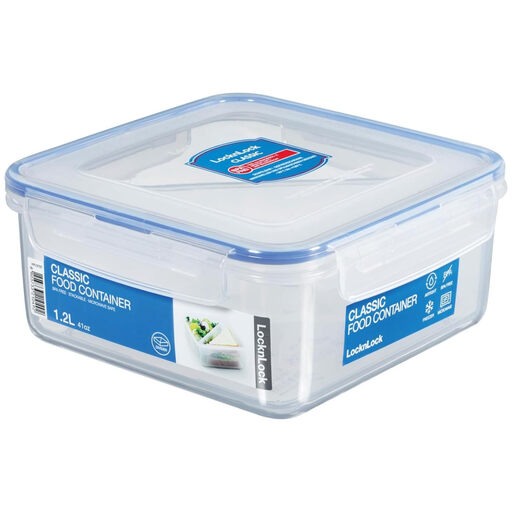
Why it suits this profile: This rectangular 1.2-litre box has an integrated divider and is designed for sandwiches, packed lunches and simple meals at work or school.
The product description lists specific features, including an airtight, leakproof closure and suitability for the microwave and dishwasher. The lid must be removed before microwaving.
1.2-litre capacity, BPA-free plastic, an integrated divider and a transparent design.
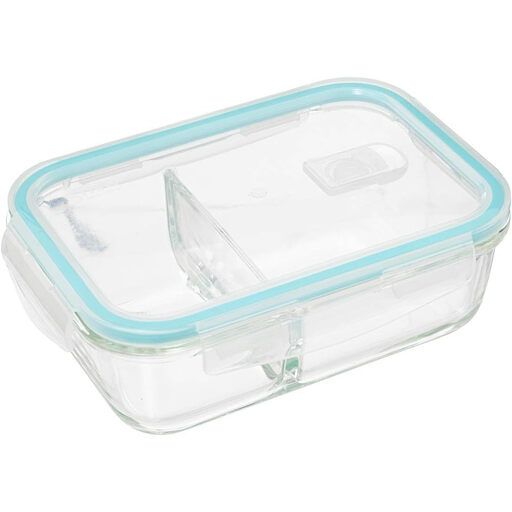
Why it suits this profile: This container combines a borosilicate glass body with polypropylene and silicone components. It’s a good option if you’re happy to carry a little extra weight in return for a glass container.
The product details specify the materials and confirm that the container is dishwasher-safe. Check the stated usable capacity before buying, as the detailed capacity information differs from the product name.
Dimensions of 21.5 × 15.3 × 7.5 cm, a borosilicate glass container and confirmed dishwasher suitability.
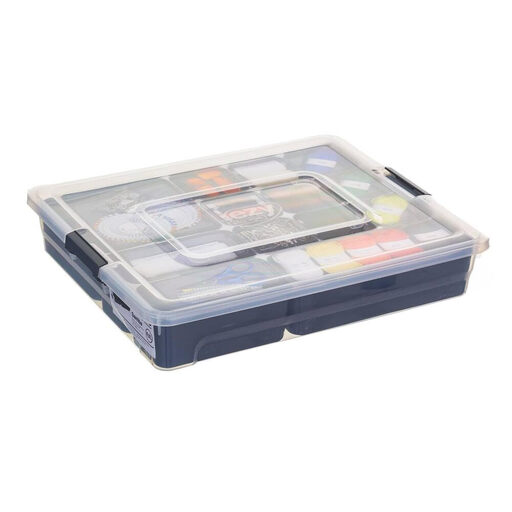
Why it suits this profile: This shallow box has 13 compartments and is best suited to dry ingredients, spices, craft materials or small items, rather than meals containing liquids.
The product details explicitly state that it’s suitable for dry food, give a maximum load of 4 kg and advise against filling it with liquids.
4.8-litre capacity, 13 compartments, clear PP construction and external dimensions of 35 × 28.5 × 7 cm.
We’ve put together a complete, regularly updated list of products that meet these strict selection criteria and fully comply with the safety regulations in force in the EU.
For an office lunch, around 900 to 1,400 ml is often a practical capacity. A removable divider is useful if you want to keep side dishes separate from the main part of your meal. If you’re carrying dressing or other liquids, make sure the box is explicitly described as airtight and watertight.
It depends on the material and the individual model. Plastic containers may be microwave-safe, but often only without the lid. Stainless steel must not go in the microwave. For glass containers, check the temperature guidance and any instructions about the lid.
Models with removable inserts and confirmed dishwasher suitability are easiest to clean. Remove the seals regularly, wash them separately and leave them to dry completely. For boxes that aren’t dishwasher-safe, warm water, mild washing-up liquid and a soft sponge are the safest choice.