
Lieferung heute & morgen

Qualitätsgarantie

Willkommens-Angebote freischalten: KOSTENLOSE Lieferung | Bis zu 80 % RABATT | Kostenlose 30-Tage-JoyPlus-Testphase
App herunterladen
A lunchbox needs to transport meals safely, be easy to clean in daily use, and suit your eating plan. In practice, unclear product descriptions, unsuitable closures or a miscalculated capacity can quickly lead to a poor purchase. Working professionals, school pupils, students and families should therefore look beyond colour and shape, and focus on specific technical features.
The term leakproof lunchbox is only helpful if the closure is clearly described. Clips, sealing rings and vents serve different purposes. A lid may close securely enough for solid foods, whereas liquids such as soup or dressing require additional seals.
Even a box described as leakproof should not automatically be carried loose in a bag. Manufacturer instructions on orientation, maximum fill level and care are essential.
A compact lunchbox is practical for sandwiches and snacks, but may not be sufficient for a full midday meal. For meal prep, 1 to 1.5 litres is often sensible, while a soup container or thermal food jar should be chosen to a different standard.
It is not just the volume that matters, but also the external dimensions. A 1.5-litre box can take up a lot of space in a slim work bag. For children and short school journeys, a smaller lunchbox with compartments is often easier to handle.
"Microwave-safe" does not mean the lid can be heated closed. With the Tefal MasterSeal Micro, for example, the vent must be opened before heating. With the Mepal Bento Lunchbox, the removable containers may go in the microwave without the lid according to the product details; the complete lunchbox is not intended for this.
"Dishwasher-safe" can also have limitations. With some products, only the top rack of the dishwasher is suitable; other containers should be washed by hand only.
First, consider what you need to transport:
Fixed dividers prevent dry and moist foods from mixing. Removable inserts offer more flexibility for cleaning and for varying portion sizes.
Plastic boxes made from PP can be lightweight and practical. Look for information on suitability for food contact and temperature resistance. A BPA-free label is an additional product feature; the Tefal box states BPA-free according to the EU 10/2011 test method.
A stainless steel thermal food jar is sturdy and typically absorbs fewer odours than some plastic surfaces. Models made from 304 or 316 stainless steel, however, do not differ in everyday usability based solely on the material grade. The closure, seal, weight and cleaning method remain equally important.
For daily use, the box should have as few hard-to-reach crevices as possible. Wide openings make it easier to fill and empty soup containers. With vacuum-insulated models, the actual temperature retention depends on factors such as starting temperature, fill volume and surroundings.
The Maxcook thermal food jars are described as offering temperature retention of 4 to 6 hours. This is a manufacturer claim and not a guarantee for every usage scenario. Pre-warming or pre-cooling with water can support temperature performance, according to the product description. Both models are intended for hand washing.
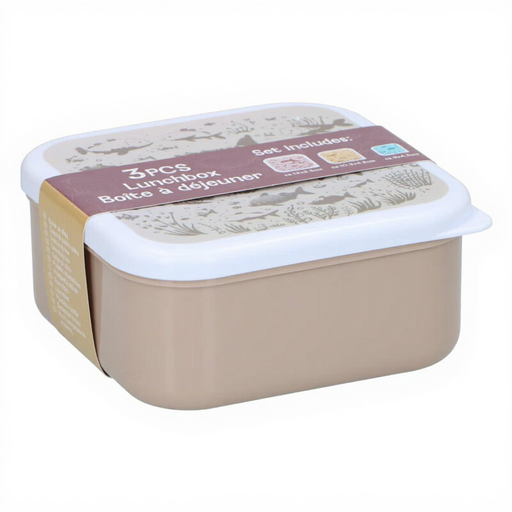
Why this product suits the profile: The set contains three different-sized PP containers for main dishes, side dishes, snacks or dressings. The stackable design is ideal for meal prep and fridge storage.
The three sizes reduce the risk of using an oversized container for every meal. Before buying, check the stated dimensions against your bag and fridge compartment.
Three formats, a low total weight of 180 g and a stackable design.
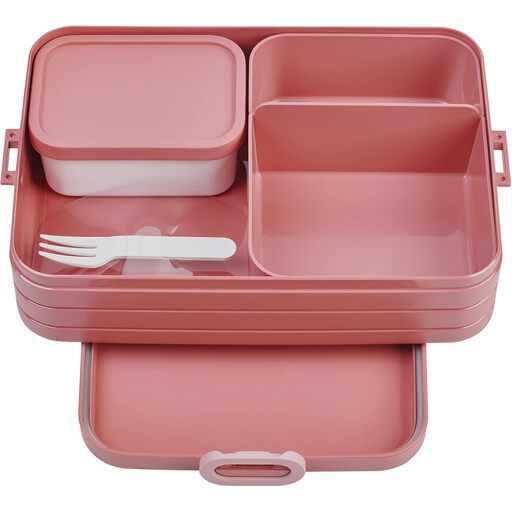
Why this product suits the profile: The 1.5-litre bento lunchbox has two separate sections plus additional containers with a fork. This allows different foods to be transported separately.
The details clearly distinguish between the removable containers and the whole lunchbox: the inner parts may go in the microwave without the lid; the box is not freezer-safe.
Two separate sections, removable containers, a fork and dishwasher suitability.
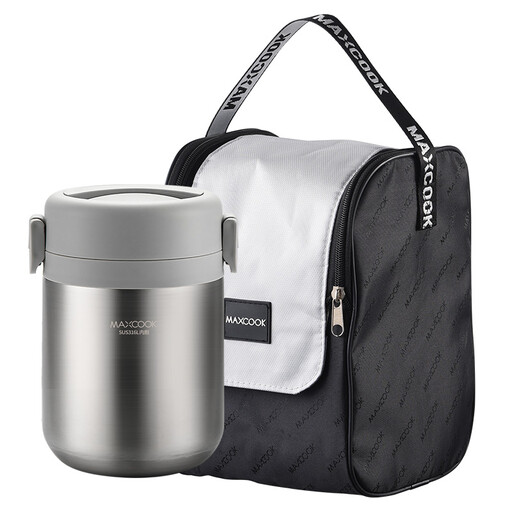
Why this product suits the profile: The vacuum-insulated stainless steel thermal food jar with a 1.5-litre capacity is designed for hot meals, soups and cold food on the go. The matching lunch bag makes transport easier.
The product description specifies hand washing and recommends pre-warming or pre-cooling the container before filling. This makes the care and usage instructions clear before purchase.
316 stainless steel, vacuum insulation, 1.5-litre capacity and an included lunch bag.
We have put together a complete, regularly updated list of products that fully meet these strict selection criteria and the safety regulations in force in the EU.
For soup, a tightly sealing soup container or a vacuum-insulated thermal food jar with a wide opening is ideal. A classic compartment lunchbox is only suitable if the manufacturer explicitly states it is safe for liquids. With the Maxcook Food Jar, the instructions for upright transport and hand washing should be followed.
For a full midday meal, many practical models range between 1 and 1.5 litres. If you only take sandwiches and fruit, you will usually need less volume. For meal prep, a divided box of around 1 litre can be sufficient if the portion is packed compactly. The internal layout and the dimensions of your work bag are also crucial.
No. Only containers explicitly labelled as microwave-safe may be heated. Lids, vents and seals may have their own requirements. With the Tefal MasterSeal Micro, the vent must be opened; with the Mepal Bento Lunchbox, the removable containers may go in the microwave without the lid. Always follow the relevant instruction manual.