
Lieferung heute & morgen

Qualitätsgarantie

Willkommens-Angebote freischalten: KOSTENLOSE Lieferung | Bis zu 80 % RABATT | Kostenlose 30-Tage-JoyPlus-Testphase
App herunterladen
A lunchbox should transport meals safely, be easy to clean in everyday use and suit your portion requirements. In practice, however, some marketing claims can lead to unsuitable purchases: a box may be described as “leakproof” even though its closure is only suitable for dry food. A large capacity may seem practical, but it can make the lunchbox unnecessarily heavy. And an elaborate compartment layout can be inflexible if you regularly transport portions of different sizes.
You should check the following points before buying:
A leakproof lunchbox depends not only on the material, but also on the seal, closure and fill level. For soups, sauces or very runny food, a food jar with a screw lid is often more practical than a shallow lunchbox with a clip closure. Even a securely closing lid should not be transported upside down or on its side for extended periods if the manufacturer does not recommend this.
A lunchbox with compartments can keep different foods separate, but it often requires more interior space and adds weight. A compact lunchbox is usually sufficient for a sandwich, fruit and a snack. However, anyone wanting to transport complete meals or meal prep needs more volume. It is also important to check whether the box fits in your rucksack, work bag or school locker.
“Dishwasher-safe” does not automatically mean that all components can be treated in the same way. Seals may need to be cleaned separately. When using a microwave, bear in mind that lids and closures often must not be heated with the food. According to the product information, the Mepal Bento Lunchbox Take a Break Midi is suitable for microwave use only without the lid and must not be placed in the freezer. Such instructions should be followed before buying and every time the product is used.
For a reusable food container, clear and verifiable material information is important. Plastic models should be confirmed as suitable for food contact and stated to be free from unwanted substances such as BPA. The Mepal Take a Break Midi lists PP, TPE and ABS and is also described as BPA-free.
A stainless steel lunchbox is durable and, when cleaned properly, absorbs fewer odours. Insulated containers often use 304 or 316 stainless steel, as well as plastic and silicone components in the lid. However, the material alone says nothing about the lid’s actual leak resistance or how easy it is to clean.
A lunchbox with compartments is ideal for bread, vegetables, fruit or snacks that should be kept separate. Removable bento inserts offer more flexibility than permanently integrated dividers. Check whether each compartment is large enough for your usual portions and whether the inner containers can be removed completely.
The Mepal Bento Lunchbox Take a Break Midi has two separate sections and an additional box with a fork. Its capacity is 900 ml, and its dimensions are 185 × 120 × 65 mm. The larger version in the same range offers 1.5 litres with dimensions of 255 × 170 × 65 mm, making it more suitable for larger meals or several components.
An insulated food container, food jar or soup flask is designed for hot dishes, soups and stews. Its wide opening makes filling, eating and cleaning easier. With vacuum containers, preheating with hot water or pre-cooling with cold water can help prepare the container for use, although the manufacturer’s instructions remain the deciding factor.
The Maxcook models are described as having vacuum insulation, a wide neck and a tightly closing lid. The 1.5-litre model made from 316 stainless steel also comes with a warning that the contents may be very hot. Check the temperature before eating directly from the container. It is not intended for carbonated drinks.
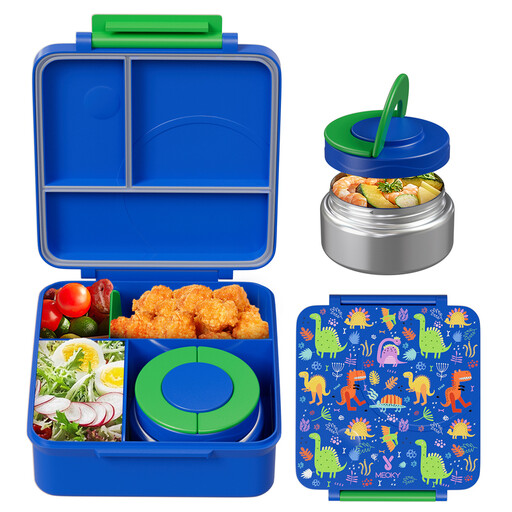
Why this product suits the profile: This divided lunchbox is ideal for anyone looking for a straightforward box for school, the office or commuting, with space to keep several foods separate.
The divided design helps prevent snacks and main meals from mixing. Before transporting liquid food, check the closure and the manufacturer’s instructions.
Single-closure design and a divided interior for different foods.
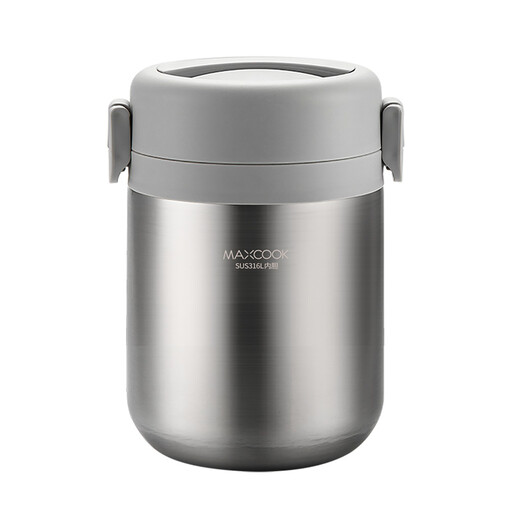
Why this product suits the profile: This insulated food jar is designed for professionals, outdoor enthusiasts and commuters who want to transport hot or cold food in a single container with a wide opening.
The product information specifies 316 stainless steel, vacuum insulation and a tightly closing lid. Do not overfill the container, use it in the microwave or fill it with carbonated drinks.
1.5-litre capacity, wide opening and vacuum insulation for hot or cold meals.
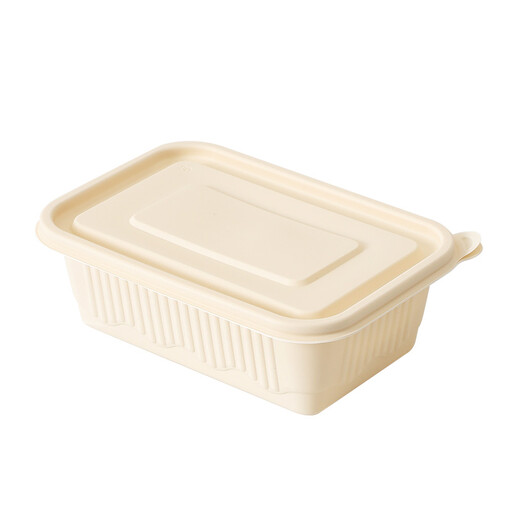
Why this product suits the profile: This disposable lunchbox with lid is suitable for parties, picnics, catering or situations where a reusable box cannot be returned.
The 750 ml capacity and number of pieces are clearly stated. For regular journeys to work or school, a reusable food container is generally the more suitable category.
750 ml capacity, transparent lid and a pack of 20 containers for larger quantities.
We have put together a complete, regularly updated list of products that fully meet these strict selection criteria and the safety regulations applicable in the EU.
For small snacks and a sandwich, around 500 to 900 ml is often sufficient. Anyone taking complete meals, several components or larger portions may need a capacity of 1.2 to 1.5 litres. The right size depends on the portion size, bag and available storage space.
For liquid food, a food jar or soup flask with a secure screw closure is usually more suitable. A classic lunchbox with compartments is primarily intended for solid foods and separate side dishes. For every container, check the instructions regarding fill level, orientation and cleaning.
Its lifespan depends on the material, closure, cleaning and level of use. Visible cracks, permanently deformed seals, unpleasant odours or lids that no longer close securely are signs that the container should be replaced. Follow the dishwasher, microwave and freezer instructions to prevent the components from becoming unnecessarily deformed.