
Lieferung heute & morgen

Qualitätsgarantie

Willkommens-Angebote freischalten: KOSTENLOSE Lieferung | Bis zu 80 % RABATT | Kostenlose 30-Tage-JoyPlus-Testphase
App herunterladen
A lunchbox should transport meals safely to work, school or while you are out and about. In practice, however, some models disappoint because important features are only advertised in limited terms. For example, a stated leak-proof design may only apply when the box is stored upright. “Microwave-safe” does not automatically mean that the lid can be heated too.
A 1-litre lunchbox offers enough space for many main meals, but removable inserts can take up varying amounts of usable room. A smaller lunchbox is often sufficient for a sandwich, fruit and a snack. If you want to transport salad, a side dish and dessert separately, you should consider not only the total capacity but also the internal layout.
Seals, clip fasteners and valves must be closed correctly. For liquid foods such as soup or dressing, it is also important to check whether the manufacturer intends the box to be transported on its side. A leak-proof lunchbox should be tested with water before its first use. Damaged seals and warped lids increase the risk of leaks.
With many containers, only the base can be placed in the microwave. Lids, valves and cutlery inserts must be removed. Dishwasher suitability may also be restricted, for example to the top rack. A dishwasher-safe lunchbox is therefore particularly practical when every individual part is explicitly approved for dishwasher use. Claims such as “suitable for freezing” or “heat-resistant” do not replace specific usage instructions.
For working adults, a lunchbox holding around 800 to 1,200 millilitres is often a good balance. A lunchbox with compartments or a bento lunchbox prevents bread, vegetables and fruit from coming into direct contact with one another. Removable boxes make cleaning easier and can be used for different portion sizes.
For schoolchildren and smaller meals, a more compact lunchbox is often sufficient. Families should also consider the external dimensions: a large bento lunchbox will not fit in every bag. For meal-prepped dishes, stackable containers may be more practical than a single box with fixed compartments.
Plastic models are generally lightweight and available in a wide range of shapes. Buyers should check the stated suitability for food contact, as well as the care and temperature instructions. Tefal’s product details specify a BPA-free design tested in accordance with the EU-10/2011 procedure. Such claims should be checked directly against the manufacturer’s information.
A stainless-steel lunchbox is durable and does not retain much odour, but it is not automatically microwave-safe. Stainless-steel containers should never be placed in the microwave. Insulated models are also often intended for hand washing only. The material alone therefore says little about how practical the lunchbox will be for everyday use.
A click or multi-point fastening system can press the seal evenly against the box. For easy cleaning, sealing rings should be removable or at least accessible. Food residue can collect in hard-to-reach gaps.
Anyone wanting to transport soup, stew or hot meals will generally need a thermal food container rather than a traditional lunchbox. According to the product information, a vacuum container keeps food hot or cold for several hours, but it does not replace refrigeration and should not be overfilled.
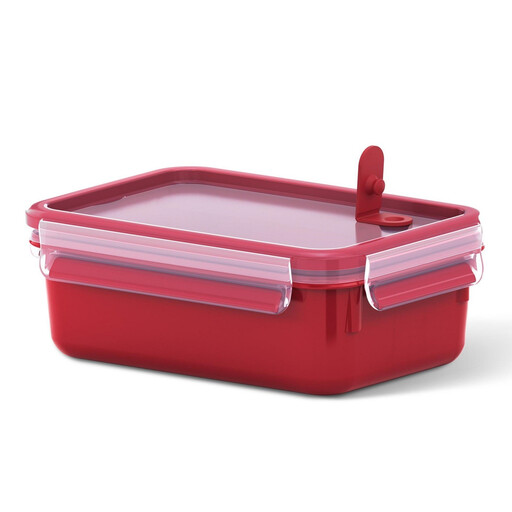
Why this product suits the profile: The rectangular box offers a 1-litre capacity and is suitable for meals that do not necessarily require separate compartments.
The manufacturer’s information mentions a click fastening system, a seal and suitability for the microwave, freezer and dishwasher. The valve must be opened before heating.
1-litre capacity, 19.5 × 13.5 × 7 cm, BPA-free according to the product details and suitable for the top rack of the dishwasher.
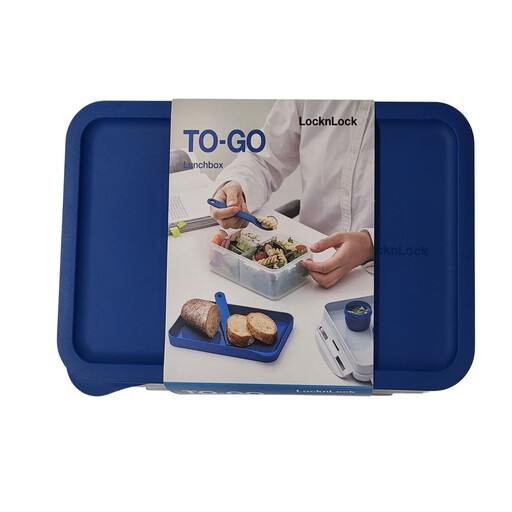
Why this product suits the profile: Three removable compartments keep the main dish, sides and snacks separate. This is practical for regular meal prep and everyday office use.
The product description mentions fasteners on four sides and a silicone seal. The lid must be removed completely before heating.
1,000 ml capacity, three inserts plus a knife, fork, spoon and sauce container; according to the information, it is dishwasher-, freezer- and microwave-safe without the lid.
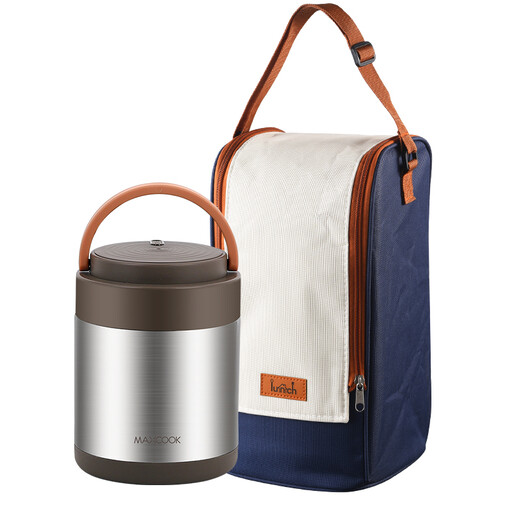
Why this product suits the profile: The wide opening and vacuum insulation are designed for soups, stews and hot meals at work, during outdoor activities or while travelling.
The information points to a tightly closing lid, but recommends not turning the container upside down. It must be washed by hand rather than in the dishwasher.
1.4-litre capacity, 304 stainless steel and a wide opening; according to the product details, it is designed to retain temperature for around 4 to 6 hours.
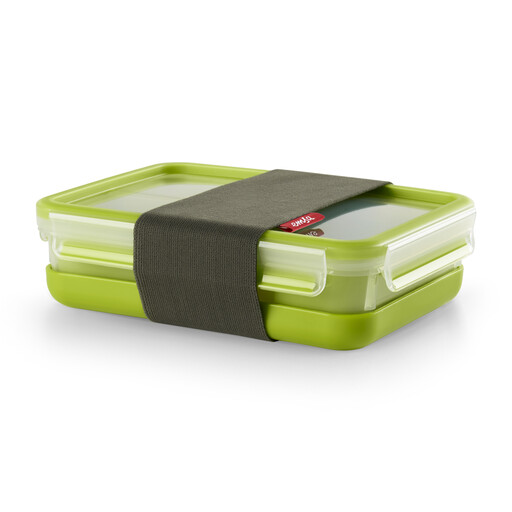
Why this product suits the profile: Three inserts and an additional plate allow the main dish, sides and snacks to be transported separately.
The product details mention a freshness seal and also specify a maximum fill level of 1.2 litres. The fastener must be fully engaged before transport.
Three inserts, an additional plate and, according to the information, suitability for the microwave, freezer and dishwasher from −40 to +110 °C.
We have put together a complete, regularly updated list of products that fully meet these strict selection criteria and the safety regulations applicable in the EU.
For one main meal, around 800 to 1,200 ml is often sufficient. Children generally need less capacity. The external dimensions, empty weight and whether cutlery or inserts are included are also important considerations.
The box should be clean and dry before you fill it. Foods that require refrigeration should be kept chilled until they are eaten. An airtight seal can reduce contact with the surrounding air, but it does not replace refrigeration or hygienic food storage.
No. Microwave suitability and leak-proofing are separate properties. For liquid foods, a suitable thermal container with a secure lid is a sensible choice. With plastic boxes, the lid, valve and temperature limits must be used in accordance with the relevant product information.