
Lieferung heute & morgen

Qualitätsgarantie

Willkommens-Angebote freischalten: KOSTENLOSE Lieferung | Bis zu 80 % RABATT | Kostenlose 30-Tage-JoyPlus-Testphase
App herunterladen
A lunchbox should transport meals safely, be easy to clean and fit into your daily routine. In practice, however, some marketing claims can lead to disappointing purchases. A large number of compartments, for example, is not automatically practical if each section offers barely enough room for a complete meal. The term “leak-proof” also means little if the seal, closure and usage instructions are not properly aligned.
This buying guide explains which features really matter when choosing a lunchbox, Bento lunch box or insulated food container. The selection takes into account the needs of professionals, schoolchildren, parents and outdoor enthusiasts.
A lunchbox with compartments can keep dry and moist foods separate. However, several small compartments are not suitable for every meal. For sandwiches, fruit and snacks, a lunch box with dividers can be useful. For pasta, salad or larger portions, a spacious main compartment is often more practical.
So don’t just look at the number of compartments. Consider:
A leak-proof lunchbox needs a lid that closes properly and an intact seal. When carrying liquids, even a good closure can reach its limits if the box is tilted inside a backpack or overfilled. Seals should be checked regularly for cracks, deformation and food residue.
For a food container for soup, a dedicated insulated container with a screw lid is often more suitable than a flat Bento box. The manufacturer’s instructions on maximum fill level and cleaning are crucial.
Plastic, stainless steel and vacuum-insulated containers are designed for different purposes. Plastic lunchboxes are often lightweight and, depending on the model, may be suitable for use in the microwave, freezer or dishwasher. Stainless steel is robust, but generally must not be used in the microwave. A vacuum-insulated food container is designed for hot or cold food, but usually needs to be washed by hand.
Claims such as “BPA-free” should also be considered in the context of the specific product and the stated testing standards. For the Tefal model, for example, a BPA-free design in accordance with the EU 10/2011 test method is specified.
For a smaller meal or snacks, around 600 to 900 ml may be enough. If you’re taking a full portion for the working day or several different foods with you, it’s better to allow for 1 to 1.5 litres. The external dimensions determine whether the lunchbox will fit in a handbag, backpack or bike bag.
A rectangular shape often makes efficient use of storage space. On the other hand, a wide container with a large opening can be more practical for soups, stews and cleaning.
A Bento lunch box is ideal when you want to keep different foods separate. Check whether the compartments are permanently integrated or removable. Removable inserts make cleaning easier and can be important when reheating food.
With a meal-prep box, it is also important to check whether several portions can be prepared and stored stacked on top of one another. A lunchbox is not automatically suitable for freezing or microwave use. These functions must be expressly stated in the product details.
Click closures or clips should close evenly and be easy to operate without excessive force. A silicone seal can help reduce leaks, but it does not replace correct handling. Before transporting the box, it is advisable to test it with a small amount of liquid first.
Vacuum-insulated stainless steel containers are designed for hot meals. The Maxcook models are described as offering a stated heat-retention time of 4 to 6 hours. The actual result depends, among other things, on the starting temperature, fill level, ambient temperature and whether the container is preheated. According to the product details, the container can be conditioned with hot or cold water before filling.
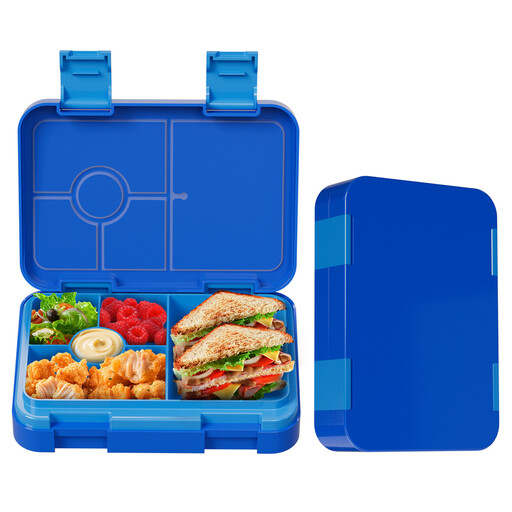
Why this product suits the profile: The five separate sections help you arrange bread, fruit and snacks neatly for school or work.
The double latches can secure the lid evenly. Nevertheless, the box should be filled and transported in accordance with the manufacturer’s instructions.
Five compartments and two closures; suitable for portioned snacks and dry foods.
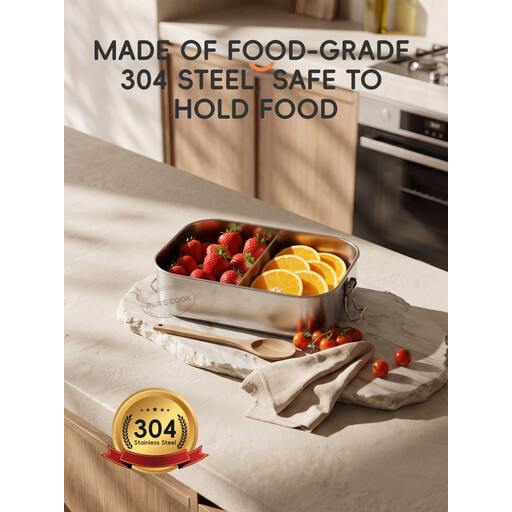
Why this product suits the profile: The 304 stainless steel design, clips and removable silicone seal are aimed at people who value a durable, reusable material.
The seal can be removed for cleaning. This makes it easier to check for residue than with permanently fitted sealing areas.
304 stainless steel, two compartments and a stated capacity of 61.2 fluid ounces; suitable for solid meals, snacks and meal prep.
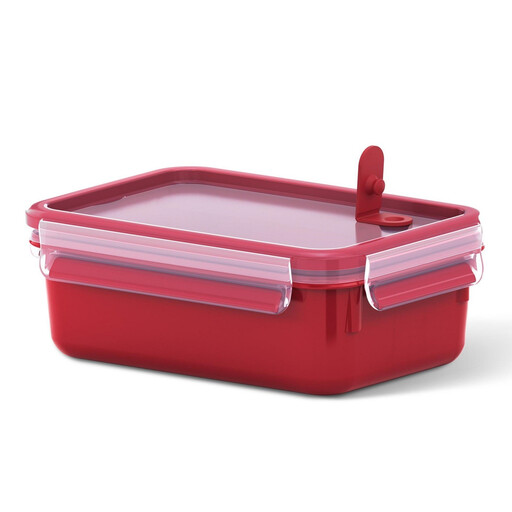
Why this product suits the profile: The 1-litre box is suitable for prepared meals and, according to the product details, can be used in the microwave, freezer and dishwasher.
The click-closure system and removable valve opening are clearly described. The valve must be opened when reheating; the box must not be used on the hob or in the oven.
1-litre capacity, clip closure, and suitability for microwave and dishwasher use according to the product details.
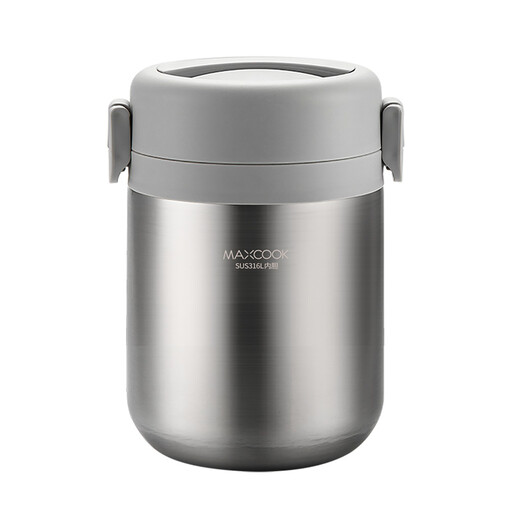
Why this product suits the profile: According to the description, the wide vacuum-insulated container is suitable for soups and hot food at work, while travelling or during outdoor activities.
Its intended use is clearly different from that of a flat lunch box: the vacuum insulation and wide neck are designed for liquid or hot food. The container must not be used in the microwave.
316 stainless steel, 1.5-litre capacity, vacuum insulation and a wide opening; hand washing is recommended.
We’ve put together a complete, regularly updated list of products that fully meet these strict selection criteria and the safety regulations applicable in the EU.
A reusable lunchbox remains functional when it is suited to the food inside and cared for according to the instructions:
For soup, a wide, securely sealed insulated lunch container with vacuum insulation is more practical than a flat Bento lunch box. Look for a secure lid, the maximum fill level and a statement confirming that the container is not suitable for microwave use.
For a single meal, 900 ml to 1 litre is often sufficient. For larger portions, several snacks or a complete meal prep, 1.5 litres may be more suitable. The external dimensions and weight are also important, particularly for daily commuting.
Its service life depends on the material, closure, cleaning routine and level of use. With proper care, stainless steel can be used for many years. With plastic boxes, you should regularly check whether the lid, clips or seals are damaged. Without knowing the individual usage conditions, it is not possible to provide a reliable specific service life.