
Lieferung heute & morgen

Qualitätsgarantie

Willkommens-Angebote freischalten: KOSTENLOSE Lieferung | Bis zu 80 % RABATT | Kostenlose 30-Tage-JoyPlus-Testphase
App herunterladen
A lunchbox needs to transport meals safely, be easy to clean, and fit into your daily routine. Yet certain product descriptions often lead to the wrong purchase. A large capacity, for example, doesn’t automatically mean the box will fit well in a work bag. The term “leak-proof” also deserves a closer look: the seal, closures, lid design and correct usage are what really matter.
This guide shows which features truly count in a lunchbox for work and school, and which models suit different needs.
A lunchbox with a 1.5 l capacity offers plenty of room, but can feel bulky in small rucksacks or bags. For a sandwich, fruit and snacks, 700 to 1,000 ml is often enough. If you want to transport complete meals or several components, you should also check the length, width and height.
A leak-proof lunchbox needs a fully sealed lid and an intact gasket. For soups, very runny foods or carbonated drinks, there may be limitations depending on the model. Closures should audibly or noticeably click into place before transport. The box should also not be overfilled.
A microwave-safe lunchbox must not automatically be heated with the lid closed. Often, the lid needs to be removed or a vent opened. With some bento models, only the removable inner containers are suitable for the microwave. Freezer suitability is a separate product feature and should be explicitly stated.
The following guidelines can help with your choice:
A lunchbox with cutlery can save extra storage space. You should check whether the cutlery is attached to the lid or lies loose inside the box.
Plastic models are usually lightweight and practical for daily transport. Details such as BPA-free should be stated directly in the product data. For the Tefal MasterSeal Micro, BPA-free status is given according to the EU testing procedure EU 10/2011 in the product description. Glass models are heavier, but may appeal to users who prefer a transparent container material.
For all variants, the rule is: only use products that are intended for contact with food. Damaged lids, cracks or deformed seals can impair function and are a reason to replace the box.
A dishwasher-safe lunchbox reduces cleaning effort. For plastic parts, follow the instructions about placing them in the upper dishwasher basket. For the microwave, always follow the manufacturer’s instructions:
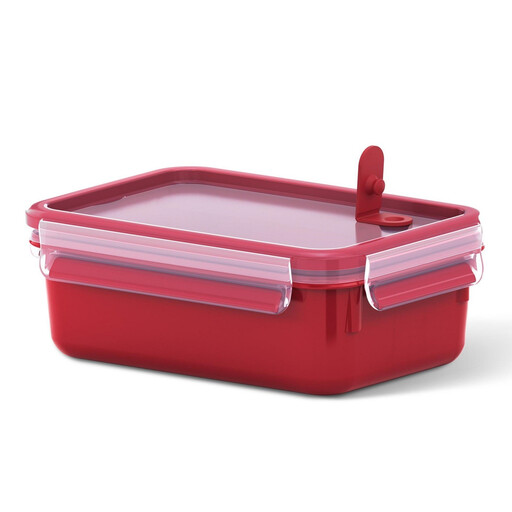
Why this product fits the profile: The 1 l capacity and rectangular shape are ideal for a single meal at school, university or the office.
The click-lock system and stated leak-proof design address the common weak point of leaky lids. To heat, simply open the vent.
1 l capacity, BPA-free according to product information, microwave, freezer and dishwasher safe.
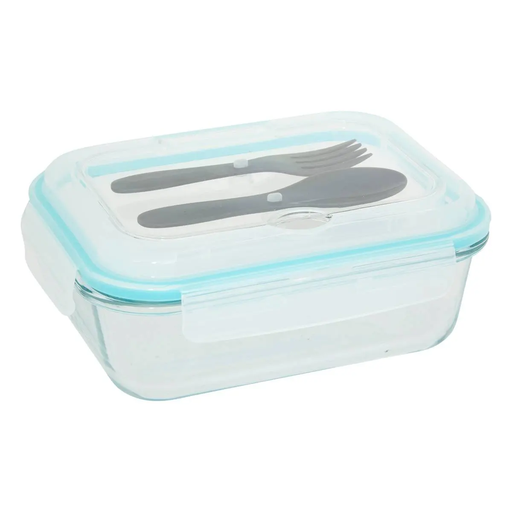
Why this product fits the profile: The glass container with 1,000 ml volume and integrated cutlery compartment suits users who want to combine material specifications with versatile use.
The product details mention a silicone sealing ring and safety clips. This means the closure elements are more clearly described than with simple snap-on lids.
Borosilicate glass, cutlery including spoon and fork, suitable for microwave, freezer and dishwasher; stated as oven-safe without the lid.
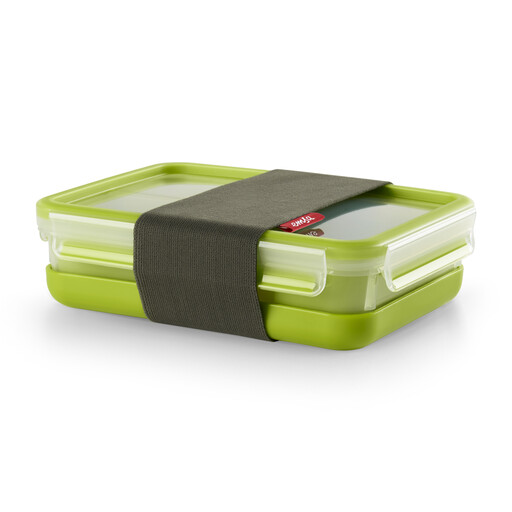
Why this product fits the profile: Three inserts, an additional plate and 1.2 l volume are designed for meal prep, travel and repeated daily use.
The compartment layout prevents different foods from mixing loosely together. According to the product information, the seal is designed to support leak-free transport.
Inserts and plate, dishwasher, microwave and freezer suitability according to the product description; stated temperature range of −40 °C to +110 °C.
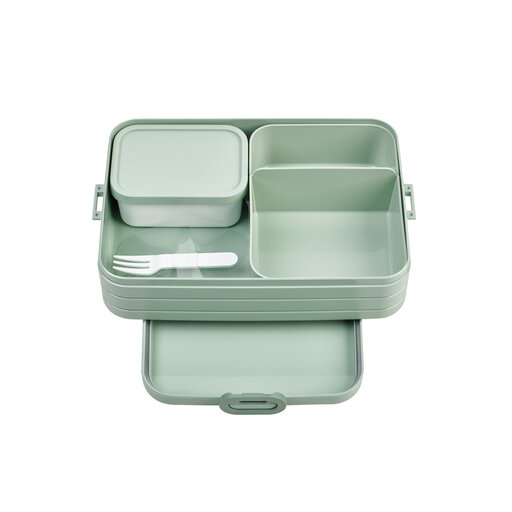
Why this product fits the profile: Two separate compartments and an additional container with a fork offer 1.5 l of space for different foods and larger portions.
The removable bento containers keep foods separate. Important: according to the product details, the inner containers are microwave-safe without the lid; the lunchbox is not intended for the freezer.
1.5 l capacity, two compartments, extra box with fork, BPA-free and dishwasher safe according to product data.
We have put together a full, regularly updated list of products that fully meet these strict selection criteria and the safety regulations in force in the EU.
For daily transport, 900 to 1,200 ml is often practical. A lunchbox with compartments is ideal if you want to keep bread, fruit and side dishes separate. If you want to heat food, you need a model that is explicitly stated as microwave-safe and must follow the lid instructions.
The lifespan depends on the material, closures, seal and care. A dishwasher-safe lunchbox should be cleaned according to the manufacturer’s instructions. Check seals regularly for cracks and deformation. If there is damage, persistent odour or a lid that no longer closes securely, it is worth replacing it.
Beyond the purchase price, the main costs are cleaning and replacement. Dishwasher-safe models can reduce hand-washing effort. Replaceable seals or inserts can extend the useful life, provided the manufacturer offers such spare parts. For meal prep, it is also worth choosing a model that supports the freezer, microwave and dishwasher according to your own routines.