
Lieferung heute & morgen

Qualitätsgarantie

Willkommens-Angebote freischalten: KOSTENLOSE Lieferung | Bis zu 80 % RABATT | Kostenlose 30-Tage-JoyPlus-Testphase
App herunterladen
A lunchbox should keep your meals secure on the move, be easy to clean and suit your daily routine. Yet some common marketing claims can lead to disappointing purchases. A lunchbox with lots of compartments isn’t automatically suitable for liquids, and a material being dishwasher-safe doesn’t necessarily mean it can go in the microwave.
This buying guide explains which details to check before you buy and what to look for in a lunchbox for work, school, meal prep or salads.
Descriptions such as leakproof lunchbox, ‘waterproof’ or ‘airtight’ should always be considered in relation to the closure system. Look for:
Even a box with a seal can struggle with soup or very runny foods if it tips over in your bag. That’s why many models are recommended for upright transport.
A dishwasher-safe lunchbox isn’t automatically suitable for every heat source. In many cases, you should:
For example, the stated temperature range for the LocknLock 3-in-1 Lunch Box is -20 to 120 °C. According to the product details, it is suitable for the microwave, freezer and dishwasher, but not for the oven, hob or direct heat.
A compact lunchbox is enough for a sandwich and a snack. For a full meal with a side, fruit and sauce, a larger capacity may be more practical. A lunchbox with compartments helps keep foods separate, but depending on its design, the dividers can reduce the usable space.
Before you buy, think about whether you’ll use the box for:
For a single portion, practical sizes often range from around 800 ml to 1.5 l. A 1,000 ml box suits many standard meals, while 1.2 to 1.5 l gives you more room for sides or larger portions. With a meal prep box available in several sizes, having different capacities can be more practical than using one large container.
Capacity isn’t the only thing that matters: check that the length, width and height will fit in your work bag, school bag, fridge or rucksack.
Polypropylene is widely used for lunchboxes and, depending on the model, may be suitable for the microwave, freezer and dishwasher. 304 stainless steel has a smooth, uncoated interior and is an alternative for anyone who prefers a durable food storage container. Stainless steel boxes often have lids and seals made from other materials, such as PE and silicone.
Look for clear details on:
Removable inserts make it easier to keep a main dish, side and snack separate. For a salad box, separate containers for toppings and dressing are useful because they stop wet ingredients from coming into direct contact with salad leaves or crunchy ingredients.
For easy cleaning, the lid, sealing ring and inserts should be removable. Even if a product is described as dishwasher-safe, follow any guidance such as ‘top rack only’ or specific temperature limits.
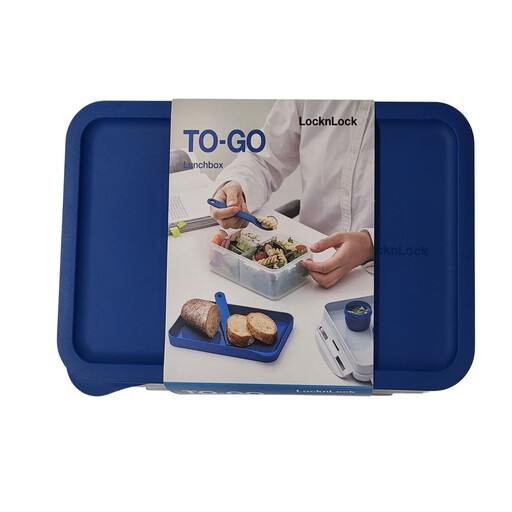
Why it suits this need: This 1-litre box has three removable compartments, plus cutlery and a sauce container. It’s a practical choice for work, school and short trips with portioned meals.
The product details specify a four-sided locking system, a silicone seal and a leakproof design. However, liquid foods should still be transported in line with the usage guidance.
1,000 ml capacity, three removable compartments, cutlery and a sauce container; stated to be suitable for the microwave, freezer and dishwasher.
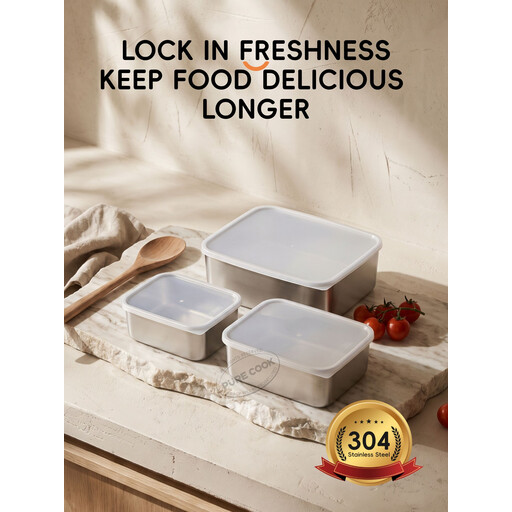
Why it suits this need: This set includes three deep containers made from 304 stainless steel, with capacities of 1,000, 1,800 and 3,000 ml. It’s ideal for meal prep, leftovers and storing food in the fridge.
The different sizes help prevent small portions from shifting around in oversized containers. According to the product information, liquid foods should be transported upright.
304 stainless steel with a smooth, uncoated interior, three capacities, PE lid with a silicone seal and dishwasher-safe, according to the product details.
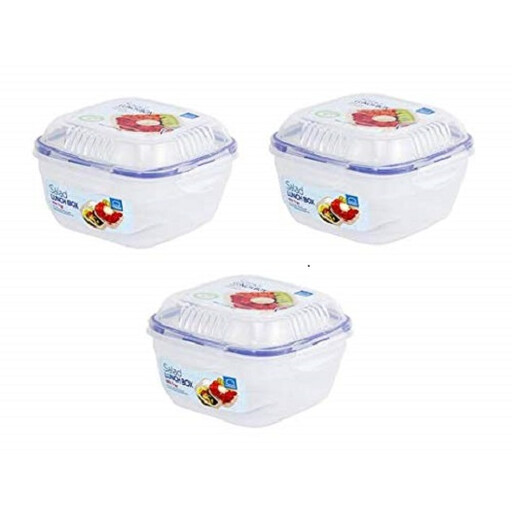
Why it suits this need: This set is designed for anyone who regularly wants to keep salads, toppings and dressing separate, or prepare several portions in advance.
Separate inserts for toppings and dressing reduce the risk of salad ingredients becoming soggy or mixing together before you eat.
Three 950 ml containers, a topping insert and a dressing pot; stated to be airtight, leakproof and dishwasher-safe. Not designed for microwave use.
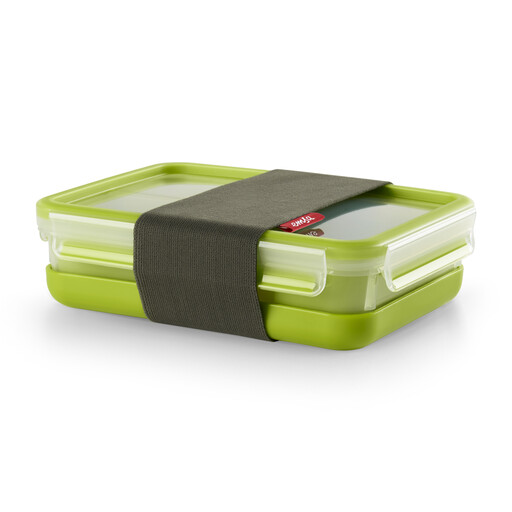
Why it suits this need: Three inserts, a separate plate element and a retaining strap give you flexibility for different meals, snacks and pre-prepared portions.
The compartments can be arranged to suit different foods. Before you carry it, make sure the lid is fully secured so the seal works as stated by the manufacturer.
1.2 l capacity, three inserts and a separate plate element; stated to be suitable for the microwave, freezer and dishwasher within a temperature range of -40 to 110 °C.
We’ve put together a complete, regularly updated list of products that meet these strict selection criteria and fully comply with the safety regulations in force in the EU.
A lunchbox’s lifespan depends greatly on its material, seal and how you care for it. Before each use, check the lid, closure and silicone ring for cracks or distortion. Don’t continue using damaged containers.
For everyday cleaning:
For a single meal, 800 to 1,200 ml is often enough. If you’re also taking fruit, sides or snacks, you could choose a capacity of 1.2 to 1.5 l. A more compact lunchbox is often enough for children and smaller snacks.
Look for a seal that runs all the way round, secure fastenings and clear guidance on using the box with liquids. Even a box described as leakproof may need to be kept upright. It’s best to carry dressing in a separate container.
No. Check whether only the container or the lid as well is suitable. With many plastic models, the lid must be removed completely. Stainless steel containers should not normally be put in the microwave unless they’re specifically approved for it. Always follow the product’s specific guidance.