
Lieferung heute & morgen

Qualitätsgarantie

Willkommens-Angebote freischalten: KOSTENLOSE Lieferung | Bis zu 80 % RABATT | Kostenlose 30-Tage-JoyPlus-Testphase
App herunterladen
A lunchbox should reliably carry meals from home to work, school or wherever you are going. In practice, unclear product information and unsuitable designs can quickly lead to disappointing purchases. What matters is not eye-catching colours or grand marketing promises, but capacity, seal, material, cleaning and intended use.
A container described as a leakproof lunchbox is not automatically suitable for soups or very runny foods. With many models, leak resistance depends on the lid being fitted correctly, the silicone seal being clean and the box being transported upright. For soup, a specially designed soup container or thermal container with a tightly closing lid is recommended.
A lunchbox with compartments can keep different foods separate. However, dividers reduce the amount of space that is actually available. A smaller lunchbox is often sufficient for a sandwich, fruit and snacks. If you want to take a complete meal with several components, you should compare the stated total capacity with the size of the individual sections.
A thermal lunchbox does not keep food hot or cold for the same length of time in every situation. Preheating or pre-cooling, the amount of food inside, the outdoor temperature and how often the box is opened all affect the result. The Maxcook models are stated to maintain temperature for 4 to 6 hours. This information comes from the product description and should not be understood as a guarantee of a constant temperature.
For a working day or school day, the size should match your usual meal. The following values can serve as a guide:
The external dimensions matter just as much as the capacity. A wide bento lunchbox may not fit in every work bag. A tall thermal container can be practical in a rucksack, but it needs sufficient clearance above it.
A stainless steel lunchbox is resistant to odours and suitable for everyday transport. Stainless steel containers with vacuum insulation are often marketed as thermal food containers. The models in this selection are made from 304 or 316 stainless steel.
Borosilicate glass is temperature-resistant and does not affect the taste of food. A glass container with a lid is particularly suitable for prepared meals and storage in the fridge. Its greater weight and risk of breakage should be taken into account when transporting it. According to the product information, the 5Five container weighs 880 g.
Plastic models are often lighter and come with removable inserts. Information such as dishwasher-safe, BPA-free or not suitable for freezing should be checked carefully before purchase. A lid should only be placed in the microwave if this is expressly permitted.
Check whether the closure consists of clips, tabs or a screw-top lid. A removable silicone seal makes cleaning easier, but it must then be fitted correctly. For thermal containers, the available product information recommends hand washing and careful handling of the sealing area. Carbonated drinks are not intended for the Maxcook thermal containers.
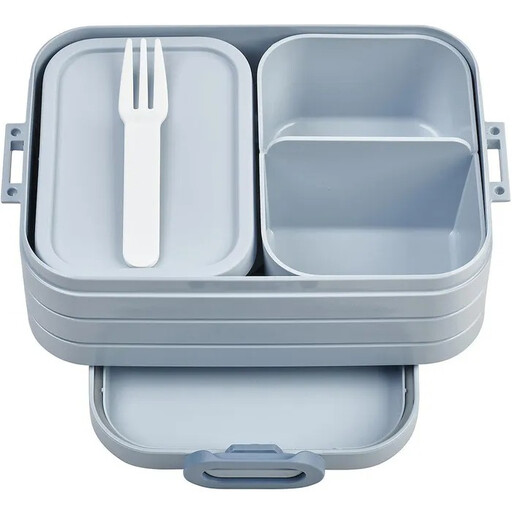
Why this product suits the profile: With a capacity of 900 ml, two separate compartments and an additional container with a fork, this box is suitable for smaller meals at the office, school or university.
The removable inserts keep different foods separate without the need for several individual containers. The manufacturer states that it is dishwasher-safe; it is not intended for use in the freezer.
900 ml capacity, two compartments, additional box with fork and weight of 325 g.
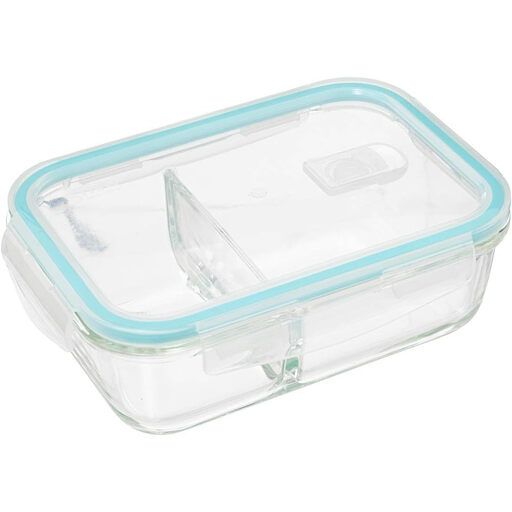
Why this product suits the profile: This borosilicate glass container is suitable for prepared food and storage at home. Its rectangular shape makes efficient use of space in the fridge.
According to the material information, glass absorbs fewer odours than many plastic containers. The lid has a silicone component; make sure the closure is fully shut before transporting it.
Borosilicate glass, 21.5 × 15.3 × 7.5 cm and dishwasher-safe according to the product information.
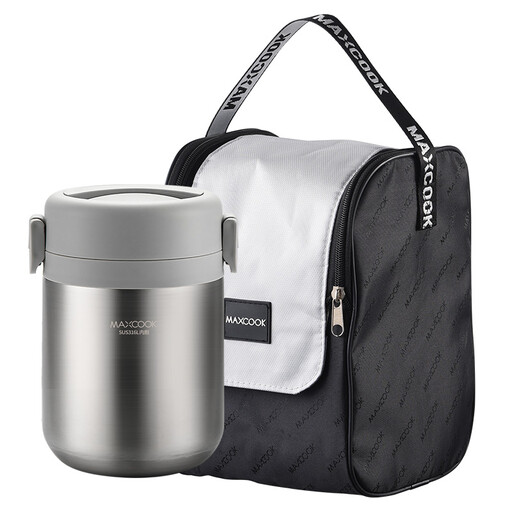
Why this product suits the profile: The wide opening and 1.5 l capacity are well suited to soups, stews and larger portions for work, commuting or short trips.
The screw-top design is intended for liquid foods. Nevertheless, the product information advises that the container should not be turned upside down or tilted.
316 stainless steel, vacuum insulation, 1.5 l capacity, wide neck and an additional insulated lunch bag.
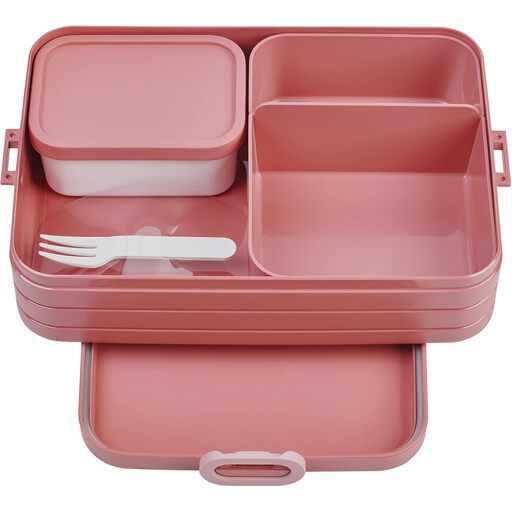
Why this product suits the profile: With a capacity of 1.5 l, the large version is suitable for longer school days, the office or meal prep with several components.
The separate compartments prevent dry and moist foods from coming into direct contact. According to the product information, it is not intended for use in the freezer.
1.5 l capacity, two compartments, additional box with fork and dishwasher-safe individual containers.
We have put together a complete, regularly updated list of products that fully meet these strict selection criteria and the safety regulations applicable in the EU.
For soup, a wide-necked, vacuum-insulated soup container with a screw-top lid is more practical than a traditional lunchbox. Look for clear manufacturer information about leak resistance, do not overfill the container and transport it upright wherever possible.
This depends on preheating, the amount of food, the outdoor temperature and how often the container is opened. The Maxcook models mentioned are stated to maintain temperature for 4 to 6 hours. This information describes the product specification and should be treated as a practical guide.
Its lifespan depends on the material, closure and care. Stainless steel and glass are long-lasting when used correctly, although seals can wear out over time. Following dishwasher instructions and temperature limits, as well as cleaning the lid correctly, will help extend its useful life.