
Lieferung heute & morgen

Qualitätsgarantie

Willkommens-Angebote freischalten: KOSTENLOSE Lieferung | Bis zu 80 % RABATT | Kostenlose 30-Tage-JoyPlus-Testphase
App herunterladen
A lunchbox should keep your lunch safe in transit, separate different foods and be easy to clean. In practice, problems often have less to do with size and more to do with unclear information about seals, fastenings or whether the box is suitable for the microwave and dishwasher.
These three common buying mistakes can lead to poor choices:
For adults taking lunch to the office, 800 to 1,200 ml is often enough, depending on the meal. If you take larger portions or several components, consider a model of around 1.5 l or a set with several containers. A smaller lunchbox is often easier for children to carry.
A bento lunchbox with several sections is suitable for bread, fruit, vegetables and snacks. However, make sure the dividers suit the way you plan to use it. Fixed dividers keep foods separate, but they do not automatically stop liquids from mixing. Removable inserts offer more flexibility when it comes to cleaning and portioning.
Plastic models are usually lightweight and often suitable for the microwave, freezer and dishwasher. Check for specific details such as BPA-free, the temperature range and whether the lid can be used.
A stainless steel lunchbox is robust and often has a smooth, uncoated interior. However, stainless steel is generally not suitable for the microwave unless the manufacturer explicitly says otherwise and provides clear guidance on any restrictions. Clips on both sides and a silicone sealing ring can help reduce leaks when the box is carried upright. Even so, keep the box upright if it contains soup or food with a lot of sauce.
A dishwasher-safe lunchbox saves time, but seals and accessories should be removed regularly and cleaned separately. Residue under the sealing ring can make hygienic cleaning more difficult and affect the fastening.
For a microwave-safe lunchbox, only use the lid, valve and fastening in the microwave if the product instructions expressly allow it. In most cases, the lid should be removed before heating. If you plan to freeze food, check the temperature range, allow room for expansion and make sure the lid is suitable.
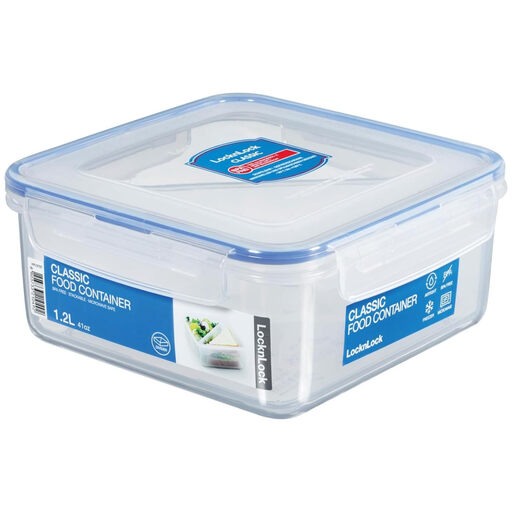
Why this product suits these needs: This 1.2-litre box has an integrated divider and is ideal for sandwiches, snacks and meals at work, school or on the go.
The product details describe an airtight, leakproof fastening. The lid must be removed before using the box in the microwave.
BPA-free plastic, 1.2 l capacity, integrated divider, and suitable for the dishwasher and microwave without the lid.
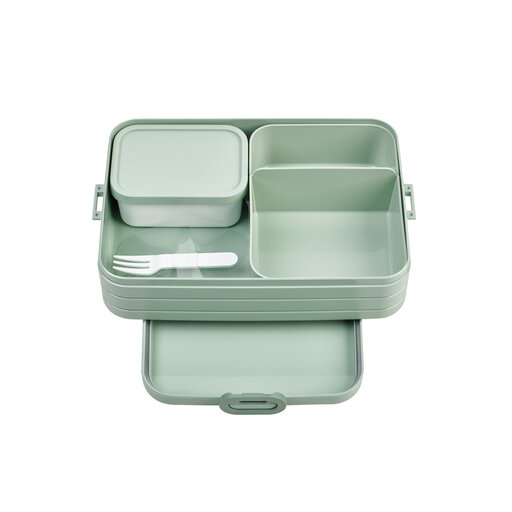
Why this product suits these needs: This 1.5-litre bento box is designed for anyone who wants to carry several foods separately and prefers a removable internal layout.
The inserts can be removed and cleaned separately. According to the product details, the bento boxes are microwave-safe without the lid; the product is not suitable for the freezer.
1.5 l capacity, two separate compartments, an additional container with a fork, and dishwasher-safe design.
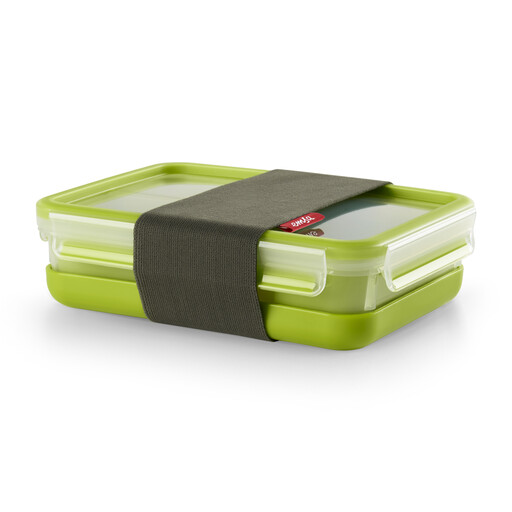
Why this product suits these needs: This box combines three inserts, a separate plate and a freshness seal for versatile meals on the go.
The product description says the design is leakproof, while also reminding you to close the seal properly. The stated temperature range is -40 to +110 °C.
Three inserts, a separate plate, and suitability for the dishwasher, microwave and freezer according to the product details.
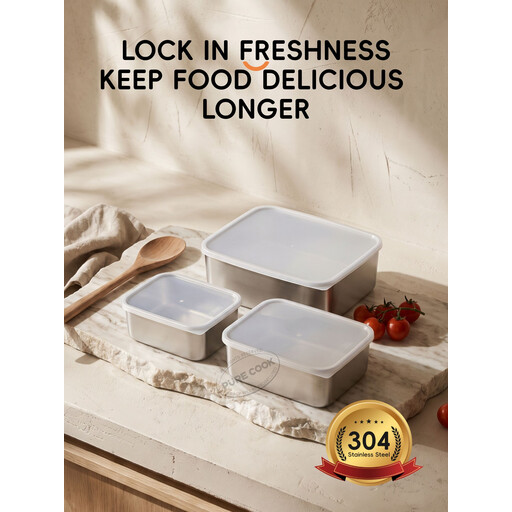
Why this product suits these needs: Three containers with capacities of 1,000, 1,800 and 3,000 ml make it easier to portion prepared meals and store them in the fridge.
The different sizes help you avoid containers that are unnecessarily large or too small. Carry the box upright if it contains liquid food.
304 stainless steel with a smooth interior, three capacities, PE lids with silicone seals, and dishwasher-safe design.
We’ve put together a complete, regularly updated list of products that meet these strict selection criteria and comply fully with the safety regulations in force in the EU.
To keep your lunchbox in good condition for longer, follow a few simple habits:
For work and school, models between around 800 and 1,500 ml are common. A lunchbox with compartments is suitable for dry foods such as bread, fruit or vegetables. Separate, tightly sealed containers are a better choice for sauces and liquid foods.
No. Plastic containers may be microwave-safe, but often only without the lid. Stainless steel is not normally suitable for the microwave. Always follow the manufacturer’s specific guidance for the box, lid and inserts.
How long it lasts depends on the material, how it is cleaned and how much the seal has worn. Check regularly for cracks, warping and fastenings that are no longer secure to help you decide when it needs replacing. There is no reliable single estimate of how long all models will last.