
Lieferung heute & morgen

Qualitätsgarantie

Willkommens-Angebote freischalten: KOSTENLOSE Lieferung | Bis zu 80 % RABATT | Kostenlose 30-Tage-JoyPlus-Testphase
App herunterladen
A lunchbox needs to transport meals safely, be easy to clean, and fit your daily routine. In practice, unclear volume specifications, leaky seals or unsuitable materials can quickly lead to a poor purchase. Particularly when choosing a lunchbox for on the go, it’s worth looking at the technical details rather than marketing claims.
A 1-litre lunchbox sounds like a clear size. What really matters, however, is whether this refers to the actual usable volume or simply a rounded manufacturer’s figure. With a compartmentalised lunchbox, some of the interior space can also be lost to dividers.
So, check the following:
In some product descriptions, the title and technical specifications may differ. That’s a good reason to read the detail page carefully before buying.
A leak-proof lunchbox can reliably hold liquids when the seal and closure are used correctly. That doesn’t automatically mean it’s suitable for soups, sauces or carbonated drinks. A lid that isn’t fitted straight can also affect the seal.
Look out for:
Before using it for the first time, you can fill the container with water, close it and carefully test it over a sink. If you notice any visible cracks, brittle seals or warped lids, the lunchbox should not be used any further.
A lunchbox shouldn’t automatically go into the microwave just because the container itself is suitable. Often, the lid needs to be removed. With a stainless steel lunchbox, microwave use is generally not recommended. Even with glass food containers, the lids, seals and clips may have different material limits than the container itself.
Always read the specific instructions for use. Notes like “dishwasher-safe” don’t necessarily apply to every individual part or to every washing temperature.
Plastic is usually lightweight and practical for everyday transport. Information such as “BPA-free” should be clearly stated in the product details, not just inferred from product images.
Borosilicate glass is temperature-resistant and doesn’t retain odours. However, it is heavier. For example, a glass container may have a stated weight of 880 grams. That can be a relevant factor for the daily commute to school or the office.
304 stainless steel is often used for insulated containers. It’s robust and suitable for soups, stews or hot meals. An insulated lunchbox with vacuum technology should be pre-warmed or pre-cooled according to the manufacturer’s instructions. For the Maxcook models, hand washing is also recommended.
A bento box with several sections is ideal for meals where you want to keep side dishes, fruit and the main course separate. A simple rectangular lunchbox, on the other hand, often offers more continuous space for sandwiches, salads or larger portions.
Compare the external dimensions with your bag. A box with a 1.5-litre capacity can be useful for a long working day, but it takes up significantly more space than a compact lunchbox.
A thermal food container is a different product category from a standard lunchbox. It’s particularly suitable for hot meals and soups. Vacuum-insulated models shouldn’t be overfilled and should be transported upright where possible. The stated heat retention time is a guideline and depends on factors such as the starting temperature, fill level and surroundings.
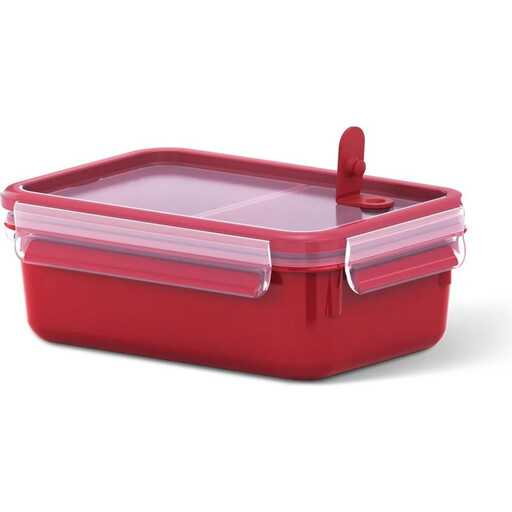
Why this product fits the profile: This rectangular lunchbox offers a 1,000 ml capacity and is designed for everyday use in the office, at school or on the go.
The product details explicitly state that it is leak-proof and suitable for the dishwasher and microwave. For microwave use, the lid must be removed.
1,000 ml capacity, 283 g product weight, BPA-free material specification and dimensions of 195 × 135 × 70 mm.
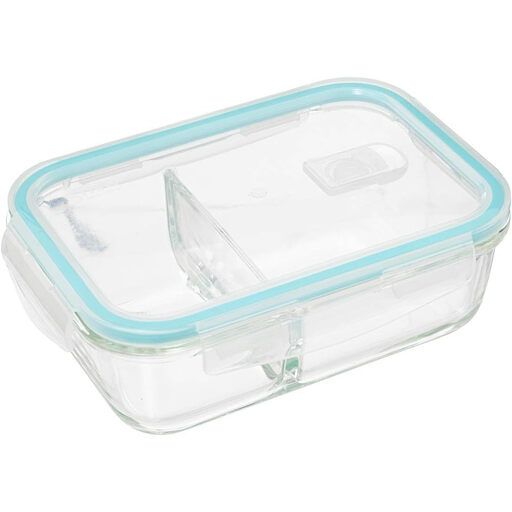
Why this product fits the profile: This container combines borosilicate glass with compartments, appealing to users who prioritise material quality and keeping different foods separate over a low transport weight.
The material and dishwasher information is clearly stated. Before purchasing, you should check the conflicting volume information in the product description.
Borosilicate glass, silicone seal and dishwasher-safe design; stated weight 880 g.

Why this product fits the profile: The wide neck makes it easy to fill and eat soups or stews from. The size is suitable for longer trips, multiple portions or a large daily requirement.
The product description mentions vacuum insulation, a tightly sealing lid and the instruction to transport the container upright.
304 stainless steel, 1.5-litre capacity, wide filling opening and stated heat or cold retention of 4–6 hours.
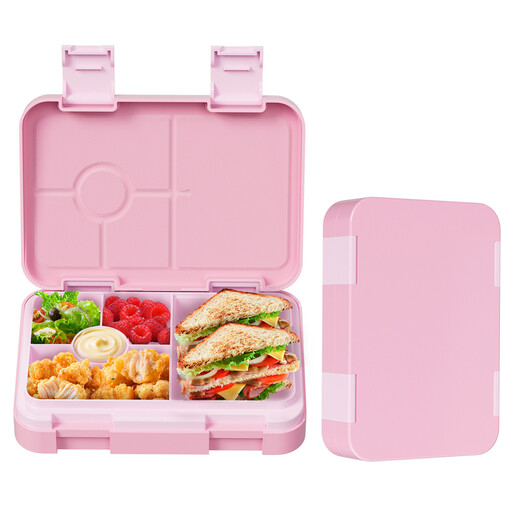
Why this product fits the profile: This bento box with five compartments is designed for users who want to transport different parts of a meal separately.
The double latch closure suggests it’s more than just a loosely fitting lid. Information on leak-proofing, microwave and dishwasher suitability should be checked on the detail page before buying.
Five separate compartments and two closures; ideal for portioned meals, snacks and side dishes.
We’ve put together a complete, regularly updated list of products that fully meet these strict selection criteria and the safety regulations in force in the EU.
For a sandwich, some fruit and a snack, around 700 to 1,000 ml is often sufficient. If you need to transport larger meals or multiple portions, you can choose a model with 1.4 to 1.5 litres. What matters most is your own portion sizes and the available space in your bag.
Both materials have different properties. Glass is transparent and, depending on the product, suitable for the microwave, but it is heavier. Stainless steel is robust and often used for vacuum-insulated containers, but it must not be used in the microwave. The specific manufacturer’s instructions are what count.
The lifespan depends on the material, closure, cleaning and daily wear and tear. A lunchbox should be replaced if you notice cracks, warping, permanently damaged seals or unpleasant odours that persist despite thorough cleaning.