
Lieferung heute & morgen

Qualitätsgarantie

Willkommens-Angebote freischalten: KOSTENLOSE Lieferung | Bis zu 80 % RABATT | Kostenlose 30-Tage-JoyPlus-Testphase
App herunterladen
A lunchbox with compartments should keep meals separate, sit securely in your rucksack and be easy to clean. In practice, however, unclear product details and unsuitable designs often lead to disappointing purchases. If you are looking for a bento lunchbox or compartment lunchbox, you should therefore consider more than just the design or a large capacity figure.
A box may have a fastening system without actually being suitable for liquid foods. Key features include a continuous seal, a sturdy lid and a closure system that applies even pressure to the seal. If the compartments can be removed, you should also check whether each compartment is sealed separately or whether only the outer lid provides the seal.
For soup, sauce or yoghurt, a classic lunchbox with loose dividers is usually less suitable than a tightly sealed container or a separate stainless steel insulated food jar.
A high litre capacity does not automatically mean greater practicality. A 1.5-litre box may be useful for a working day, but it takes up considerably more space in your rucksack and adds extra weight. Compact formats are often easier for schoolchildren to carry. Adults who prepare meals, on the other hand, may need more volume or several separate containers.
Pay attention to:
Not every plastic product is suitable for the microwave, freezer or dishwasher. A dishwasher-safe lunchbox should be used according to the manufacturer’s instructions; for many models, this applies only to the top rack. For microwave use, the lid generally needs to be removed completely.
A plastic box that appears practical is not necessarily intended for liquids either. According to the product information, the Samba Compartmentalised Plastic Box is described for dry small items and dry food, and is not intended for liquids. It is therefore not a conventional lunchbox for soup or sauce.
For a lunchbox for work and school, the layout should suit your everyday meal. Two larger compartments, for example, are suitable for a main course and a side dish. Three or more smaller sections are practical for fruit, snacks and bread, but may be less flexible for larger portions.
A leakproof lunchbox should provide clear information about its seal and closure. A four-sided locking system, such as the one on the LocknLock model, distributes pressure more evenly than a single clip. Even so, food should not be filled beyond the maximum fill line.
Polypropylene (PP) is relatively lightweight and is used in many bento lunchboxes. If information such as BPA-free is provided, this should be stated explicitly in the product details. LocknLock and Mepal are described as BPA-free in the available information.
304 or 316 stainless steel is robust and typically absorbs fewer odours. However, stainless steel containers are often heavier and are not suitable for microwave use. With an insulated food jar, the lid seal and vacuum insulation are additional considerations. These products should generally be washed by hand.
An insulated lunchbox is useful for hot or cold food when several hours pass between preparation and eating. Temperature retention depends on the starting temperature, fill level and surrounding conditions. Without specific test conditions, it is not meaningful to make a blanket promise about maintaining a particular temperature.
When using a microwave:
The following selection groups models according to specific everyday situations. The available product information on materials, capacity, compartments, accessories and care is the deciding factor.
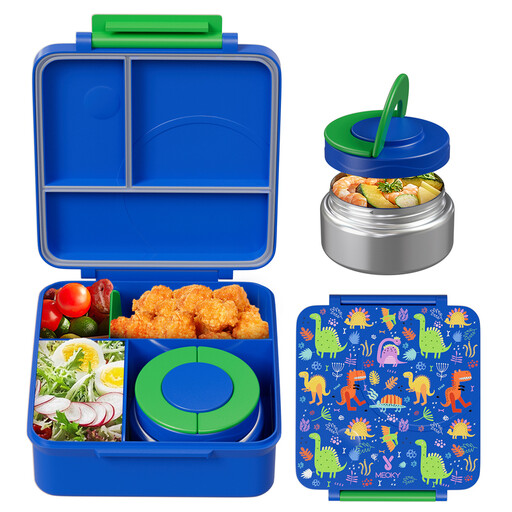
Why this product suits this profile: The divided design provides a simple way to transport a main meal and snacks separately. It is suitable for anyone looking for a straightforward, reusable lunchbox for everyday use.
The compartments make it clear how food is separated. Before buying, however, you should check whether the single closure is sufficient for the foods you plan to carry.
Divided design and one-handed closure according to the product description; suitable for separate dry meals and snacks.
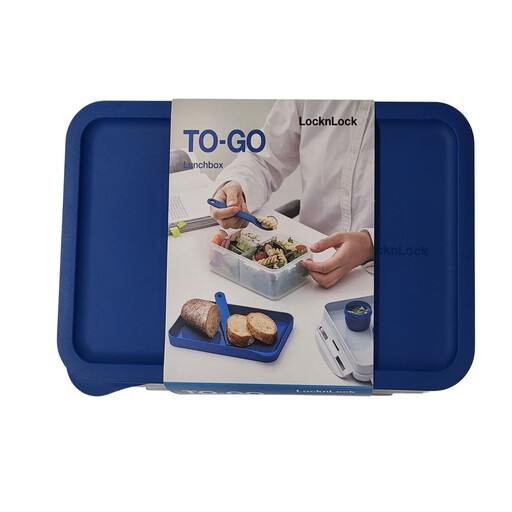
Why this product suits this profile: This model combines a 1,000 ml capacity with three removable compartments, cutlery and a sauce container. It is designed for organised meals at the office, at school or on day trips.
The specifications mention a four-sided locking system, a silicone seal and suitability for liquid foods. Microwave use is intended only without the lid and up to 120 °C.
Three removable compartments, cutlery set and sauce container, with a stated temperature range of -20 °C to 120 °C; dishwasher-safe on the top rack.
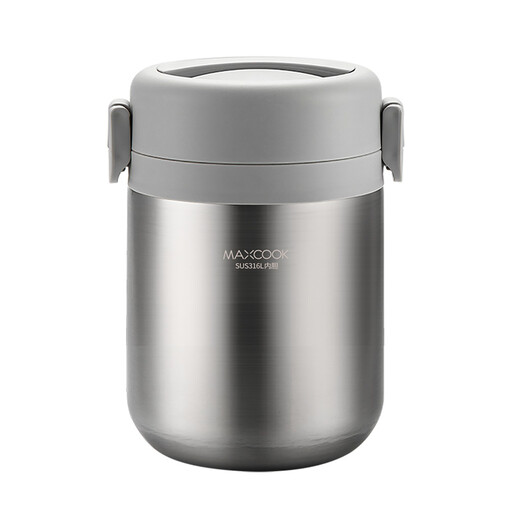
Why this product suits this profile: The wide stainless steel insulated food jar is designed for soups, stews and other hot or cold foods. It is well suited to outdoor users, commuters and meal-prep enthusiasts who need more capacity.
The vacuum insulation is explicitly described. At the same time, hand washing is recommended; if you need a dishwasher-safe lunchbox, you should choose a different design.
316 stainless steel, 1.5-litre capacity, wide opening and a lid described as leakproof; not suitable for microwave use or carbonated drinks.
We have put together a complete, regularly updated list of products that fully meet these strict selection criteria and the safety regulations applicable in the EU.
A reusable lunchbox remains functional when its seals and closures are checked regularly. Food remnants should be removed after every use, and all individual parts should be dried thoroughly. Odours and residue can build up particularly easily in silicone seals.
Practical tips:
Look for explicitly stated leakproof performance, a continuous seal and a sturdy multi-sided closure. For soup, insulated food jars with a wide opening are often more suitable than boxes with open dividers. Always follow the manufacturer’s instructions regarding liquids and the position in which the product should be transported.
For a standard meal, many practical formats range from around 900 ml to 1,000 ml. If you also carry fruit, snacks or larger portions, you can choose a 1.5-litre model. External dimensions and weight are also important, especially when carrying it in a rucksack every day.
This depends on the model and its individual components. For the LocknLock container, the dishwasher is specified for the top rack; microwave use is intended without the lid and up to 120 °C. Stainless steel insulated food jars are normally suitable for neither the microwave nor the dishwasher. The care instructions for the specific product take precedence.