
Lieferung heute & morgen

Qualitätsgarantie

Willkommens-Angebote freischalten: KOSTENLOSE Lieferung | Bis zu 80 % RABATT | Kostenlose 30-Tage-JoyPlus-Testphase
App herunterladen
A lunchbox with compartments should do more than simply store food. Sandwiches, fruit, side dishes and dressing need to stay separate, while the box should fit in your rucksack and be easy to clean after use. At the same time, many models are marketed as “leak-proof”, “airtight” or “microwave-safe”, without their limitations being immediately obvious.
The following points will help you avoid common purchasing mistakes and choose a Bento box or lunchbox with compartments that suits your everyday routine.
A leak-proof lunchbox can only reliably contain liquids when the lid, seal and clips are closed correctly. Removable inserts can also create additional contact points. Before buying, you should therefore check:
A simple partition will stop dry foods from mixing. For salad dressing, yoghurt or sauces, however, a salad box with a dressing container is usually more practical.
With plastic boxes, the lid will generally need to be removed completely before heating the contents in the microwave. Otherwise, pressure may build up. The temperature limit is also relevant: according to the product specifications, some models have a maximum temperature of 120 °C. A lunchbox is not automatically suitable for use in an oven, on a hob or with direct heat either.
A box with three or more compartments may seem versatile, but it does not always offer enough room for a complete meal. For people who work and students, 1.0 to 1.2 litres is often sufficient. Anyone carrying larger portions, several side dishes or meal-prepped food may benefit from 1.4 to 1.6 litres. The actual internal layout is what matters, not just the stated total capacity.
A meal-prep box with removable compartments can be arranged differently depending on the meal. For example, three separate inserts are suitable for a main course, side dish and snack. A permanently integrated divider is less flexible, but it can make cleaning easier.
For everyday use, it is worth checking the external dimensions. A 1.5-litre box may have a large footprint despite its moderate height, meaning it may not fit in a smaller rucksack or work bag.
Polypropylene (PP) and silicone are commonly used in plastic models. A BPA-free lunchbox should be explicitly described as BPA-free. This statement refers to the material and does not replace checking the other product specifications.
If you want to avoid plastic, you can choose a stainless-steel box with compartments. Stainless steel is robust and retains little odour, but it is not suitable for microwave use. With any box, seals should be checked regularly for cracks, deformation or residue.
A dishwasher-safe lunchbox makes everyday use easier. However, check whether this applies to all individual parts or just the box itself. According to the product specifications, several LocknLock models are intended to be cleaned in the top rack of the dishwasher.
For freezing, the box should leave enough room for the contents to expand. When using it in the microwave, remove the lid, observe the temperature limit and take hot contents out carefully. An airtight storage container is not automatically suitable for carbonated drinks or dry ice.
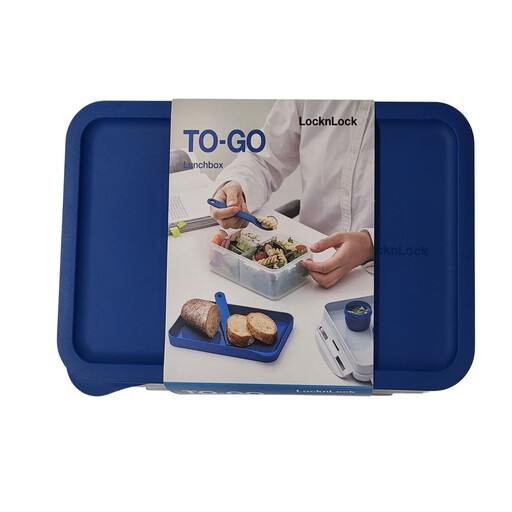
Why this product suits the profile: The compact 1.0-litre box is suitable for regular break-time portions at school, university or in the office. According to the LocknLock product specifications, the package includes three removable compartments, cutlery and a sauce container.
The removable compartments keep foods separate, while the four-sided closure and silicone seal provide an airtight and watertight seal according to the product specifications.
1.0-litre capacity; according to the product specifications, suitable for microwave, freezer and dishwasher use, subject to the stated usage limitations.
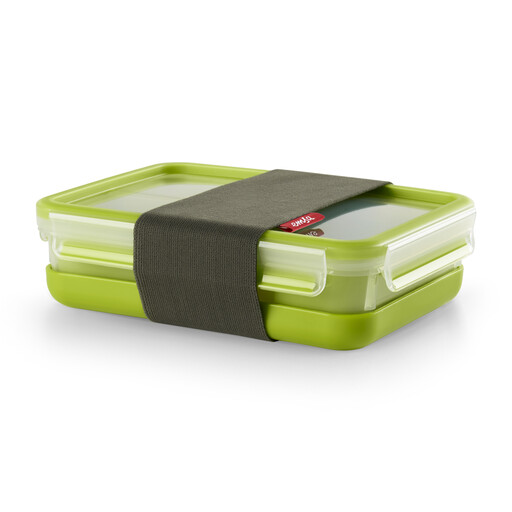
Why this product suits the profile: This box is designed for users who want separate inserts and a defined temperature range for everyday use, work and travel.
According to Emsa’s product specifications, three inserts and a separate plate are included. The seal is intended to keep liquids contained during transport, provided the lid is fully secured.
1.2 litres; according to the product specifications, suitable for dishwasher, microwave and freezer use between -40 °C and +110 °C.
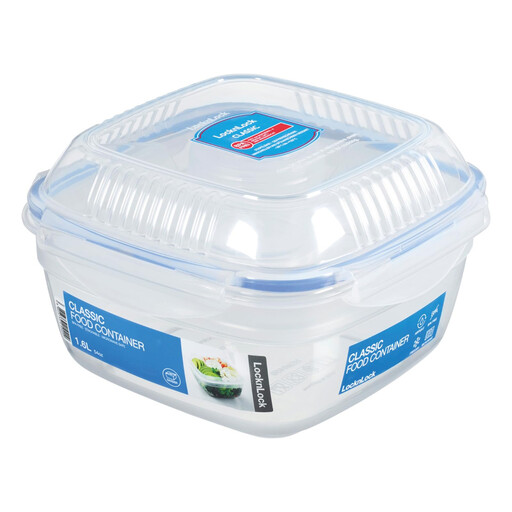
Why this product suits the profile: The generous capacity, topping insert and sauce container are ideal for salads, substantial meal-prep portions and longer working days.
According to the LocknLock product specifications, the separate topping insert and sauce cup stop crunchy ingredients and dressing from mixing with the salad too early.
1.6 litres, BPA-free plastic and a four-sided closure; according to the product specifications, suitable for microwave use without the lid and for the top rack of the dishwasher.
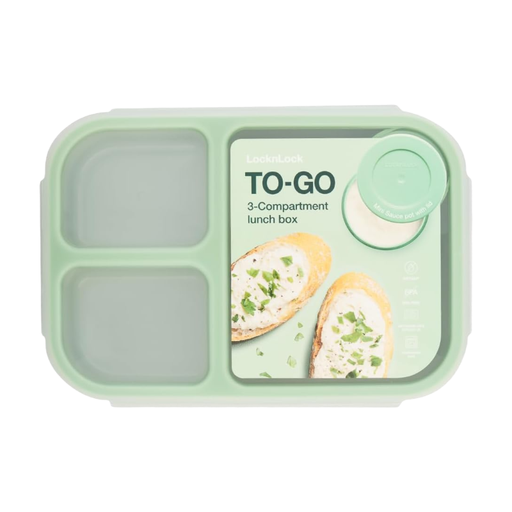
Why this product suits the profile: The 1,500 ml capacity provides room for a main course, side dishes and salad. The included sauce cup helps keep liquid ingredients separate.
The three separate sections reduce the risk of foods mixing. According to LocknLock’s product specifications, the lid has a silicone seal and the box features an airtight, leak-proof closure.
1,500 ml and three compartments plus a sauce container; according to the product specifications, suitable for microwave, freezer and dishwasher use.
We have put together a complete, regularly updated list of products that fully meet these strict selection criteria and the safety regulations applicable in the EU.
For a normal break-time meal, 1.0 to 1.2 litres is often enough. If you are taking larger portions, fruit and several side dishes, consider models from around 1.4 litres upwards. The external dimensions and the height of the compartments are also important.
No. A box is only suitable for liquids if this is explicitly stated and the lid is closed correctly. A separate dressing container provides additional separation for salads. Check all the locks before transporting the box.
There is no fixed replacement interval. Visible cracks, brittle seals, deformation, loose clips or persistent odours despite thorough cleaning are the key warning signs. If you notice any of these, replacing the box is advisable for hygiene and practical reasons.