
Lieferung heute & morgen

Qualitätsgarantie

Willkommens-Angebote freischalten: KOSTENLOSE Lieferung | Bis zu 80 % RABATT | Kostenlose 30-Tage-JoyPlus-Testphase
App herunterladen
A lunchbox with compartments should keep meals separate, close securely and be easy to clean. In practice, however, many models do not suit the actual need: a large bento box may be oversized for a sandwich, while a small lunch box may not offer enough capacity for a full working day.
The term leakproof lunchbox is only practically relevant when the lid, seal and fasteners work together. A loose inner compartment may separate foods, but it does not automatically stop dressing or liquids from getting into your bag. Look for a continuous silicone seal and check whether the lid locks securely on several sides.
A bento box with five or more sections may seem versatile, but filling and cleaning it can involve more effort. For sandwiches, fruit and a snack, one to three sections are often enough. If you regularly transport salad, also check whether there is a separate dressing container or topping compartment.
“Dishwasher-safe” does not always apply to every individual part or every level of the dishwasher. Likewise, a microwave-safe lunchbox can often only be heated without the lid. Always check the manufacturer’s information regarding temperature ranges, the lid and accessories. With glass lids, sudden changes in temperature should also be avoided.
For a snack or sandwich, around 700 to 1,000 ml is often sufficient. A lunchbox for work and school with a capacity of approximately 1.2 to 1.6 litres is more suitable for a complete meal with a side dish. Meal-prep sets with several containers can be useful because portions can be prepared separately and stacked in the fridge.
Capacity is not the only consideration: a flat, wide box fits better in many work bags, while a deep model is suitable for salads or larger portions. Compare the external dimensions with your existing rucksack or cool bag.
A BPA-free lunchbox made from polypropylene is lightweight and resistant to breakage. Stainless steel does not retain many odours and can be less susceptible to discolouration from oily foods. Glass is useful for checking the contents at a glance and for storage, but it increases the weight and requires careful handling when temperatures fluctuate.
Being BPA-free alone says nothing about the entire product. Also check the material specifications for the seal, cutlery and removable inserts.
An airtight lunch box should be fully closed before you transport liquids in it. Four-sided clip fasteners usually distribute pressure more evenly than a single snap closure. With a salad box with a dressing container, the sauce, toppings and salad base should remain separate so that the texture is preserved until mealtime.
For everyday use, a dishwasher-safe lunchbox is practical. Where possible, remove the seals and inserts so that residue cannot collect underneath them. Information such as “top rack” or “microwave without the lid” should be followed.
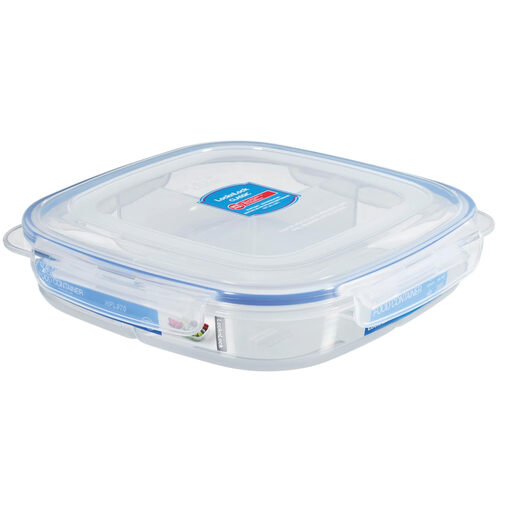
Why this product suits this profile: The single, transparent compartment is suitable for snacks, sandwiches and simple meals at the office, at school or on the go.
The 1.35-litre box focuses on a clear, accessible interior rather than hard-to-reach small sections. According to the product information, it should be used in the microwave without the lid.
BPA-free plastic, an airtight seal according to the product information, and suitability for the freezer, microwave without the lid and dishwasher.
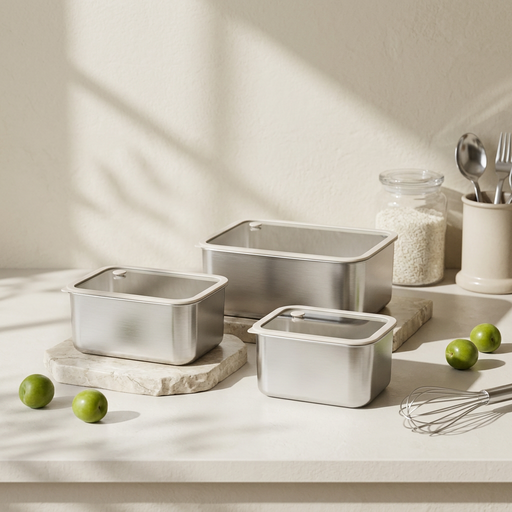
Why this product suits this profile: This set is designed for users who want to prepare different meal-prep portions for the fridge, pantry or a picnic.
The three separate sizes of 1,000, 1,800 and 3,000 ml make the intended uses clearer than one oversized compartment. Sudden changes in temperature should be avoided with the glass lid.
304 stainless steel containers, borosilicate glass lids, silicone seals, stackable design and dishwasher cleaning according to the product information.
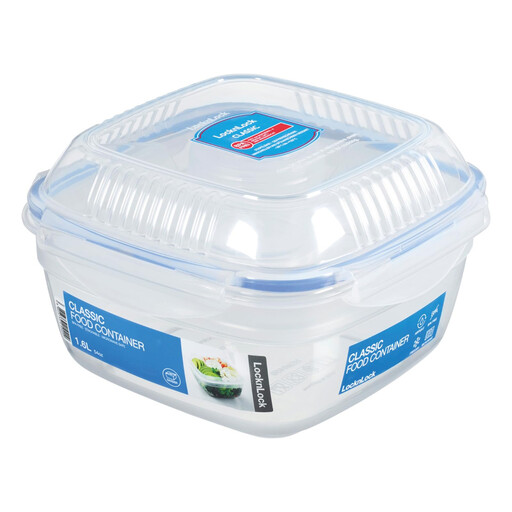
Why this product suits this profile: The large format with a separate topping insert and sauce cup is designed for salads and substantial meals at the office, while travelling or commuting.
Toppings and dressing are not mixed directly with the salad base. According to the product information, all four clips must be securely closed during transport.
1.6-litre capacity, BPA-free plastic, separate topping compartment and sauce cup, plus dishwasher suitability according to the product description.

Why this product suits this profile: For professionals, school pupils and students who want to carry separate foods, cutlery and sauce in one box.
The three removable compartments can be adjusted to suit the meal. For microwave use, the lid must be removed completely; according to the product information, it is not suitable for use in an oven.
1.2-litre total capacity, three removable compartments, knife, fork, spoon and sauce container; BPA-free and dishwasher-safe according to the product information.
We have put together a complete, regularly updated list of products that fully meet these strict selection criteria and the safety regulations applicable in the EU.
For a sandwich with fruit or snacks, two to three sections are usually enough. A bento box with five compartments is useful if you regularly carry lots of small portions separately. The key is to choose compartments that suit the portion sizes and are easy to clean.
Only fill liquids up to the stated capacity and close all clips completely. Check the silicone seal regularly for cracks or distortion. For dressing, a separate container is usually more practical than one large shared compartment.
Its service life depends on the material, closure and care. Allow the box to dry completely after cleaning and do not use damaged containers. With plastic, severe discolouration, cracks or lids that have become permanently warped should be treated as signs that the box needs replacing.