Households with limited worktop space
If you want to wash lunchboxes regularly but can’t keep worktop space free for a tabletop model, first check whether you have a suitable freestanding or integrated space, and measure the appliance carefully.


When worktop space is limited, a suitable 45 cm freestanding or integrated dishwasher is a sensible place to start, provided you have a suitable spot and the necessary connections. A tabletop model may work for smaller loads, but it still needs its own space. Measure your boxes and lids and check the basket layout rather than assuming place-setting capacity tells you whether they will fit.
If you want to wash lunchboxes regularly but can’t keep worktop space free for a tabletop model, first check whether you have a suitable freestanding or integrated space, and measure the appliance carefully.
If you want to wash boxes, lids and other dishes together, check that the basket layout can hold everything securely and that the spray arms can rotate freely.
If you only have a few boxes and dishes to wash, a tabletop model could be an option. Compare the space it needs and its smaller capacity with the number of cycles your load may require.
A good fit if: You have a suitable space and want to wash lunchboxes alongside everyday dishes.
Things to weigh up: It takes up floor space and needs suitable connections, so measure the exact location where you plan to install it.
A good fit if: You have a suitable cavity and cabinet door, and want to keep your worktop clear.
Things to weigh up: The appliance dimensions alone won’t confirm that it will fit the cavity or suit the cabinet door and connections.
A good fit if: You have a small amount of washing up and a suitable spot beside the worktop.
Things to weigh up: A tabletop model can be wider than a 45 cm dishwasher and take up worktop space. Its lower capacity may also mean extra cycles when you have more dishes to wash.
| Priority | What to check when buying | Who should pay particular attention? |
|---|---|---|
| Space and type | Check the appliance and cavity dimensions, door clearance, location and connections. | If I have limited worktop space, the appliance needs to fit somewhere else suitable. Around 36% of consumers focus mainly on space and the type of appliance. |
| Room for boxes and lids | Measure the largest items, check the basket layout and make sure the spray arms can move freely. | If boxes, lids and other dishes all need to fit, the actual layout matters more than the place-setting capacity. Around 29% of consumers focus on whether their lunchbox parts will fit. |
| Consumption for your typical load | Compare energy and water figures for the same programme, and take your own washing-up frequency into account. | If I want to estimate what my usual washing-up frequency means, I compare the Eco figures with the loads I actually wash. Around 21% of consumers focus primarily on consumption. |
| Connections and ongoing costs | Check the manufacturer’s instructions against your existing connections; look at installation and warranty terms separately. | If I want to estimate the installation work and future costs, I first check the connections and services on offer. Around 14% of consumers see connections and ongoing costs as their main concern. |
Your choice depends on both the space available and the dimensions of your lunchboxes. A slimline dishwasher only helps if it fits where you plan to put it and its baskets have room for all the individual parts.
The Exquisit tabletop model considered here is 55.0 cm wide, while the Bosch freestanding model is 45.0 cm wide. The label alone doesn’t tell you how much worktop or floor space a specific model needs.
Compare the appliance’s width, depth and height, as well as the clearance needed to open the door, with the space available.
A tabletop model takes up worktop space, so check whether you have another suitable place for it.
Place settings describe a standardised capacity for dishes, not the number or shape of your boxes and lids.
Measure the largest items, check the basket layout and make sure the spray arms can rotate freely when the dishwasher is loaded.
The glass and fork symbol indicates that an item is suitable for contact with food; it doesn’t mean it’s dishwasher-safe. Instructions can vary between containers, lids and seals. The consumer advice centre explains the difference.
Check the instructions for each lunchbox part separately, and clean items another way if their instructions say to do so.
The consumption figures shown are for the Eco programme. Frequent extra cycles can affect your overall consumption. The German Environment Agency recommends using the Eco programme and running the dishwasher when it’s full.
Compare label figures for the same programme, and take your actual load size and washing-up frequency into account.
The freestanding SPS4EMW02D is an example of a 45 cm model.
The fully integrated SR63EX25KE is an example of a slimline built-in model, provided you have a suitable cavity.
The freestanding SGS0445PS is a 45 cm model with features for different types of load.
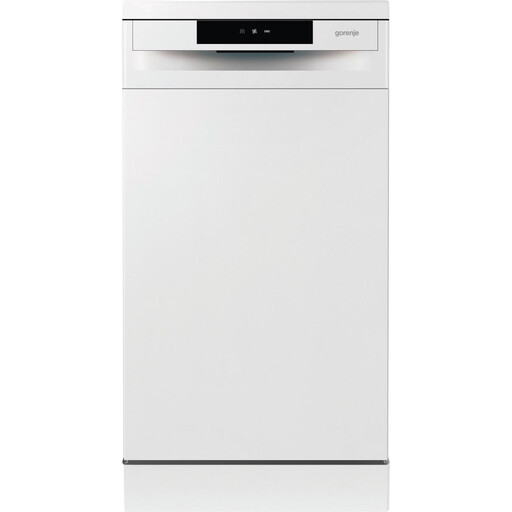
The GSP 14544-1 W is a freestanding model with a net width of 44,8 cm.
Tabletop models are one option if you have a suitable spot away from your limited worktop space.
This selection includes slimline freestanding dishwashers for a suitable space. Check the basket layout and dimensions of each model against your lunchboxes and kitchen.
 No image available
This 44,8 cm-wide freestanding model is worth considering for a suitable narrow space. Measure your lunchboxes and check the basket layout before you decide.
It has 9 place settings and 5 programmes, including Eco, Intensive and Quick. The dimensions are 84,5 × 44,8 × 60 cm. Other listed features include a stainless steel interior, AquaStop and a self-cleaning filter.
 No image available
The height-adjustable upper basket and fold-down racks give you different loading options. Check that your largest boxes and lids will fit.
It has 10 place settings, 6 programmes, energy class C and dimensions of 850 × 448 × 600 mm. Features include a cutlery drawer and three height settings for the upper basket.
 No image available
This 44,8 cm-wide model can be compared with the space available. The place-setting capacity alone won’t tell you whether your lunchboxes will fit.
It has 9 place settings, 6 programmes and dimensions of 81,5 × 44,8 × 55 cm. Features include an adjustable basket, a cutlery drawer, fold-down cup holders and extra drying.
 No image available
The flexible basket system and height-adjustable upper basket offer different loading options. Check your lunchbox dimensions against the actual basket layout.
It has 10 place settings, energy class E and dimensions of 84,5 × 45 × 60 cm. Features include a cutlery drawer, fold-down elements and MultiZone for washing a single basket.
 No image available
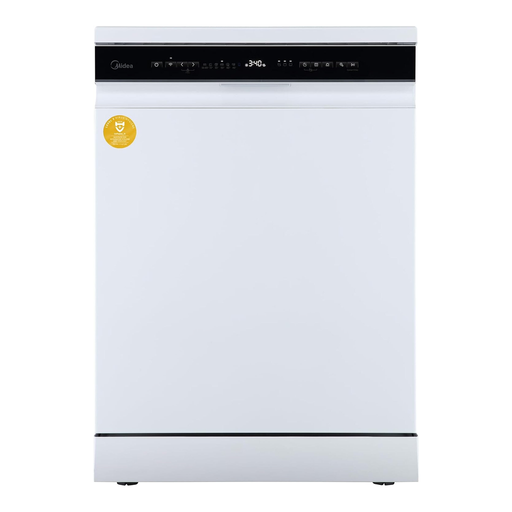
This freestanding dishwasher is designed for a suitable space. Before buying, check the appliance dimensions and connection requirements against the product details.
The title lists a width of 45 cm, 10 place settings and energy class C. Other stated features include a height-adjustable upper basket, a cutlery basket, Aqua Stop and a delay start.
No. The symbol indicates that an item is suitable for contact with food; it doesn’t mean it’s dishwasher-safe. Check the instructions separately for the container, lid and any other parts.
First, compare figures for the same programme: the dishwasher energy label shows energy consumption in kWh per 100 Eco cycles and water consumption in litres per Eco cycle. You’ll also need to consider how often you expect to run it; other programmes may use different amounts.
Check the location, water inlet and outlet, and power supply against the instructions for your specific appliance. Load the boxes so the spray arms can rotate freely, and clean the filter as directed in the appliance instructions.
Dishwashers that must carry an energy label need to display the EU energy label when sold online, too. The EU explains this requirement, while the consumer advice centre describes the A to G scale used for new models. So don’t compare them with the old A+++ scale.
No. Your statutory rights cover faults and apply to the seller; a guarantee is an additional voluntary service with its own terms. The consumer advice centre explains the difference.