
Lieferung heute & morgen

Qualitätsgarantie

Willkommens-Angebote freischalten: KOSTENLOSE Lieferung | Bis zu 80 % RABATT | Kostenlose 30-Tage-JoyPlus-Testphase
App herunterladen
A lunchbox for work and days out should do more than hold a sandwich. Employees, teachers, care workers, students and commuters often need space for a full meal, drinks and snacks. For picnics, camping trips or longer journeys, insulation and a secure closure are also important.
Many products look similar at first glance. However, some common buying mistakes can mean that the bag is hardly used in everyday life.
The statement “for lots of containers” says little about how practical a product is to use. If there is no separation between dry food and chilled dishes, bread, fruit or documents may come into contact with moisture. For commuting, a backpack with a lunch compartment or a model with separate inner sections is often more practical than one large compartment.
A leak-proof lunchbox can retain liquid more effectively when the lid, seal and fasteners are closed correctly. However, this does not automatically mean that it is suitable for soups or liquid foods in every position. Before buying, shoppers should check the specific product description, the type of closure and the intended use.
A thermal lining made from aluminium foil, EVA or foam can reduce heat transfer. It does not replace active cooling, however. For perishable foods, a suitable ice pack, a fully closed zip and the shortest possible transport times are important additional factors. A thermal lunchbox should therefore be assessed according to its insulating material, inner lining and closure – not just the word “cooling”.
Before ordering, measure how much space is available in your rucksack, locker or bike basket. A lunch backpack with a laptop compartment, for example, must have enough room for your device, documents and food. Useful details include:
A model with a removable lunch compartment may be appealing to commuters, as the internal capacity can be adjusted when needed.
For a stainless steel lunchbox, the description “304 stainless steel” is a specific indication of the material. It is durable and is commonly used for food containers. Nevertheless, users should check whether the lid, seals and fasteners can be cleaned separately.
For a cool bag, look for water-repellent outer material, a wipe-clean inner lining and durable zips. Textile insulated bags should be cleaned according to the care instructions. If the manufacturer recommends cleaning with a damp cloth, the bag is not automatically suitable for machine washing.
For meal prep, tightly sealing containers with matching lids are useful. A meal-prep container should fit inside the bag without putting tension on the zip. Overfilling can place strain on seams, fasteners and seals.
Anyone looking for a cool bag for picnics and camping should also consider separate compartments, carrying comfort and empty weight. A heavy model can become impractical over longer distances, while a model that is too small may not provide enough room for drinks and food.
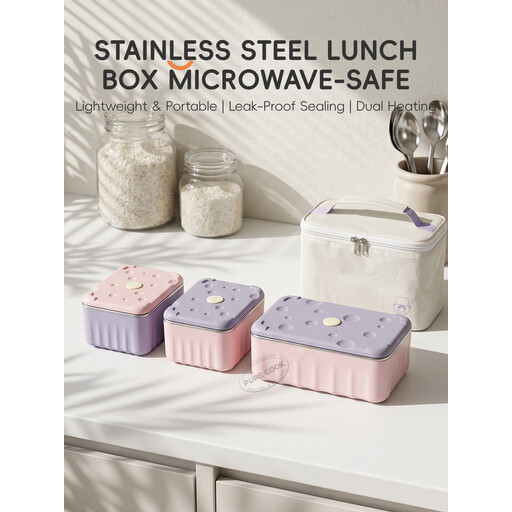
Why this product suits the profile: This three-piece set is designed for users who portion meals at home and need containers for work, school or their daily commute. The stated configuration includes 304 stainless steel containers and an insulated bag.
The containers are supplied as a set with different stated capacities. This makes it easier to adapt portion sizes instead of transporting everything in one undivided container.
304 stainless steel, a three-piece container set and a supplied insulated bag, according to the product description.
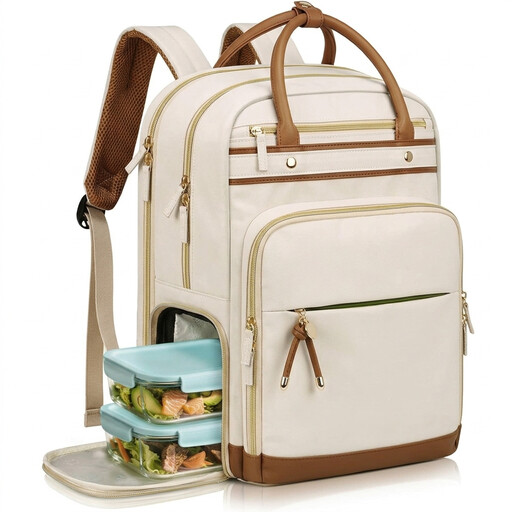
Why this product suits the profile: This work backpack combines a removable insulated lunch compartment with a padded compartment for laptops up to 15.6 inches, an A4 organiser and a luggage strap. It is well suited to office workers, teachers, care workers and students with several daily carrying needs.
The lunch compartment can be removed from the rest of the backpack. This keeps food separate from work documents, while also creating additional storage space when the compartment is not in use.
Water-repellent polyester, an aluminium foil and EVA lunch compartment, a laptop compartment for devices up to 15.6 inches, plus a USB port and trolley strap.
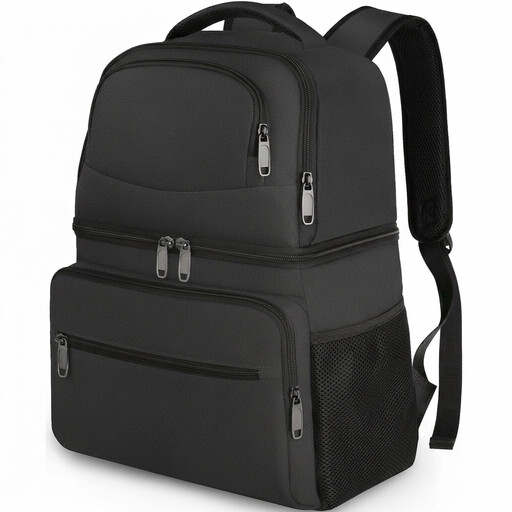
Why this product suits the profile: This insulated lunch backpack is aimed at outdoor enthusiasts, families and users who want to organise drinks and food separately for picnics, camping, walks or day trips.
The dual-compartment design separates the insulated lower section from the dry upper compartment. The PEVA inner lining is described as leak-proof; the zip should nevertheless be closed fully.
8-mm foam insulation, PEVA inner lining, separate compartments, an empty weight of 700 g, plus adjustable shoulder and waist straps.
We have put together a complete, regularly updated list of products that fully meet these strict selection criteria and the safety regulations applicable in the EU.
To help a lunchbox for work and days out retain its qualities for as long as possible, users should follow a few simple habits:
This depends on the meal, drink and journey. A compact set of containers is often sufficient for a single portion. Anyone also carrying fruit, snacks, bottles or a laptop will need a lunch compartment or a backpack with several compartments. The internal dimensions are more informative than a general litre capacity.
Insulation slows down temperature equalisation but does not guarantee a specific temperature duration. How long it lasts and how well it performs depend on factors including the starting temperature, surroundings, contents, how often it is opened and the ice packs used. For perishable foods, follow the relevant food storage guidance.
A lunchbox set can be useful when meals need to be portioned and transported separately. Before buying, shoppers should check whether the containers fit in the intended bag, which lids are included and whether the individual parts can be cleaned easily.