
Lieferung heute & morgen

Qualitätsgarantie

Willkommens-Angebote freischalten: KOSTENLOSE Lieferung | Bis zu 80 % RABATT | Kostenlose 30-Tage-JoyPlus-Testphase
App herunterladen
A lunchbox should transport meals safely, be easy to clean and suit your daily routine. A compact lunchbox is often enough for the office, while schoolchildren and parents can benefit from a lunchbox with compartments. If you want to take soup, stew or hot pasta with you, however, an insulated food container is usually the better choice.
Three common pitfalls in particular can lead to the wrong decision when buying:
For a small snack, 500 to 700 ml is often enough. A lunchbox for work and school will often hold around 900 to 1,500 ml, depending on portion size and meal plan. A lunchbox with compartments keeps bread, fruit, vegetables and snacks separate. This reduces contact between moist foods and dry ingredients.
A bento box with removable inner containers offers additional flexibility. The stated capacity of the Mepal Take a Break Midi is 900 ml; the larger version holds 1.5 litres. If you regularly take several meals or larger portions with you, you should also consider the external dimensions and the weight in your work bag.
A stainless steel lunchbox retains its shape and typically absorbs fewer odours than some plastic boxes. For stainless steel models, check whether they are made from 304 or 316 stainless steel, which components are made from plastic and whether the seal can be removed.
Plastic boxes can be lighter and may be suitable for microwave use. Important details include BPA-free status, suitability for food contact and the permitted temperature range. “Dishwasher-safe” does not always mean that every part can be cleaned on every programme. Lids, seals and closures may have separate care instructions.
A leakproof lunchbox should be closed correctly before being transported. For liquid foods, it is advisable to carry out a quick test over the sink before putting the box in your bag. Even a securely sealed container can put pressure on the seal if it is overfilled.
For soups and stews, a soup thermos or vacuum-insulated meal-prep container is more suitable than a traditional lunchbox. According to the product information for certain insulated containers, preheating them with hot water can help maintain the temperature. However, the exact heat-retention time depends on the quantity, starting temperature, ambient conditions and how often the container is opened. Hot contents can cause burns and should be checked carefully before eating directly.
The following products differ in material, compartment layout and intended use. The manufacturer and product information provided for each item is the deciding factor.
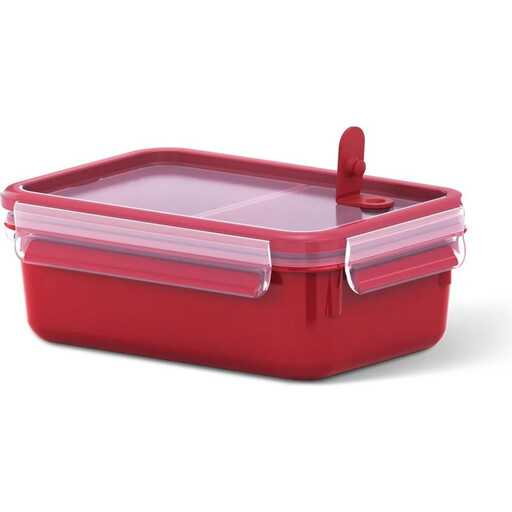
Why this product suits this profile: The 1-litre box is designed for everyday meals at the office, at school or on the go. According to the product information, it is leakproof, dishwasher-safe and microwave-safe; the lid must be removed before heating.
The product description clearly states the relevant usage features. The instruction to remove the lid before using the microwave helps prevent incorrect use.
1,000 ml capacity, stated BPA-free construction, dimensions of 195 × 135 × 70 mm and dishwasher cleaning according to the product information.
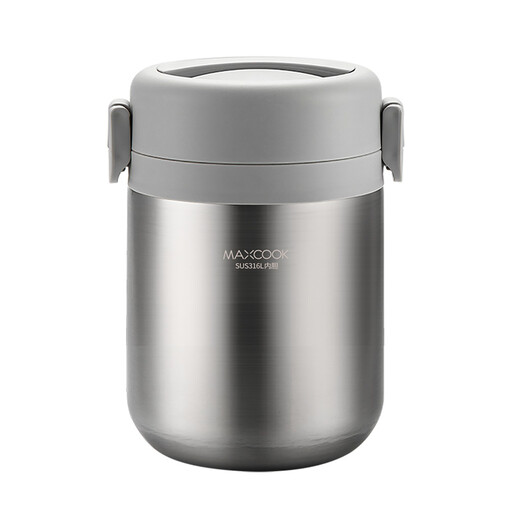
Why this product suits this profile: The 1.5-litre container made from 316 stainless steel is designed for users who want to transport hot or cold food over longer journeys, to work or for outdoor activities.
The specifications mention the material, vacuum insulation, wide opening and leakproof closure. According to the usage instructions, the container must not be put in the microwave and should be cleaned by hand.
316 stainless steel, 1.5-litre capacity, wide opening and vacuum insulation according to the product description.
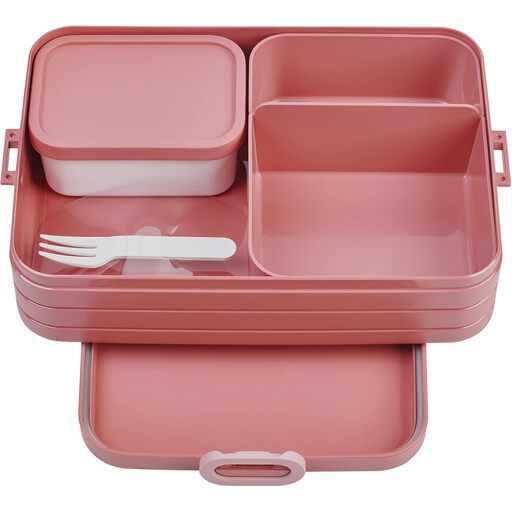
Why this product suits this profile: The 1.5-litre bento box is suitable for large portions and different foods. Two separate sections and an additional box with a fork support well-organised meal planning.
The removable bento containers keep different foods separate. For microwave use, the instructions expressly state that only the boxes may be used, without the lids; freezer suitability is not specified.
1.5-litre capacity, two separate sections, additional box with fork and dishwasher suitability according to the product information.
We have put together a complete, regularly updated list of products that fully meet these strict selection criteria and the safety regulations applicable in the EU.
For snacks and small breaks, 500 to 700 ml is often enough. For a complete lunch, 900 to 1,500 ml is common. Portion size, compartment layout and the space available in your bag or rucksack are the key factors.
The lid and seal must be clean, undamaged and fitted correctly. Do not overfill the box. For soup, vacuum-insulated containers with screw-top lids are usually more suitable than an ordinary lunchbox. A quick leak test before transport can be useful.
There is no standard lifespan that applies in every case. Wear and tear mainly affects seals, clips and lids. Plastic containers should be replaced if they develop cracks, become deformed or retain persistent odours. With stainless steel models, the closure and seal in particular should be checked regularly.