
Lieferung heute & morgen

Qualitätsgarantie

Willkommens-Angebote freischalten: KOSTENLOSE Lieferung | Bis zu 80 % RABATT | Kostenlose 30-Tage-JoyPlus-Testphase
App herunterladen
A lunchbox with compartments should offer more than an ordinary lunch box: your main meal, side dish, fruit or dressing stay separate, while the meal can be taken to work, school or university with ease. In practice, however, the differences often only become apparent after several uses.
A leak-proof lunchbox needs more than just a lid. It also requires a suitable seal and a closure that shuts evenly all the way around. If there is no continuous silicone seal, or the product is described as having only a loose-fitting lid, liquids may leak into your rucksack.
Look for specific details such as:
Even a high-quality seal will no longer work properly if it is twisted, dirty or damaged.
The number of compartments alone says little about how practical a lunchbox is for everyday use. Very small sections are suitable for nuts or pieces of fruit, but may be impractical for a complete meal. With a bento lunchbox, you should therefore consider the total capacity and the size of the individual containers.
For a meal at the office or school, around 900 to 1,200 ml is often suitable. If you want to carry larger portions or several components for meal prep, you may need a capacity of around 1.5 litres. Removable compartments offer more flexibility than permanently integrated sections.
“Microwave-safe” does not automatically mean that the closed box can be heated in its entirety. With many plastic containers, the lid must be removed completely. Cutlery, seals and inserts may also have their own usage instructions.
Before buying, check the following:
These details are crucial if you want to heat prepared meals directly at work.
A BPA-free lunchbox made from polypropylene is usually lightweight and practical for everyday transport. According to the product information, the container, inserts and lid of the LocknLock 3-in-1 Lunch Box are made from polypropylene, while the seal is made from silicone. The stated weight is approximately 390 g.
A glass lunchbox is heavier, but may be suitable for storing and heating food, provided the manufacturer explicitly permits microwave use. According to the product description, the 5Five glass model is made from borosilicate glass and weighs 880 g. You should bear the additional weight in mind if you have a longer journey.
A stainless steel lunchbox is robust and resistant to many types of food. However, stainless steel boxes are often unsuitable for microwave use. If a model has a removable silicone seal, the seal should be checked regularly and dried thoroughly.
A lunchbox with cutlery can make transport easier if the knife, fork or spoon is securely attached inside or to the box. A separate sauce container is particularly useful for salads and dressings: the liquid stays separate until the meal is served.
Removable inserts are ideal for users who switch between sandwiches, salads, hot meals and snacks. Permanently integrated compartments, on the other hand, can be more stable if the box is mainly used for dry foods.
Compare the outer dimensions with your rucksack, work bag or the compartment in your school bag. A large meal-prep box with a capacity of 1.5 litres offers more space, but naturally takes up more room. For commuters, compact rectangular models holding approximately 900 to 1,000 ml may be more suitable.
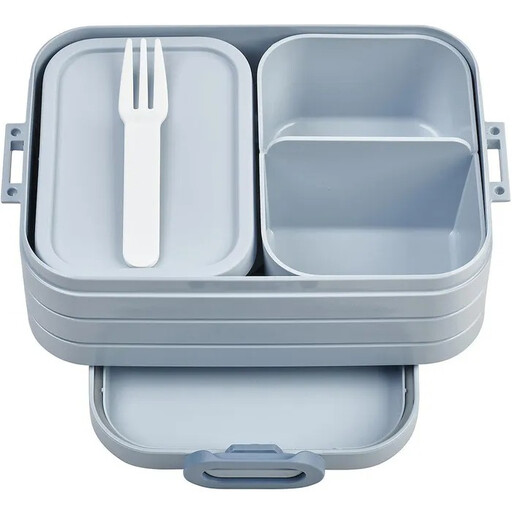
Why this product suits this profile: The 900 ml box is designed for work, school and university, and separates different foods into two sections. An additional container with a fork is included.
The removable bento containers make the compartment layout clear and practical. The lid must be removed for microwave use; according to the product information, an insert is not intended for use in the freezer.
900 ml capacity, BPA-free materials according to the product description, dishwasher-safe and supplied with a separate fork.
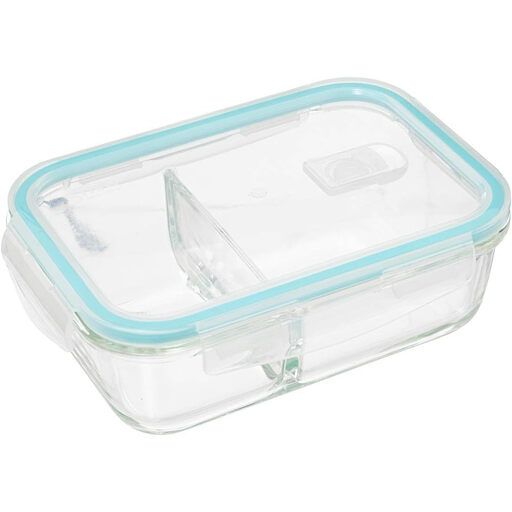
Why this product suits this profile: This container combines a rectangular shape with borosilicate glass, making it suitable for users who prefer glass for food storage.
The material and dimensions are specified in the product description. At 880 g, its weight should be taken into account when carrying it in a rucksack or bag.
Borosilicate glass, silicone seal, polypropylene lid and dishwasher-safe according to the product information.
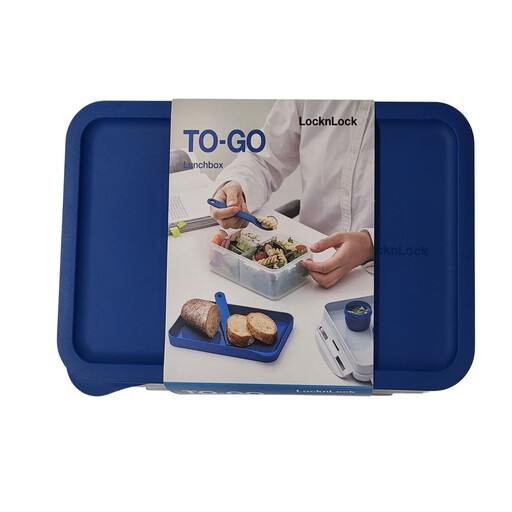
Why this product suits this profile: Three removable compartments, a cutlery set and a sauce container cover a range of needs at the office, at school, when travelling and during meal prep.
The product information specifies a four-sided closure, a silicone seal and suitability for liquid foods. The lid must be removed for microwave use.
1,000 ml capacity, three removable compartments, cutlery and sauce container; according to the product information, BPA-free plastic and suitable for freezer, microwave and dishwasher use under the stated conditions.
We have put together a complete, regularly updated list of products that fully meet these strict selection criteria and the safety regulations applicable in the EU.
The service life of a lunchbox depends greatly on how you handle the lid, seal and closures. Follow these points:
For a dishwasher-safe lunchbox, the top rack is recommended if this is specified in the product instructions. Harsh cleaning products and abrasive sponges can put additional strain on seals and surfaces.
For a single meal with a side dish, around 900 to 1,200 ml is often sufficient. If you want to carry larger portions, several snacks or meal-prep components, you can choose a box with a capacity of 1.5 litres. The outer dimensions and weight are also important.
No. Leak-proof performance depends on the seal, lid design and closures. Look for specific manufacturer information about liquid-tightness and close the lid fully. Removable compartments alone do not prevent leaks.
This depends on the model. According to the product information, the plastic models mentioned may only be used in the microwave without the lid. Stainless steel is generally unsuitable for microwave use. Always check the material, temperature limit and instructions before heating food.