
Lieferung heute & morgen

Qualitätsgarantie

Willkommens-Angebote freischalten: KOSTENLOSE Lieferung | Bis zu 80 % RABATT | Kostenlose 30-Tage-JoyPlus-Testphase
App herunterladen
A lunchbox with compartments is designed to keep different foods separate, sit securely in your rucksack, and be easy to clean. In practice, however, problems often arise not from the capacity, but from unclear product descriptions, unsuitable closures, or hard-to-reach seals. This applies just as much to adults in the office as it does to school pupils or families who batch-prepare meals.
A leak-proof lunchbox should have a reliable closure and a continuous seal. Even so, this label doesn’t automatically mean that each compartment is individually sealed against liquids. In boxes with multiple chambers, for example, dressing can seep from one compartment into another if only the lid edge is sealed, but not the dividers.
So, check the following:
A 1-litre lunchbox might sound generous at first. What really matters, though, are the external dimensions, the shape of the compartments, and how much space it takes up in your bag. A tall container may be suitable for soups, but it might not fit into a slim work bag. With a five-compartment bento box, the volume is also distributed differently than in a single interior space.
For a standard meal at work or school, it’s not just the total volume that counts, but the usable size of each compartment. Fruit, bread, side dishes and snacks all need different shapes.
A food container with compartments should be able to dry completely after every use. Seals with narrow grooves, non-removable dividers, or a lid with lots of recesses make cleaning difficult. Also check whether the manufacturer says it’s dishwasher-safe.
When it comes to choosing a material, different priorities apply:
First, think about which meals you’ll be transporting regularly. For bread, fruit and small snacks, a shallow food box with two or three sections is often enough. For pre-prepared lunches, a meal prep container with several chambers can be more practical.
Pay attention to:
A secure closure should be easy to operate without excessive force. Single or double closures can be useful depending on the design. For children, easy-to-understand closures are important, while professionals often prefer a compact shape for the commute.
Even with a lunchbox described as leak-proof, it’s advisable to transport liquid foods upright and to follow the manufacturer’s instructions. Before regular use, a quick test with water can show whether the lid is sitting correctly.
If the lunchbox is microwave-safe, the lid usually needs to be removed first. This is explicitly stated, for example, with the Tefal box. Dishwasher-safety makes daily use easier, but doesn’t replace checking the seals and wear parts.
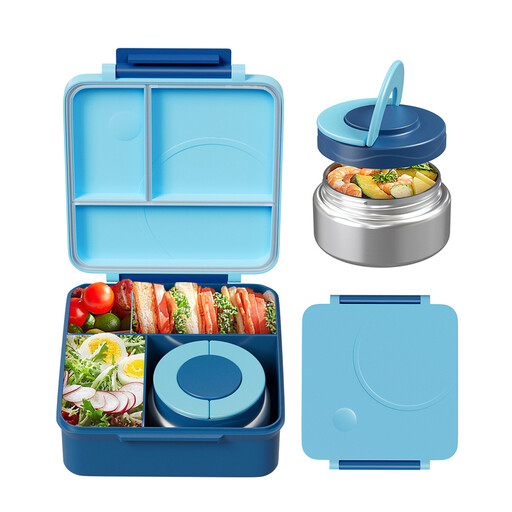
Why this product fits the profile: The divided design is aimed at people looking for a simple way to portion out food for work, school or on the go.
The details about the divided interior make the layout clearer than a simple volume claim. Information about the seal and cleaning should be checked before purchase.
One closure and separate sections; blue design.
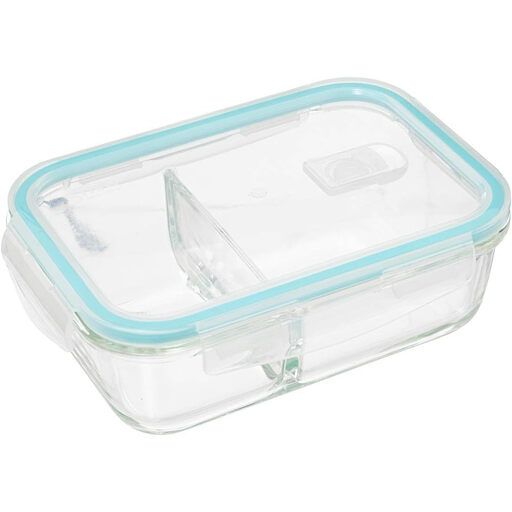
Why this product fits the profile: This container combines borosilicate glass with compartments and is suitable for users who pay close attention to material details and cleaning.
The product states dimensions of 21.5 × 15.3 × 7.5 cm and dishwasher-safety. The weight of 880 g should be considered for daily commuting.
Borosilicate glass; lid with polypropylene and silicone; dishwasher-safe according to the product information.

Why this product fits the profile: This insulated container is designed for hot meals and soups when a classic bento layout isn’t enough.
The product details mention a wide opening, a leak-proof closure and hand-washing only. The container should not be turned upside down or overfilled.
304 stainless steel; vacuum insulation; 1.5-litre capacity; wide opening.
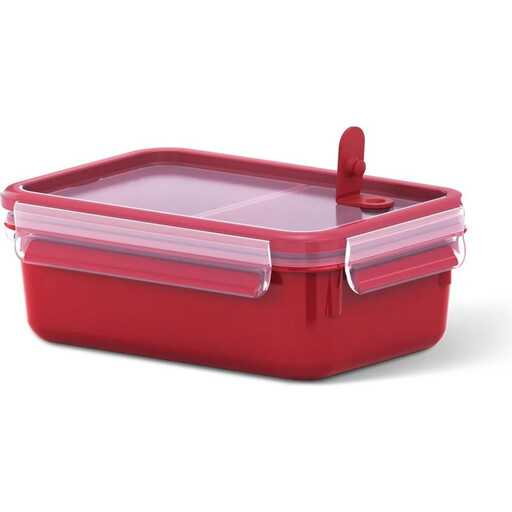
Why this product fits the profile: The rectangular shape and 1,000 ml capacity suit pre-prepared main meals for the office or on the go.
The product description mentions leak-proof design, dishwasher-safety and microwave-suitability. The lid must be removed when heating.
1,000 ml capacity; dimensions 195 × 135 × 70 mm; according to the product information, BPA-free, leak-proof and dishwasher-safe.
We’ve put together a complete, regularly updated list of products that fully meet these strict selection criteria and the safety regulations in force in the EU.
For bread, fruit and snacks, a lightweight bento box with several compartments is practical. If you regularly take hot meals with you, choose a thermal lunchbox or an insulated food jar with a wide opening. What matters are the right dimensions, an easy-to-understand closure, and a cleaning routine that fits into your daily schedule.
That depends on the meal. A 1-litre lunchbox is suitable for many main meals, while smaller models can be enough for packed lunches and snacks. It’s not just the total volume that counts, but also the compartment layout and the external dimensions, which should fit your bag.
Food should be filled in after it has cooled down, unless the manufacturer states otherwise. After eating, clean the container, lid and seals, and dry them completely. With a compartment lunchbox, it’s particularly important to check whether residue collects on the dividers or in the seal area.