
Lieferung heute & morgen

Qualitätsgarantie

Willkommens-Angebote freischalten: KOSTENLOSE Lieferung | Bis zu 80 % RABATT | Kostenlose 30-Tage-JoyPlus-Testphase
App herunterladen
A lunchbox with compartments is designed to keep meals separate, sit securely in your rucksack, and be easy to clean. For professionals, students, schoolchildren and meal-preppers, that sounds straightforward enough. In practice, however, leaky seals, unsuitable materials or awkward internal dividers can quickly lead to a disappointing purchase.
A leak-proof lunchbox needs more than just a tight-fitting lid. What really matters is a continuous seal, a well-designed closure system and, where necessary, separate seals for removable compartments. For liquid foods, yoghurt or salad dressings, the product description should explicitly mention a watertight construction.
“Microwave-safe” often applies only to the container itself, not the lid. On many models, the lid must be removed or a vent opened. Even with a dishwasher-safe lunchbox, the seals, inserts or accessories may have different care instructions. Always follow the manufacturer’s specific guidance.
More compartments don’t automatically mean more usefulness. Large slices of bread, pieces of fruit or salad need enough room. Very small dividers are better suited to snacks and side dishes. Before buying, check that the internal layout, total volume and external dimensions fit your rucksack or work bag.
For a lunchbox for work and school, around 900 to 1,500 ml is a practical size for most meals. A bento lunchbox with removable compartments offers greater flexibility: dry and moist foods can be transported separately, while the box can also serve as one large container when needed.
Look out for the following points:
A BPA-free lunchbox made of plastic can be lightweight and transparent. For products with a manufacturer’s claim, you should also check whether suitability for food contact is documented. Polypropylene is commonly used for lunchboxes and, depending on the model, may be approved for microwave, freezer and dishwasher use.
A stainless steel lunchbox is an option for buyers looking to reduce plastic. However, it is not generally microwave-safe. Seals and lids are often made from different materials and need separate care. A thermal lunchbox with vacuum insulation usually requires hand washing and has special instructions for the lid.
Check whether the lid closes with clips, a latch or a snap mechanism. A seal should sit neatly in its groove and dry completely after washing. Claims such as “microwave-safe” or “freezer-safe” should always be read alongside the temperature range and usage conditions.
For the microwave, the general rules are:
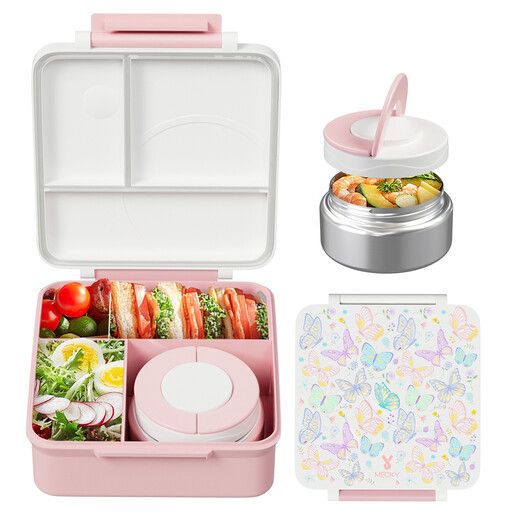
Why this product suits the profile: The divided design is aimed at users who want to transport snacks or a simple meal separately and prefer a compact design.
The compartments reduce the mixing of different foods. Before transporting, check that the closure and seal are correctly positioned.
Divided internal layout and single-latch closure; various colour options available.
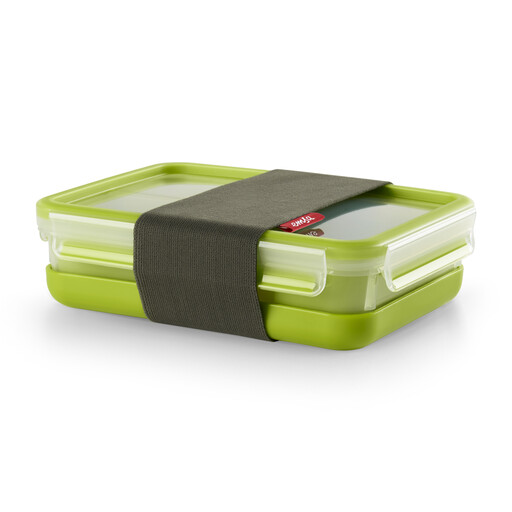
Why this product suits the profile: Three inserts, a separate compartment or plate and a freshness seal support varied work and school meals.
The removable inserts make it easy to separate different foods. According to the product information, the box, lid and inserts are dishwasher-, microwave- and freezer-safe within the specified range.
1.2 litre capacity, three inserts, separate plate and freshness seal.

Why this product suits the profile: For salads, toppings and dressings, the 3-in-1 concept offers separate compartments plus cutlery and a sauce pot.
The removable 3-compartment insert keeps moist ingredients separate. For the microwave, the lid must be completely removed according to the product information.
950 ml capacity, cutlery set, sauce pot and details on microwave, freezer and dishwasher suitability.
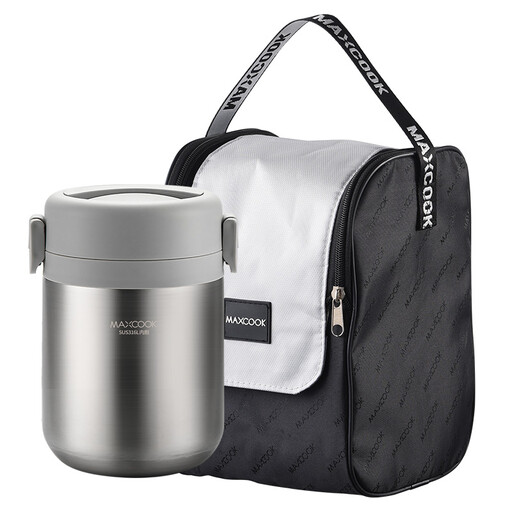
Why this product suits the profile: The insulated container is aimed at users who want to transport soups or other hot or cold foods without using a microwave.
The wide opening makes filling and cleaning easier. The manufacturer recommends hand washing and advises against transporting the container upside down or tilted.
316 stainless steel, 1.5 litre capacity, vacuum insulation and included lunch bag.
We have put together a complete, regularly updated list of products that fully meet these strict selection criteria and the safety regulations in force in the EU.
Even a sturdy lunchbox will only stay hygienic and leak-proof if it is looked after properly. Remove seals and inserts where possible, and let all parts dry completely. Dried-on food residue can damage the sealing lip. If you notice visible cracks, warping or perished seals, replace the lunchbox.
Look for one with an explicitly described seal and a secure closure. For dressings, a separate sauce pot can be more practical than a large compartment with a loose divider.
That depends on the specific model. Often the lid must be removed or a vent opened. Stainless steel lunchboxes are generally not intended for microwave use. Always follow the information on the product and in the instruction manual.
The lifespan depends on usage, cleaning and material. Regularly checking the lid, clips and seal is more important than a general guideline in years. Once the box no longer closes reliably or is damaged, it should not be used for transporting food.