
Lieferung heute & morgen

Qualitätsgarantie

Willkommens-Angebote freischalten: KOSTENLOSE Lieferung | Bis zu 80 % RABATT | Kostenlose 30-Tage-JoyPlus-Testphase
App herunterladen
A lunchbox with compartments is designed to keep different foods separate, sit securely in your rucksack, and be easy to clean. For professionals, school pupils, university students and meal-prep enthusiasts, that sounds straightforward enough. In practice, however, unclear volume specifications, unsuitable closures and hard-to-reach seals often lead to disappointing purchases.
This buying guide shows you which details to check before you buy, and which models suit different everyday situations.
A lunchbox labelled "1.5 litres" doesn't automatically give you 1.5 litres of freely usable space. Removable inserts, dividers or rounded interior surfaces can reduce the actual available volume. So check whether the figure refers to the total capacity or to individual containers.
With the 5five glass box, for example, the product name states 1.1 litres, while the technical specifications show a usable volume of 0.1 litres. This discrepancy should be clarified directly on the product page before you buy.
A leak-proof lunchbox needs a snug-fitting lid, an intact seal and a secure closure. Even a well-sealed model can leak if it's overfilled, carried at an angle, or used with very runny foods it wasn't designed for.
Look out for:
A standard lunchbox won't keep hot food warm for hours on its own. For that you need a thermal food container or an insulated food container with vacuum insulation. For soups, stews and rice dishes, a wide opening is also handy, as it makes filling, eating and cleaning much easier.
A bento lunchbox or lunchbox with compartments is ideal if you want to transport fruit, side dishes, bread and snacks separately. Fixed dividers prevent foods from mixing together. Removable inserts, on the other hand, make cleaning easier and allow flexible arrangement.
For school or the office, a medium capacity is often sufficient. If you're carrying a full meal, snacks and dessert, you might consider a 1.5 litre lunchbox. Just check the external dimensions: a large box won't fit every bag, and when full it can be surprisingly heavy.
A box may be dishwasher-safe, while the lid or seal needs hand-washing. For microwave-safe items, it's often only the container, not the lid. According to the product description, the Mepal model can go in the microwave without the lid, but is not suitable for the freezer.
So before you buy, compare the following points:
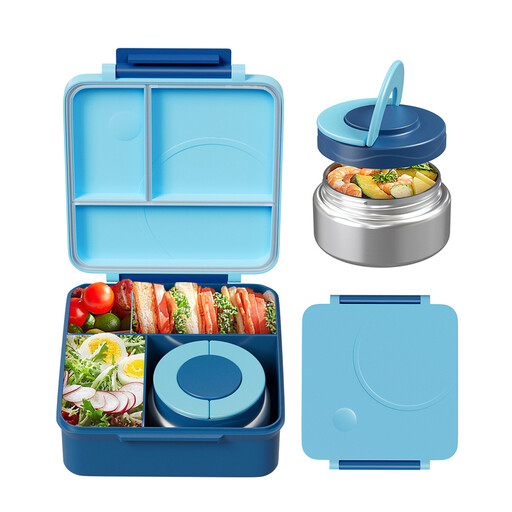
Why this product fits the profile: The divided design is ideal for simple break-time meals and snacks at school, university or the office.
The divided interior reduces the mixing of foods. Before transport, check that the closure is properly secured.
Single latch and separate sections; available in several colour variants within the product range.
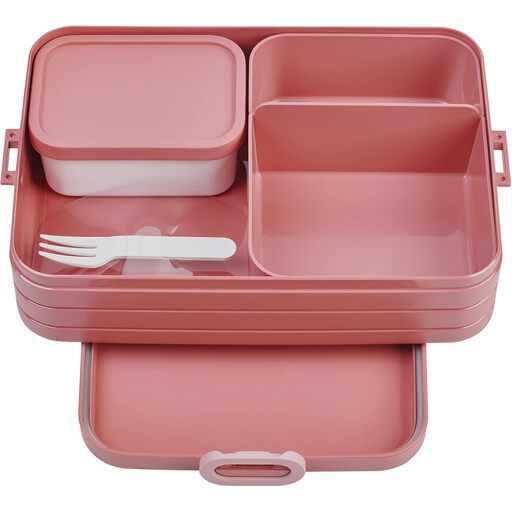
Why this product fits the profile: The 1.5 litre capacity and removable bento containers suit varied meals and leftovers.
The separate inserts help transport different foods without mixing. Microwave use is only permitted without the lid, according to the product details.
1.5 litre capacity; dishwasher-safe; BPA-free according to product details; includes an additional container with a fork.

Why this product fits the profile: The insulated container is designed for soups, stews and other hot or cold foods for work, outdoor activities and longer journeys.
The wide opening makes cleaning easier. The manufacturer states a temperature retention time of 4–6 hours; the jar should be transported upright and not overfilled.
304 stainless steel with vacuum insulation; 1.5 litre capacity; wide filling and eating opening.
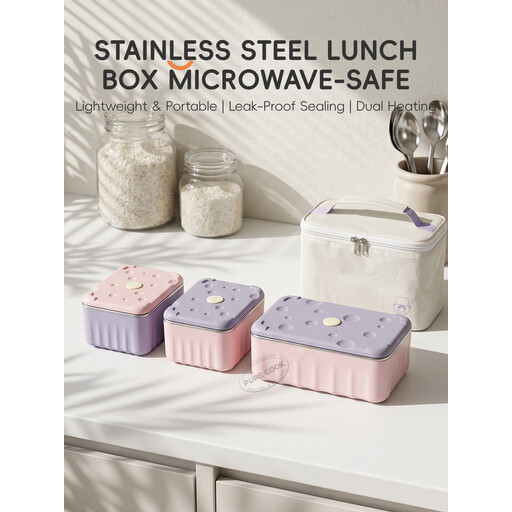
Why this product fits the profile: The set of three containers with an insulating bag supports meal prep and the separate transport of multiple portions.
Multiple containers prevent all foods from sitting together in one large compartment. The actual leak resistance should be checked against the manufacturer's instructions before transport.
304 stainless steel; set of three containers; includes an insulating bag as per the product name.
We've put together a full, regularly updated list of products that fully meet these strict selection criteria and the safety regulations in force in the EU.
For soup, a tightly sealing thermal food container with a wide opening is more practical than a flat lunchbox. Look for vacuum insulation, the permitted fill level and guidance on upright storage. A temperature retention time is always a manufacturer's claim and depends on factors such as pre-warming, fill volume and ambient temperature.
The lifespan depends on the material, closure, seal and care. Scratches, warping, persistent odour or a perished seal are signs it's time to replace it. Even with dishwasher-safe models, you should still follow the care instructions, because high temperatures and harsh detergents can wear down seals over time.
A glass food storage container makes it easy to see what's inside and, depending on the model, can be microwave and dishwasher-safe. Stainless steel is generally more resistant to breakage and practical for on-the-go use. For hot food that needs to stay warm for longer, a vacuum-insulated stainless steel container is the more suitable design. Ultimately, volume, weight, compartment layout and cleaning remain the deciding factors.