Which requirements matter most?
First, establish whether you really need to serve several different workstations. For a stable, single-workstation workflow, compare a cobot with dedicated automation. If the gripping task or safety arrangements are still unclear, start with a limited pilot.
| Requirement |
What to check before buying |
Who should pay particular attention |
| Flexibility between machines |
Test reach, accessible workstations, routes and handovers using your planned layout. |
If several existing machines need to handle different workpieces, I want to know whether a system can actually cover the routes and handovers required. Around 31 % of consumers say flexibility is their most important buying requirement. |
| Gripping and placing |
Check the gripper or hand option, workpiece surface, position recognition and placement tolerance using your actual mix of parts. |
When parts vary or are difficult to position, I want to know whether they can be picked up securely and placed correctly in the machine. Around 25 % of consumers put this gripping task first. |
| Safety and integration |
Clarify machine status and release interfaces, safety arrangements, product documentation and the risk assessment for your specific operation. |
If robots, machines and employees share the same workspace, I need to know how the robot will be integrated safely with the existing equipment. For around 25 % of consumers, safety and integration are the most important selection criteria. |
| Cost-effectiveness in the workflow |
Compare a humanoid robot, a cobot with a feeding system and a fixed solution using the same mix of parts, time period, cycle time, interventions and engineering effort. |
For my business, what matters is how much useful machine tending remains after set-up and interventions. Around 19 % of consumers focus on this comparison of productivity and effort. |
Humanoid robots at Joybuy
The following products are humanoid robots that may be relevant for initial testing. Their product names do not prove industrial suitability or approval for machine tending. Check the product documentation and system integration for your intended use.
 No image available
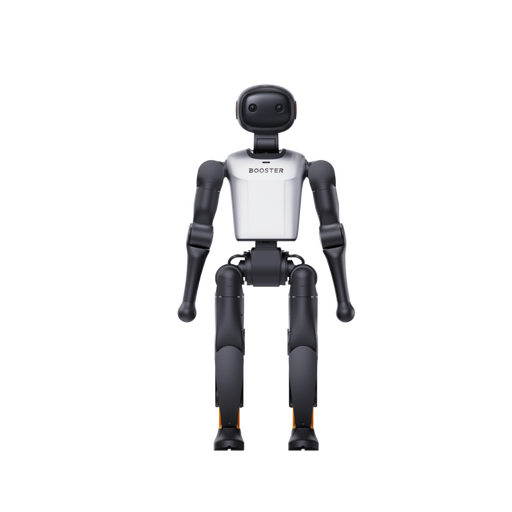
Booster Robotics K1 Geek Humanoid Robot, 48 TOPS, 22 DoF
The product name positions this model as an embodied AI development platform, with 48 TOPS and 22 DoF specified.
View at Joybuy
 No image available
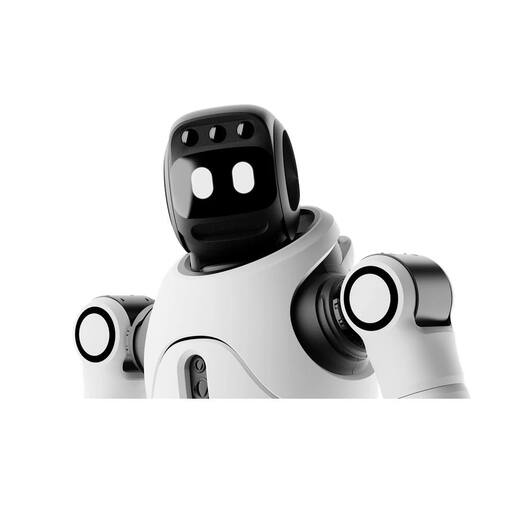
AGIBOT X2 Ultra Humanoid Robot
The product description lists autonomous navigation, obstacle avoidance, secondary development, 31 DoF and an RGB-D camera. It requires supervised operation and a clearance of at least 2 m; always follow the product-specific operating instructions and assess whether it is suitable for your intended use.
View at Joybuy
 No image available
AGIBOT X2 Humanoid Robot
For an initial technical assessment, the product description specifies 27 DoF and an arm reach of 437 mm. These figures do not prove its performance in machine tending.
View at Joybuy
 No image available
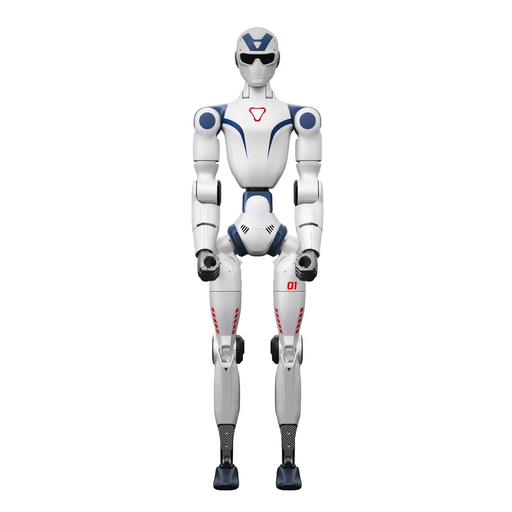
Unitree R1 Humanoid Robot, two cameras, 26 DoF, Blue and White
The product name specifies two cameras and 26 DoF. The product description recommends keeping the robot away from people and fragile objects, and operating it under adult supervision.
View at Joybuy
 No image available
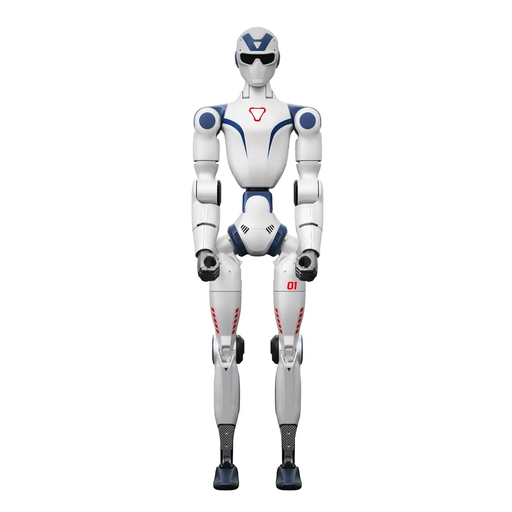
Unitree R1 Air Humanoid Robot, monocular camera, 20 DoF, Blue and White
The product name specifies a monocular camera and 20 DoF. The product description warns of pinch hazards at moving joints and advises against operating the robot near stairs, edges or uneven ground.
View at Joybuy
Frequently asked questions
Does the BMW application prove that a humanoid robot can tend any CNC machine?
No. Figure described its BMW application at a US plant as removing and positioning sheet-metal parts at a welding fixture. Figure later retired its Figure 02 fleet. Other machines, workpieces and models need to be assessed separately.
How should you assess a machine-tending pilot?
Start with one machine and clearly defined parts. Check correct placement, cycle time, human intervention and safe transitions between machine states. The figures Figure reported for its earlier BMW application were specific to that task; you cannot simply apply their target values to your process.
Which ongoing costs and performance details should a quotation include?
As well as the platform, ask for details of the gripper, feeding system, engineering, integration, supervision and productive operating time over the same period. Compare these figures with those for a cobot and a fixed solution using the same workflow.
Is a CE mark on the robot enough to operate it with an existing machine?
No. For products covered by the relevant EU legislation, check the applicable conformity requirements and documentation; you must also assess the safe use of the specific combination. Whether integration creates an assembly of machinery depends on how the equipment is actually connected.
Does the EU Machinery Regulation already apply instead of the Machinery Directive?
Not yet, as at 19 October 2026. The European Union's legal overview gives 20 January 2027 as the date when the Machinery Regulation (EU) 2023/1230 replaces Directive 2006/42/EC. Check the applicable legal position again at the actual time of placing the product on the market or putting it into service.


