What matters when choosing?
Humanoid platform
Consider it if: a machine requires several different handling tasks or working positions, and you can run a limited pilot safely.
Weigh up: Manufacturers’ descriptions of intended tasks do not prove that a robot can meet your machine’s cycle time or be integrated safely into a specific setup.
Cobot or specialised cell
Consider it if: the machine, handover position and sequence of movements are sufficiently well defined to tailor the gripper, door sequence and workpiece changeover.
Weigh up: Documented applications relate to their specific machines, workpieces and integrations; they are not general proof of performance or cost.
Comparative proof of concept
Consider it if: grasping, variant changeovers, the need for interventions or the safety concept for your process have yet to be confirmed.
Weigh up: A pilot takes time and integration work; general product information is no substitute for comparing options under the same process conditions.
Before you compare solutions, define the workpieces and complete machine processes they need to handle.
| Consideration |
What to check before buying |
Who should pay particular attention? |
| Safety in a shared workspace |
Have the risks assessed for the specific combination of robot, gripper and machine, including access and fault conditions. |
If staff work around or need to intervene at the machine, a robust safety concept is my top priority. Around 25 % of consumers would prioritise employee protection above all else. |
| Interfaces and documentation |
Clarify door, clamping and cycle status, as well as responsibilities between the machine manufacturer and integrator. |
If the existing machine is to be integrated, I need a clear process and agreed responsibility for integration. Around 25 % of consumers would put machine integration first. |
| Gripping different parts |
Test representative challenging workpieces and variant changeovers; record failed grasps and reconfiguration. |
If parts or positions change, I want to know that gripping and changeovers will work with my workpieces. Around 20 % of consumers would choose handling variants as their main priority. |
| Cycle time and manual interventions |
Measure the complete loading and unloading cycle, including machine wait time, failed attempts and interventions. |
If the machine needs a reliable process, I focus on the whole cycle rather than one successful grasp. Around 20 % of consumers would prioritise cycle-time consistency and the need for interventions. |
| Costs beyond the pilot |
Compare like-for-like quotes covering the gripper, integration, safety concept, commissioning, modifications and servicing. |
If I need to assess both the pilot and potential future operation, I want to compare the scope of work clearly. Around 10 % of consumers would prioritise the overall cost above all else. |
Humanoid robots on Joybuy
The following Joybuy products are humanoid platforms that you could consider as part of a comparative pilot. Product information alone does not prove that a model is suitable for a specific machine-tending task or its safety requirements.
 No image available
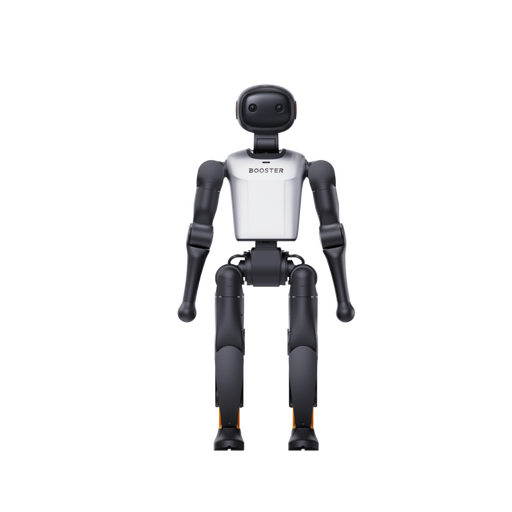
Booster Robotics K1 Geek
This model can be included in a pilot comparison as a humanoid development platform; its product name does not prove that it is suitable for a particular machine.
The product name lists 22 degrees of freedom and 48 TOPS.
Joybuy
 No image available
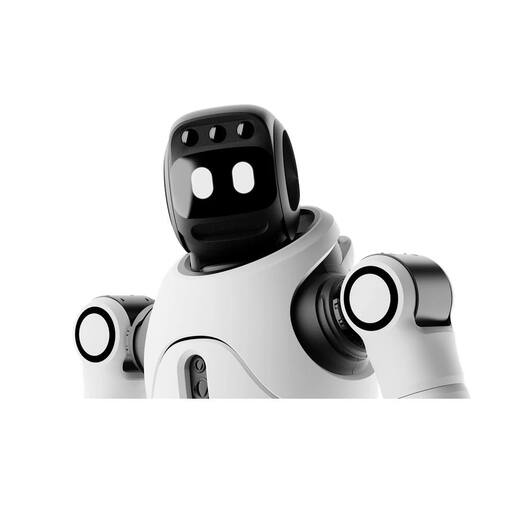
AGIBOT X2 Ultra
This humanoid platform could be considered for a limited pilot comparison; check the specific gripping tasks and safety measures required for the target machine.
The product description lists 31 degrees of freedom. Without an end effector, the payload is up to 3 kg in certain postures and up to 1 kg across the full range of motion.
The safety information lists crushing and impact risks from moving joints and the robot’s weight.
Joybuy
 No image available
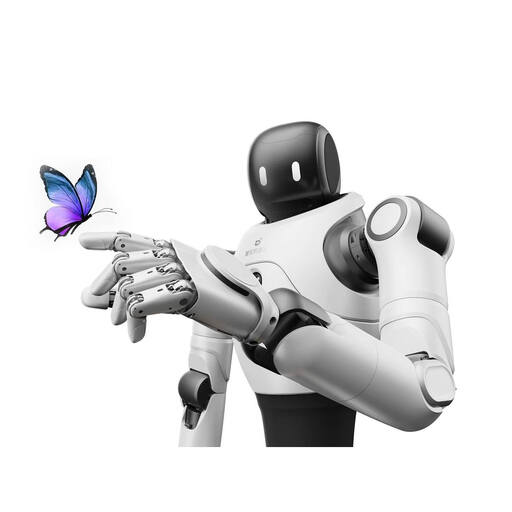
AGIBOT X2
This humanoid model could be considered as a pilot candidate; the product information does not prove that its reach or payload will be sufficient for your machine process.
The description lists 27 degrees of freedom and an arm reach of 437 mm. Without an end effector, the payload is up to 3 kg in certain postures and up to 1 kg across the full range of motion.
Joybuy
 No image available
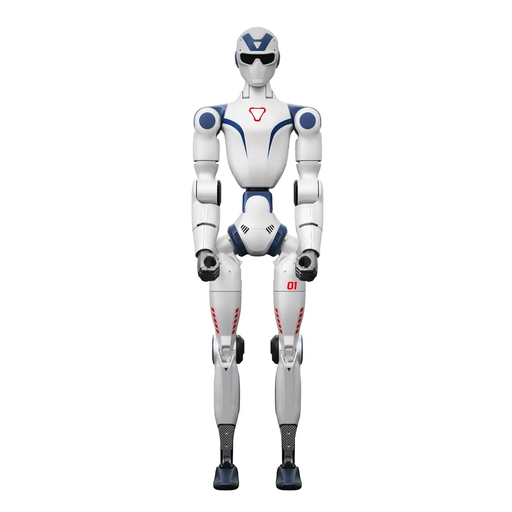
Unitree R1 Air, blue and white
This model can be included in a pilot assessment as a humanoid platform; check the requirements of the machine environment before putting it to use.
The product name lists 20 degrees of freedom and a monocular camera. The product warning advises against operating it near stairs, edges or uneven surfaces.
Joybuy
 No image available
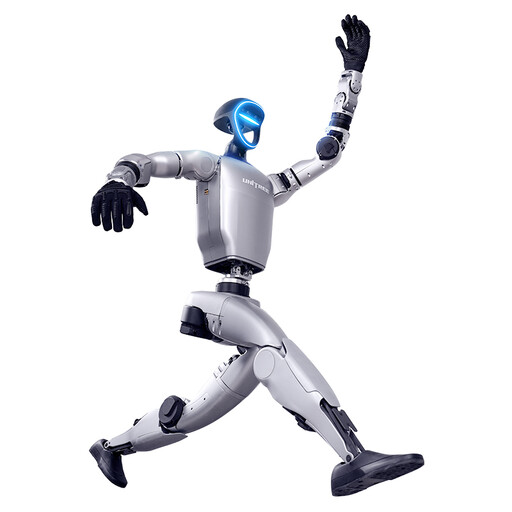
Unitree G1
This model could be assessed as a humanoid pilot candidate; evaluate the specific manipulation task rather than assuming the product name means it is suitable for machine tending.
The product name lists force-controlled, dexterous hands. According to the product name, SDK/API is not yet available for this version.
Joybuy
Frequently asked questions
Which interfaces should you clarify before a loading trial?
Agree with the machine manufacturer and integrator on the states for the door, workpiece fixture, machining start and fault conditions, as well as handovers between the machine and robot controls. A process documented by KUKA using the LBR iisy shows loading followed by the door closing before machining; it does not prove which interfaces your machine supports.
Can a robot marketed as collaborative work alongside staff without further assessment?
No. The product description alone does not establish that it is suitable for a specific workplace. A risk assessment is required for tasks involving staff; Fraunhofer IPA also highlights the need to test safety technologies for humanoid systems.
How should you run a pilot with different workpieces?
Define representative workpieces and the complete machine process before the trial begins. After changing a workpiece or gripper, test gripping, interventions and any affected safety measures again; general manufacturer information does not prove suitability for the revised task.
What should a request for pricing and servicing include?
Request the same scope of work for every option: robot or cell, gripper, machine integration, safety concept, commissioning, modifications and ongoing support. Only like-for-like quotes allow you to assess the costs for your process.
Which legislation applies to placing machinery on the market around January 2027?
According to the BAuA, machinery placed on the market up to 19 January 2027 must continue to comply with Machinery Directive 2006/42/EC; from 20 January 2027, Regulation (EU) 2023/1230 applies. Whether your specific integration constitutes an assembly of machinery that needs to be assessed, and which documents those involved need to provide, depends on the setup.


