By a bright window, a mini PC or desktop with a separately positioned monitor gives you the freedom to choose and position the screen and computer independently. An all-in-one combines them, but ties you more closely to its built-in display. You’ll also need to consider what your layout software requires and, if you’re assessing colours for print, use a coordinated colour-management workflow.
Who is this decision relevant to?
Layout by a bright window
If your workspace is next to a bright window or one where the light changes throughout the day, check the screen position and reflections in the actual space. The Federal Institute for Occupational Safety and Health points out that daylight can still cause glare.
Magazine layout using multiple programmes
Choose a specification that suits the programmes and versions you actually use. Adobe lists specific system requirements for InDesign depending on the version; these are not general requirements for all layout programmes.
Pre-press work with colour checking
If you want to assess colours for a particular print process, your monitor, calibration and print profile need to work together. EIZO describes ICC print profiles as part of this kind of colour-management workflow.
What matters when buying?
Mini PC with separate monitor
A good fit if: You need to save desk space for the computer and want to position or choose the screen yourself.
Things to consider: The monitor and, depending on the configuration, input devices are sold separately. Ports and upgrade options vary by model.
Slim desktop or tower
A good fit if: You’re setting up a permanent workspace and want to choose the computer and monitor separately.
Things to consider: Allow space for each device and check the ports, as well as any changes you may be able to make to the specific configuration later on.
All-in-one
A good fit if: You want the computer and main display in one device, and the screen size, finish and position by the window work for you.
Things to consider: You choose the computer and integrated display together, and can’t position the screen independently of the device.
| Priority |
What to check before buying |
Who is it important for? |
| A screen that’s easy to read in daylight |
Check the screen position, finish and options for controlling the light in your intended workspace. A stated maximum brightness alone won’t tell you how well the screen handles reflections. |
If the window lets in strong sunlight at certain times of day, you’ll want to position the monitor so that text and images remain easy to see. Around 36% of consumers put controlling reflections first. |
| Suitable performance for layout and multitasking |
Compare the operating system, processor, memory, SSD and software version with your specific workflow. For InDesign 21.3 or later on Windows, Adobe lists 8 GB RAM as the minimum and recommends 16 GB. |
If you work with several programmes and files at once, the specification should suit the applications you actually use. Around 29% of consumers put software and multitasking requirements first. |
| Assessing colours for print |
For colour-critical work, check the monitor, calibration options, soft proofing and the profile that matches your print process together. |
If you need to assess screen colours for a specific print process, you need a complete colour workflow rather than a display specification alone. Around 21% of consumers put checking print colours first. |
| A complete, adaptable workspace |
Check which devices are included, which ports are available and what changes can be made to the configuration you’ve chosen. |
If you want to combine the computer with an existing or new monitor to suit your workspace, the exact contents of the box matter. Around 14% of consumers prioritise a complete, adaptable workspace. |
Avoid common misconceptions
-
Confusing computing power with screen visibility by a window
A powerful computer won’t eliminate reflections. The Federal Institute for Occupational Safety and Health points out that daylight can still cause glare, even with modern screen technology.
Check the viewing angle and how the daylight changes in your intended workspace before choosing a monitor and computer format.
-
Treating a colour or brightness specification as print approval
A single display specification doesn’t prove that colours can be assessed reliably for your intended print process. EIZO describes how the monitor, calibration and ICC print profile work together.
For colour-critical work, decide on the print process and assess the monitor and soft proof together.
-
Assuming a mini PC is a complete workstation
For the ThinkStation P3 Tiny Gen 2 documented by Lenovo, the monitor, keyboard and mouse are sold separately. This applies to that configuration and not necessarily to other variants.
Compare what’s included with the exact variant you’re ordering against the devices you need for your workspace.
-
Assuming every model in a range has the same specification
Sharing a model name doesn’t mean the processor, memory and other features are the same. Dell lists different configurations for the Pro Slim Plus QBS1250.
Before choosing, compare the full model name and specification of the specific variant.
Key brands at a glance
Dell
Dell offers compact Pro Slim desktops for a permanent Windows workspace with a separately chosen monitor.
- Dell lists 16 GB RAM and a 512-GB SSD for one QBS1250 configuration.
- Specifications may vary by configuration; describing it as an office PC doesn’t specifically confirm its suitability for a colour-critical print workflow.
Apple
The Mac mini is designed for a macOS workspace with a separately chosen monitor; the iMac combines the computer and display.
- Apple lists different Mac mini configurations, while the iMac has an integrated display.
- Display specifications don’t prove that the screen will be glare-free by your window or that every configuration is compatible with your layout software.
HP
HP offers Z2 Mini configurations as compact Windows workstations for permanent workspaces.
- HP lists 128 GB RAM and a 2-TB SSD for the B76Q7ET configuration.
- These specifications apply to the configuration listed and aren’t general minimum requirements for magazine layout.
Lenovo
Lenovo offers compact ThinkStation workstations as well as all-in-one devices such as the ThinkCentre Neo 50a.
- For one ThinkStation P3 Tiny configuration, Lenovo lists 32 GB RAM and a 1-TB SSD.
- The monitor, keyboard and mouse are sold separately with this configuration; on the all-in-one, the screen is part of the device.
Joybuy products
The computers below are designed for a permanent workspace with a separately chosen monitor. The selection includes mini PCs, slim desktops and tower desktops.
 No image available
HP Z2 Mini G1a, Ryzen AI Max+ PRO 395, 128 GB, 2 TB SSD
The mini PC format suits a workspace where you want to position the monitor independently of the computer.
Listed specification: AMD Ryzen AI Max+ PRO 395, 128 GB RAM and 2 TB SSD.
A monitor isn’t listed as included in the product description; check what’s included with the variant you order.
Joybuy
 No image available
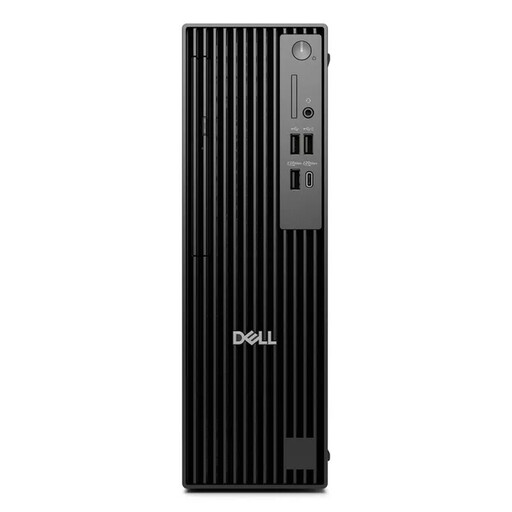
Dell Pro Plus SFF QBS1250 Slim Desktop, Core Ultra 7 265
The slim desktop is an option if you want to set up the computer separately from the monitor in a permanent workspace.
Listed specification: Intel Core Ultra 7 265, 32 GB DDR5 RAM and 512 GB NVMe SSD.
The product name also lists Intel Graphics and Windows 11 Pro.
Joybuy
 No image available
Alienware Aurora ACT1250 1J3N5, Core Ultra 9-285K
The tower is a good choice if you want to position the computer separately and place the monitor by the window wherever you need it.
Listed specification: Core Ultra 9-285K, 32 GB RAM, 2 TB SSD and RTX 5080.
The product name lists Windows 11.
Joybuy
 No image available
ACEMAGIC E3B Mini Desktop, Ryzen 7 7735HS
The mini PC format lets you set up the computer separately from a monitor that you can position wherever you like.
Listed specification: AMD Ryzen 7 7735HS, 24 GB LPDDR5 RAM, 512 GB NVMe SSD and Windows 11 Pro.
The product name lists two M.2-2280 slots supporting up to 4 TB.
Joybuy
 No image available
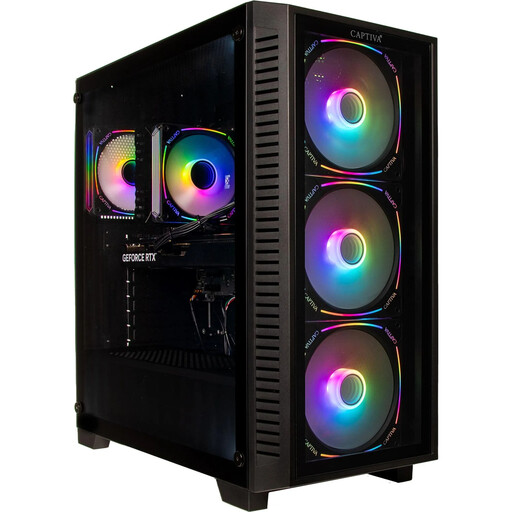
Captiva R89-503, Ryzen 7 7800X3D
The tower is worth considering if you want to set up the computer and monitor separately.
Listed specification: AMD Ryzen 7 7800X3D, RTX 5070 Ti with 16 GB, 32 GB DDR5 RAM and 2 TB SSD.
The product name lists Windows 11 Home.
Joybuy
Frequently asked questions
Should I simply buy the brightest screen for a bright window?
No. First check reflections in the lighting conditions you work in, along with the screen position and options for controlling the light. The Federal Institute for Occupational Safety and Health points out that daylight can cause glare; maximum brightness alone won’t answer this workspace question.
What should I check before connecting a separate monitor?
The video output on the specific computer needs to match the monitor’s input. Also plan where to position the screen by the window and check what’s included with the variant you’ve ordered. For the ThinkStation P3 Tiny configuration documented by Lenovo, the monitor, keyboard and mouse are sold separately.
Do I need a monitor that can be calibrated for a printed magazine?
If you want to assess colours for a particular print process, a calibrated monitor is part of a workflow that uses suitable print profiles and soft proofing. Simply creating and checking page layouts doesn’t mean you’re generally required to buy a particular monitor.
Which consumer rights and workplace safety rules apply in Germany?
When you buy goods as a consumer in the EU, the seller is generally responsible for a legal guarantee of at least two years. Online orders usually come with a 14-day right to cancel, although exceptions may apply. This information comes from Your Europe and the Verbraucherzentrale. If the space is set up as a workplace for employees, ASR A6 from the Federal Institute for Occupational Safety and Health sets out requirements for screen work within its scope; this doesn’t mean that private buyers can assume a particular product feature.


