
Lieferung heute & morgen

Qualitätsgarantie

Willkommens-Angebote freischalten: KOSTENLOSE Lieferung | Bis zu 80 % RABATT | Kostenlose 30-Tage-JoyPlus-Testphase
App herunterladen
Whether for the office, university, a single-person household or the campsite, Maggi Magic Asia instant noodles offer an easy way to enjoy a quick meal. However, noodle cups, fried Asian noodles and multipacks can differ considerably in terms of preparation method, portion size, ingredients and allergens.
The product name alone is therefore not enough to make the right choice. If you only look for terms such as “Asia”, “Teriyaki” or “Chicken Flavour”, you can easily overlook important details.
A noodle cup is usually filled with boiling water and left to stand for several minutes. Fried Asian noodles, on the other hand, often require a frying pan. This can be impractical in the office, on the train or when camping without access to cooking facilities.
Example: Maggi Magic Asia Fried Noodles Chicken Flavour 121 g are prepared in a frying pan with 375 ml of water, then fried with oil and served after around five minutes. A noodle cup such as Maggi Magic Asia Noodle Cup Duck Flavour 63 g, on the other hand, requires boiling water and a standing time of around four minutes.
An 8-pack can be a sensible choice for families, regular users or stocking up. For anyone who wants to try a flavour first, a single product weighing 60 to 63 g or 119 to 124 g is often easier to assess. Before buying, it is worth comparing the price per portion and total weight.
Instant noodles often contain wheat or gluten. Depending on the recipe, they may also contain soya, egg, mustard, milk, celery or sesame. A product described as vegetable is therefore not automatically vegan or free from animal-derived ingredients. The ingredients list and allergen information on the packaging are the deciding factors.
Noodle cups are ideal for eating on the go, as you generally do not need a bowl, cutlery or a colander. The cups in the Maggi Magic Asia range are filled with hot water up to the mark. The Duck Flavour version has a stated standing time of four minutes, while the Beef Flavour cup takes around three to four minutes.
For a meal prepared in a frying pan, fried Asian noodles are a good option. They are cooked with water and then fried. This creates a different texture, but requires a heat-resistant frying pan and oil.
The products mentioned here commonly contain wheat or gluten. According to the product information, the Teriyaki noodles also contain soya; possible traces include celery, mustard, egg, milk and sesame, among others. The Chicken Flavour version contains gluten, egg, soya and mustard. Gluten is listed as a contained allergen for the Duck Flavour noodle cup; other ingredients may be present as traces.
Recipes can change. The current packaging should therefore always be checked before eating, especially in the case of allergies or intolerances.
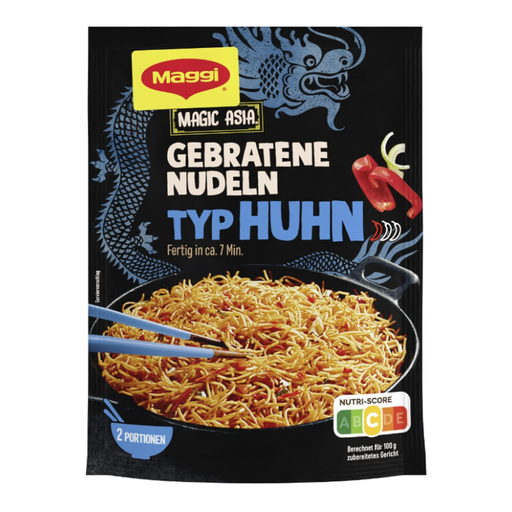
Why this product suits the profile: The 121-g single pack offers an accessible introduction to fried Asian noodles and is designed for one meal.
The pack size is clearly stated, and preparation involves more than simply adding water: the noodles are cooked in a frying pan for around five minutes.
Single portion containing vegetables such as carrots, leeks and spinach; preparation in a frying pan as stated on the product.
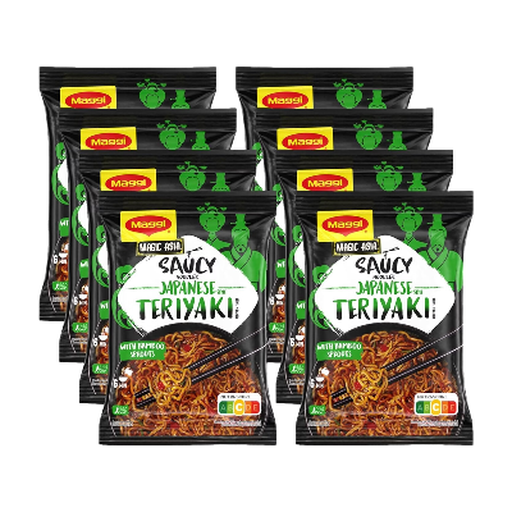
Why this product suits the profile: The multipack with eight portions is ideal for regular consumption and offers a Teriyaki variety with a mildly sweet and savoury flavour.
The pack information clearly states 8 × 128 g, making the total quantity transparent. The allergen information explicitly lists wheat and soya.
Eight individual portions; 70.3% fried noodles according to the product information; prepared with hot water.
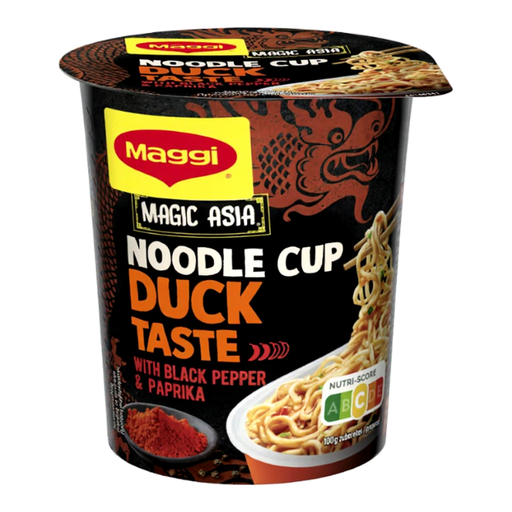
Why this product suits the profile: The cup is suitable for the office, travelling, camping or events when boiling water is the only facility available.
The preparation method is clear: add water up to the fill line, wait for around four minutes and stir. No frying pan is required.
63-g portion cup; four-minute standing time according to the product information; compact format for eating on the go.
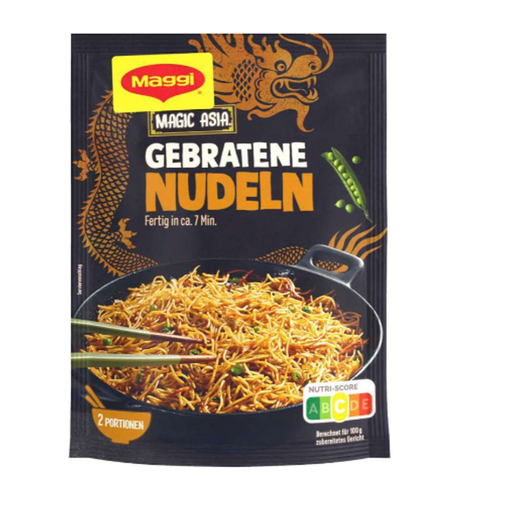
Why this product suits the profile: The 124-g portion combines a vegetable profile with frying-pan preparation, making it suitable for lunch or dinner at home.
The ingredients list includes wheat and egg, among other ingredients. This makes it clear that the vegetable description does not indicate a vegan recipe.
124-g single portion; prepared with 375 ml of water and then fried; vegetables such as carrot, white cabbage, leek and peas.
We have put together a complete, regularly updated list of products that fully meet these strict selection criteria and the safety regulations applicable in the EU.
It depends on the variety. Noodle cups are filled with boiling water up to the mark and usually left to stand for three to four minutes. Fried Asian noodles are cooked in a frying pan with water and then fried with oil. The precise instructions on the relevant packaging are the deciding factor.
Unopened products should be stored in a dry, cool place away from heat. The specific best-before date is shown on the packaging. Opened or prepared noodles should be handled according to the product information and, as a rule, eaten immediately.
Many varieties contain wheat or gluten. Depending on the product, they may also contain soya, egg, mustard, milk, celery or sesame. It is therefore not possible to make a general statement about their suitability. Anyone with allergies or intolerances should check the current ingredients and allergen list before buying and eating the product.