
Lieferung heute & morgen

Qualitätsgarantie

Willkommens-Angebote freischalten: KOSTENLOSE Lieferung | Bis zu 80 % RABATT | Kostenlose 30-Tage-JoyPlus-Testphase
App herunterladen
A magic set for children can be a creative gift for a birthday, Christmas or children’s party. It gives children the opportunity to learn magic tricks, prepare their own performances and entertain friends or family. However, children’s magic sets vary considerably in terms of age suitability, contents, instructions and materials.
If you focus only on a high number of tricks or especially ambitious promises on the packaging, you may end up buying a set that is quickly left unused. The following criteria will help parents, grandparents and relatives choose a suitable magic set for children aged 6 and over.
Claims such as “lots of effects” or “numerous tricks” may sound convincing at first. However, what matters is whether each magic trick is explained clearly and whether children can perform it independently with some practice. A set with fewer, well-structured instructions may be more suitable for beginners than an extensive collection without a clear learning structure.
You should therefore look for:
A magic set for children aged 6 and over may contain small cards, coins, strings or other individual parts. The age recommendation describes the intended use, but it does not replace adult supervision. Small parts pose a choking hazard for children under 3. Older children may also need support at first if a trick involves several preparation steps.
Before buying, check the information on the product page and packaging. If the recommended age and the child’s actual abilities differ significantly, choosing another set may be more sensible.
Terms such as “professional”, “real magic” or “ready to perform straight away” are not technical quality features. Magic toys are play and learning materials for creating illusions. The effect often depends on how carefully the child practises and how the performance is presented.
By contrast, material specifications, contents, product dimensions, battery requirements and the type of instructions can be checked objectively.
For beginners, a manageable introduction is helpful. A small card or rope-trick set is suitable if the child initially wants to learn a single technique. Larger sets with several props are better suited to children who practise regularly and want to prepare their own magic show for children.
Video tutorials can make it easier to get started, provided a compatible access method or clear reference is included. Also check whether the instructions are available in German.
Props made from ABS plastic are lightweight and may be suitable for portable sets. Cardboard and paper are common in card and simple illusion sets, but should be stored in a dry place. Compact packaging or a portable case makes storage easier and helps prevent important parts from getting lost.
When choosing, look for:
Magic tricks for beginners should not involve sharp objects, naked flames or hazardous chemicals. Children should not put props in their mouths or modify tricks on their own. When performing for friends, a sufficiently large, tidy space is recommended.
An electrical decorative product such as a plasma ball is not automatically a traditional magic set. According to the product information for the Pheashine plasma ball, it is not recommended for children under 9 and requires a mains adapter. For a child who wants to learn magic tricks, mechanical props with instructions are therefore generally more suitable.
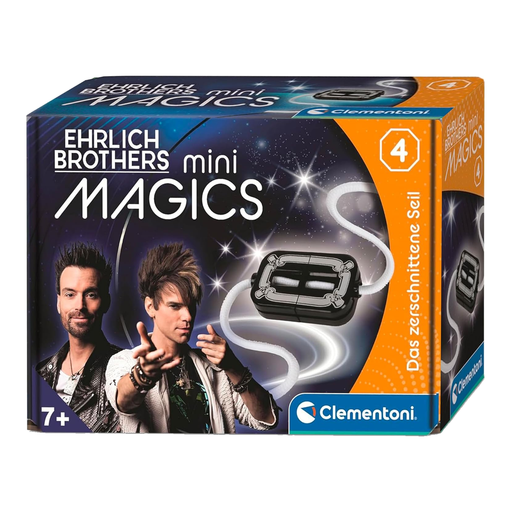
Why this product suits this profile: The set focuses on a classic rope trick and, according to the product information, is intended for children aged 7 and over. This makes it suitable for a clearly defined introduction without an extensive collection of accessories.
The selection of tricks remains manageable. Step-by-step instructions make practising easier instead of simply promoting a high number of effects.
Compact format, no batteries required and a specific rope trick as the main learning focus.

Why this product suits this profile: The set is designed for children aged 6 and over and, according to the product description, includes 25 tricks, a magic hat, a cuddly rabbit, a magic wand, coins, cards and cups.
The age recommendation, specific contents and progression from simpler to more challenging tricks are clearly set out.
25 described tricks, illustrated instructions and online video tutorials; no batteries required.
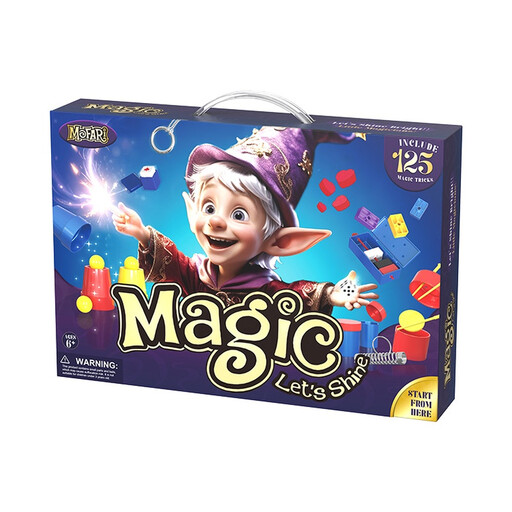
Why this product suits this profile: According to its product name, this portable set is aimed at boys and girls aged 6 and over and includes 12 tricks and 125 magical effects. It is suitable for children who want to perform regularly.
The stated number of tricks and effects is supported by a manual and video tutorials. Before buying, customers should check the exact contents on the product page again.
Portable format, ABS props according to the product name, plus printed and digital learning support.
We have put together a complete, regularly updated list of products that fully meet these strict selection criteria and the safety regulations applicable in the EU.
Many sets are suitable from 6 or 7 years. However, fine motor skills, concentration and the ability to handle small props are also important. The safety instructions from the relevant manufacturer should always be followed. Adult supervision is particularly important for younger children.
A simple card or rope trick may be ready to perform after a short period of practice. More challenging illusions require repeated training and a good presentation. A set with illustrated instructions and video tutorials can make the learning process easier to understand, but it cannot replace practice.
Many traditional magic sets for children work without batteries. This applies, for example, to mechanical props, cards, coins and ropes. Electronic products such as a plasma ball or a music bubble machine, on the other hand, require mains power or batteries and should not be confused with a traditional magic set. Before buying, therefore, check the information about the power supply and contents.